A Suburbanite's Ingenious Alarm
"Beyond the measures"
Keys: Space play/pause · ←/→ 10s · F fullscreen · M mute · </> speed
About this film
An office worker takes desperate measures in an attempt to get up on time in the morning.
Cast & crew
More films like this
More Comedy films
View all →







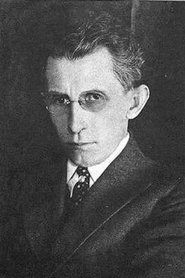
More from J. Searle Dawley
View all →

More about this film
About the production
Release dateFebruary 1908
Box officeUnknown - box office tracking was not systematically recorded for short films in this era
ProductionEdison Manufacturing Company
Filmed inEdison Studios, Bronx, New York
was shot on Edison's indoor studio sets using natural lighting from large skylights. The elaborate mechanical contraption was built specifically for this production and represented one of the more complex prop constructions for an Edison comedy of the period. Director J. Searle Dawley was known for his technical innovation and attention to mechanical details in his comedies.
Themes
Technology and modern lifeThe struggle against timeHuman ingenuityThe mechanization of daily routinesComedy of domestic frustration
Themes & topics
alarm clockoversleepingmechanical deviceoffice workersuburban lifemorning routinetardinessinventionphysical comedyRube Goldberg machine
Historical background
Made in its country of production around 1908, A Suburbanite's Ingenious Alarm belongs to the first decade of projected film. Its story of an office worker takes desperate measures in an attempt to get up on time in the morning spoke to audiences of the day through familiar genres and topical settings.
Why this film matters
Archivists and historians still cite A Suburbanite's Ingenious Alarm when tracing how the first decade of projected film filmmakers staged office and worker on screen.
Making of
The production of 'A Suburbanite's Ingenious Alarm' took place during a period when Edison Studios was actively trying to elevate the quality of their comedy productions. Director J. Searle Dawley, who had joined Edison in 1907, was given considerable creative freedom to experiment with more complex visual gags and narrative structures. The elaborate alarm mechanism was constructed by the studio's prop department over several days and required multiple takes to perfect the timing of each mechanical element. The film was shot in Edison's Bronx studio, which featured one of the first glass-enclosed stages designed to maximize natural lighting. The actor playing the lead role had to perform numerous physical comedy routines, including being pulled, lifted, and propelled by various mechanical devices, requiring considerable athletic ability and timing.
What critics said
Reviews from 1908 weighed A Suburbanite's Ingenious Alarm on pacing, performance, and novelty. Later criticism reads its emphasis on office, worker, takes through modern standards of craft and representation.
Did you know?
- is considered an early example of the 'gadget comedy' genre that would later become popular in silent films
- Director J. Searle Dawley was one of the first directors to work exclusively for a single studio (Edison)
- The mechanical alarm device in the film was reportedly inspired by real-life Rube Goldberg-style inventions popular in the early 1900s
- Edison marketed as 'A Laugh in Every Reel' in their promotional materials
- The film was shot on 35mm film at Edison's standard 16 frames per second
- Only one print of is known to survive, held in the Library of Congress collection
- The actor playing the suburbanite was likely a regular Edison player, though specific cast credits were not given in this era
- was part of Edison's push to create more sophisticated comedies to compete with French and British imports
- The mechanical effects were achieved in-camera without trick photography, using actual working props
- The film's title was shortened to 'Ingenious Alarm' in some regional distribution catalogs
Visual style
The cinematography was typical of Edison productions of the period, utilizing a stationary camera positioned to capture the entire bedroom set in a single wide shot. The lighting came primarily from the studio's large skylights, creating a natural, even illumination that was necessary for the slow film stocks of the era. The camera work was functional rather than artistic, focused on clearly documenting the mechanical action rather than creating visual effects. However, the composition was carefully planned to ensure all elements of the alarm mechanism were visible and their interactions could be followed by the audience. The film was shot at Edison's standard 16 frames per second, giving the motion a slightly staccato quality characteristic of the period.
Innovations
The film's primary technical achievement was the design and execution of the working mechanical alarm device, which required precise engineering and timing to function consistently for multiple takes. The prop construction demonstrated Edison Studios' capability to create complex mechanical effects without relying on camera tricks or editing. The film also showcased early examples of sequential physical comedy, where each gag logically led to the next, requiring careful choreography and timing. The production demonstrated the studio's ability to create elaborate sets and props on a modest budget, contributing to the evolution of more sophisticated visual comedy in American cinema.
Music
As a silent film, 'A Suburbanite's Ingenious Alarm' would have been accompanied by live musical performance during its theatrical exhibition. Typical accompaniment would have included a pianist or small orchestra playing popular tunes of the era, with music that matched the on-screen action - gentle melodies for the sleeping scenes, increasingly frantic music during the alarm sequence, and upbeat ragtime for the final rush to work. Some larger theaters might have used sound effects, including bells, whistles, and mechanical noises to enhance the comedy. No original score was composed specifically for , as was standard practice for shorts of this period.
Famous quotes
(Intertitle) 'Tired of being late for work, he invents the perfect alarm'
(Intertitle) 'The mechanism is set... morning will never be the same'
(Intertitle) 'Success at last! But will he make it on time?'
Memorable scenes
- The elaborate sequence where the alarm mechanism triggers a chain reaction of mechanical devices, including falling books, pulling ropes, and eventually catapulting the sleeper out of bed, all captured in a single continuous take that the complexity of the prop design and the physical comedy timing of the performer.
What audiences thought
The film was reportedly popular with nickelodeon audiences, who appreciated its relatable premise and spectacular mechanical finale. Contemporary accounts mention that audiences often laughed throughout the alarm sequence, particularly at the increasingly absurd methods used to wake the sleeping protagonist. The film's success led Edison to produce similar gadget comedies, though few matched the mechanical complexity of this original. Theater owners reported good returns on the film, with many requesting additional copies due to high demand. The relatable theme of struggling to wake up on time resonated with working-class audiences who faced similar challenges in their daily lives.
Film connections
Influenced by
- Georges Méliès' trick films
- French comedies from Pathé
- American stage comedy traditions
- Early vaudeville routines
- Industrial age technology demonstrations
This film influenced
- Later Rube Goldberg-style comedies
- Charlie Chaplin's 'The Pawn Shop' (1916)
- Buster Keaton's 'The Scarecrow' (1920)
- Harold Lloyd's gadget comedies
- The Three Stooges' mechanical shorts
Film restoration
The film survives in a single 35mm nitrate print held by the Library of Congress. The print shows signs of decomposition but has been digitally preserved. While not considered lost, the surviving copy is incomplete and shows significant deterioration typical of nitrate film from this period. No color-tinted versions are known to survive.
Where to watch
- The film is available through the Library of Congress's digital collections
- Some public domain film websites feature the surviving print
- It occasionally appears in early cinema retrospectives and film festival programs
- Included in some educational DVD collections of early American cinema