A Switchback Railway
"Early Edison ride film of a switchback railway."
Keys: Space play/pause · ←/→ 10s · F fullscreen · M mute · </> speed
About this film
The Switchback Railway was the forerunner of the roller coaster. Passengers sit in a small car which trundles up a swooping railway track then performs a 180 degree turn at its summit before swooping back down on a parallel track.
Cast & crew
More films like this
More Documentary films
View all →
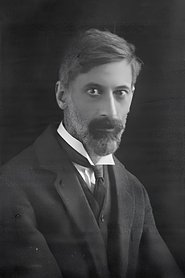
More from Robert W. Paul
View all →
More about this film
About the production
Release date1898
ProductionRobert W. Paul's Animatograph Works
Filmed inLondon, England (likely at a fairground or amusement park)
Filmed using Robert W. Paul's innovative camera equipment, this short was part of his early experiments with capturing motion and movement for entertainment purposes. The film was likely shot in a single take, requiring careful positioning of the stationary camera to capture the entire ride sequence. As with many early films, no synchronized sound was recorded, though it would have been accompanied by live music or narration during exhibition.
Themes
Technology and progressEntertainment and leisureMotion and movementVictorian innovationPublic amusements
Themes & topics
roller coasteramusement parkfairgrounddocumentaryactualitiesVictorian eratransportationthrill rideearly cinemasilent film
Historical background
A Switchback Railway (1898) reached screens through Robert W. Paul's Animatograph Works. Exhibitors of the time built nickelodeon-era programs that mixed shorts, features, and live acts, so a clear premise helped A Switchback Railway travel between cities and exchange markets.
Why this film matters
Archivists and revival programmers still cite A Switchback Railway (1898) when tracing studio habits, casting pools, and the visual rhetoric audiences once took for granted. Even modest surviving prints help map how A Switchback Railway fit beside competing releases of its day.
Making of
Robert W. Paul, originally an electrical instrument maker, became interested in film after being asked to duplicate Thomas Edison's Kinetoscope. He developed his own camera and projection system, the Animatograph, which allowed him to both shoot and exhibit films. For 'A Switchback Railway,' Paul would have used his early camera design, which was relatively portable for the time. The filming location was likely at one of London's popular fairgrounds or pleasure gardens, where such attractions were common. The stationary camera position was chosen to capture the complete ride arc, demonstrating Paul's understanding of cinematic composition despite the medium's infancy. The film was part of Paul's extensive catalog of short subjects that he produced and distributed internationally, helping establish Britain as an early center of film production.
What critics said
Trade coverage around 1898 discussed A Switchback Railway for pacing, clarity, and program fit rather than blockbuster grosses. Later writers value it as evidence of period style and as a reference point beside other films from the same era.
Did you know?
- the production is one of the earliest examples of what would later be called 'phantom rides' - films shot from the perspective of moving vehicles or rides
- The Switchback Railway was invented by LaMarcus Adna Thompson and first appeared at Coney Island in 1884, making the production documentation of a relatively new entertainment phenomenon
- Robert W. Paul was a British inventor and film pioneer who began his career as an electrical engineer before moving into filmmaking
- The film was likely shown as part of Paul's traveling film exhibitions, which were popular entertainment in Victorian England
- This is one of the earliest films to document amusement park rides, predating more famous examples like Edison's 'Rough Sea at Dover'
- The film's brevity was typical of the era, as early cinema technology limited filming duration and audiences were still being introduced to the medium
- Paul's Animatograph Works was one of Britain's first film production companies, established in 1896
- The film represents early cinema's fascination with capturing modern technological marvels and popular entertainments
- Unlike many early films that were staged, this appears to be actual documentation of a real ride in operation
- The film would have been hand-cranked through the camera, resulting in variable frame rates typical of early cinema
Visual style
The cinematography in 'A Switchback Railway' represents early documentary filmmaking at its most basic yet effective. The camera remains stationary throughout, positioned to capture the complete trajectory of the ride from start to finish. This fixed perspective was typical of early cinema, when camera movement was technically challenging and rarely attempted. The framing shows the wooden structure of the ride, the track, and the car's movement, providing viewers with a comprehensive view of the attraction. The black and white imagery, characteristic of the period, creates stark contrasts that emphasize the ride's structure and movement. The camera's angle was carefully chosen to maximize the visual drama of the car's ascent, turn, and descent, demonstrating early filmmakers' understanding of visual composition despite technical limitations.
Memorable scenes
- The dramatic moment when the car reaches the summit and performs its 180-degree turn before beginning its descent, captured in a single continuous shot that demonstrates the complete ride experience
What audiences thought
Victorian audiences were reportedly thrilled by early films like 'A Switchback Railway,' which offered them novel visual experiences they had never encountered before. The film would have been particularly exciting for viewers who had never ridden a Switchback Railway themselves, providing a virtual experience of this new form of entertainment. As part of Paul's traveling exhibitions, the film likely drew curious crowds eager to see the latest marvel of the age - moving pictures. The short's subject matter was relatable and exciting, making it popular among the working-class and middle-class audiences who attended early film shows. The film's brief runtime was typical of the era, when audiences watched programs of multiple short subjects rather than feature-length presentations.
Film connections
Influenced by
- Thomas Edison's early actuality films
- Lumière brothers' documentary shorts
- Early railway films
- Fairground photography
This film influenced
- Later phantom ride films
- Early amusement park documentaries
- Edison's 'Rough Sea at Dover' (1898)
- Georges Méliès' trick films with movement
Film restoration
The film is preserved in various film archives, including the British Film Institute's collection. As one of Robert W. Paul's early works, it has been recognized as historically significant and efforts have been made to maintain copies of this important early documentary. The film exists in its original 35mm format and has been digitized for preservation and accessibility purposes.
Where to watch
- British Film Institute's online archive
- YouTube (through archive uploads)
- Various early cinema compilation DVDs
- Academic film collections and libraries
- Museum of Modern Art's film collection (when screened)