A Victim of Misfortune
"A painter flees a comic mob"
Keys: Space play/pause · ←/→ 10s · F fullscreen · M mute · </> speed
About this film
Painter pursued by policeman, laundress, milkman, etc.
Cast & crew
More films like this
More Comedy films
View all →







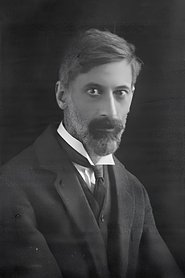
More from Robert W. Paul
View all →
More about this film
About the production
Release date1905
ProductionRobert W. Paul's Animatograph Works
Filmed inLondon, England
Filmed using Robert W. Paul's innovative camera equipment at his studio in Muswell Hill, London. The film was created during Paul's most productive period as a filmmaker and demonstrates his mastery of the chase comedy format that was becoming popular in early cinema. The outdoor street scenes were likely filmed on location in London, requiring careful coordination of the chase sequence with multiple actors and minimal disruption to public activity.
Themes
Chase and pursuitComic escalationUrban chaosMistaken identitySocial order disruption
Themes & topics
Historical background
Fairground exhibitors screened A Victim of Misfortune around 1905, when projected images still traveled as curiosity entertainment.
Why this film matters
A Victim of Misfortune belongs to early staged screen fiction, when producers tested camera placement and trick cuts.
Making of
The production of 'A Victim of Misfortune' took place during a pivotal time in Robert W. Paul's career as he was transitioning from being primarily a equipment manufacturer to focusing more on creative filmmaking. The chase sequence would have required careful choreography and timing, as early cameras were cumbersome and film was expensive. The actors were likely drawn from Paul's regular troupe of performers who understood the exaggerated acting style needed for silent film comedy. The outdoor shooting presented challenges as early film equipment required bright natural light, and the presence of a film crew in public streets would have attracted curious onlookers, potentially complicating the filming of the chase scenes.
What critics said
Press notices for A Victim of Misfortune (1905) are sparse in digitized sources; interest today rests on preserved prints and comparison with related titles.
Did you know?
- Robert W. Paul was one of Britain's most important early film pioneers, initially starting as an instrument maker before moving into film production
- represents the popular chase comedy format that was a staple of early cinema, predating the more famous Keystone Cops chases by nearly a decade
- The film was likely shot on 35mm film using Paul's own camera designs, as he manufactured his own equipment
- Paul's Animatograph Works was one of the first film studios in Britain, established in 1898
- Early chase films like this were important in developing cinematic language for action and movement
- The film was probably distributed internationally through Paul's extensive distribution network
- Robert W. Paul retired from film production in 1910, making from his later period of activity
- The film would have been originally shown with live musical accompaniment in music halls and fairground booths
- Paul's films were known for their technical quality and clever use of location shooting
- is an example of how early British cinema contributed to developing comedy genres
Visual style
The film was likely shot using Robert W. Paul's own 35mm cameras, which were among the most advanced of their time. The cinematography would have been static, as camera movement was technically difficult in 1905. The filmmakers would have relied on careful composition within the frame to capture the action of the chase sequence. The outdoor scenes would have utilized natural light, requiring careful timing of shooting schedules. The visual style would have been characteristic of the period, with clear, well-lit compositions designed to maximize visibility for audiences in large exhibition spaces.
Innovations
While not groundbreaking in technical terms, the film demonstrates Robert W. Paul's expertise in early film production techniques. The coordination of multiple actors in a chase sequence required careful planning and execution, representing an advancement in film staging and blocking. The use of both studio and location shooting shows the growing sophistication of film production methods. Paul's cameras and film stock would have been among the best available in 1905, contributing to the film's technical quality.
Music
As a silent film, 'A Victim of Misfortune' would have been accompanied by live music during exhibition. The accompaniment could have ranged from a single pianist in smaller venues to a small orchestra in larger music halls. The music would have been lively and comedic, often incorporating popular tunes of the Edwardian era. The score would have been synchronized with the on-screen action, with faster tempos during the chase sequences and more playful melodies during moments of comic relief.
Memorable scenes
- The climactic chase sequence where the painter is pursued by an ever-growing crowd through London streets, demonstrating the escalating chaos that was central to early chase comedies
What audiences thought
Edwardian audiences would have found great amusement in the escalating chaos of the chase sequence, which was a popular format in early cinema. The visual nature of the comedy made it accessible to all viewers regardless of literacy or language barriers. The film's short length and straightforward plot made it ideal for the varied programming of music halls and traveling exhibitions where films were shown as part of larger entertainment bills.
Film connections
Influenced by
- Georges Méliès' comedic films
- Lumière brothers' actualities with comedic elements
- Music hall comedy traditions
- Slapstick theater performances
This film influenced
- Later chase comedies by Mack Sennett
- Keystone Cops films
- Charlie Chaplin's chase sequences
- Buster Keaton's pursuit films
Film restoration
Like many films from this era, the preservation status of 'A Victim of Misfortune' is uncertain. Many of Robert W. Paul's films have been lost due to the fragile nature of early nitrate film stock. However, some of his works have survived through archives such as the British Film Institute. The film may exist in fragmentary form or as part of compilation reels, but a complete, high-quality version would be rare.
Where to watch
- British Film Institute collections (if preserved)
- Early cinema archives and special collections
- Academic film libraries
- Online archives of early cinema (if digitized)
- Museum exhibitions on early film history