A Wringing Good Joke
"Chair, towel, splash"
Keys: Space play/pause · ←/→ 10s · F fullscreen · M mute · </> speed
About this film
Grandpa dozes in kitchen while washerwoman leaves tub; boy ties chair to towel so pulling laundry yanks grandpa into water. Edison prank short turns domestic chore into slapstick trap.
Cast & crew
More films like this
More Documentary films
View all →
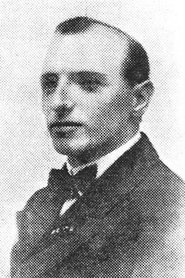
More from James H. White
View all →


More about this film
About the production
Release dateNovember 1899
ProductionEdison Manufacturing Company
Filmed inEdison Studio, Black Maria, West Orange, New Jersey
This film was produced at Edison's Black Maria studio, the world's first film production facility. The studio was built with a retractable roof to allow natural sunlight for filming, as electric lighting was insufficient for early film cameras. The film was likely shot in one take with a stationary camera, typical of early Edison productions. The practical effects involving the clothes wringer and the collision would have been carefully choreographed to ensure the gag worked properly within the single continuous shot.
Themes
Domestic comedyPractical jokesFamily dynamicsEveryday lifePhysical comedy
Themes & topics
washerwomangrandfatherprankclothes wringerkitchencollisionboytowelarmchair
Historical background
A Wringing Good Joke (1899) belongs to Edison's late-1890s domestic gag films.
Why this film matters
Chair-pull gags became repeatable physical comedy devices in silent slapstick.
Making of
The production of 'A Wringing Good Joke' took place at Edison's innovative Black Maria studio, which was essentially a tar-paper-covered building that could rotate on tracks to follow the sun throughout the day. Director James H. White, who had previously worked as a photographer for Edison, would have directed the actors through shouted instructions from behind the camera, as there was no recorded sound. The actors were likely stage performers from the New York area who Edison hired on a daily basis. The practical joke setup required precise timing - the actors had to coordinate their movements to ensure the towel-pulling gag worked within the single continuous take. The wash tub and wringer would have been real equipment brought into the studio, and the collision effect was achieved through careful positioning of the props and actors. Early film audiences were fascinated by these simple narrative films that showed recognizable situations with unexpected twists.
What critics said
Nickelodeon audiences laughed at predictable payoff; archivists note surviving paper print.
Did you know?
- the production is part of Edison's early series of 'trick films' that used practical jokes and physical comedy as their main attraction.
- The Edison catalog described the production as 'a crowning success as a comic picture,' indicating how highly the studio valued this production.
- The film was released during the peak of the Spanish-American War period, when audiences were seeking light entertainment.
- James H. White was one of Edison's most prolific directors, responsible for hundreds of short films between 1897 and 1905.
- The clothes wringer was a common household appliance in 1899, making the gag immediately relatable to contemporary audiences.
- The film's title is a play on words, combining 'wringing' (the laundry action) with 'ringing' (as in a good joke that 'rings true').
- the production was likely exhibited on Edison's Vitascope projector, which could show films to larger audiences than the earlier Kinetoscope.
- The boy in the film represents the archetype of the mischievous child that would become a staple in later comedy films.
- The film was shot on 35mm film at approximately 16 frames per second, standard for early Edison productions.
- The Edison catalog sold the production for $10.75, a significant price for the time, indicating the studio's confidence in its commercial appeal.
Visual style
The cinematography of 'A Wringing Good Joke' follows the standard conventions of early Edison films, utilizing a single stationary camera positioned to capture the entire scene in one continuous take. The camera was likely placed at eye level to provide a clear view of all the action, with the kitchen set arranged to maximize visibility of the characters and props. The lighting would have been natural sunlight coming through the Black Maria's retractable roof, creating the bright, even illumination necessary for the slow film stock of the era. The composition follows a theatrical proscenium style, with the action staged horizontally across the frame. The camera's fixed position requires all the comedy to play out within a single frame, demonstrating the early filmmakers' growing understanding of spatial relationships and movement within the cinematic frame. The black and white images show the typical contrast and grain of 1899 film stock, with the white laundry providing visual interest against the darker background.
Innovations
While 'A Wringing Good Joke' may appear simple by modern standards, it represented several technical achievements for its time. The successful coordination of multiple actors and props within a single continuous take demonstrated the growing sophistication of early film production. The film's use of a practical effect involving the clothes wringer and resulting collision showed early filmmakers' ability to create visual gags through mechanical means. The clear visibility of all the action within the static frame indicates careful planning of blocking and positioning, important skills in an era when editing was minimal. The film's preservation of comedic timing through the medium of early film stock, which required bright lighting and couldn't capture rapid movement as clearly as later films, shows the technical adaptation of theatrical comedy to the new medium. The production also benefited from Edison's advanced camera equipment and the controlled environment of the Black Maria studio.
Music
As a silent film from 1899, 'A Wringing Good Joke' had no recorded soundtrack. During exhibition, the film would have been accompanied by live music, typically a pianist in larger theaters or possibly a phonograph recording in smaller venues. The musical accompaniment would have been improvised or selected from popular pieces of the time, with lively, upbeat music during the comic moments and perhaps more dramatic music during the collision sequence. Some exhibitors might have provided sound effects using mechanical devices or their own vocalizations to enhance the comedy, particularly during the wringing and collision scenes. The experience of watching the production in 1899 would have included these live musical elements, which were considered an essential part of the motion picture presentation.
Famous quotes
This is a crowning success as a comic picture.—Edison Catalog
Memorable scenes
- The climactic collision scene where the grandfather is pulled into the wash tub by the towel being wrung, creating a chaotic splash that serves as the film's comedic payoff and demonstrates early filmmakers' ability to execute physical gags on camera.
What audiences thought
Audiences in 1899 reportedly responded enthusiastically to 'A Wringing Good Joke,' finding humor in both the familiar domestic setting and the unexpected physical comedy. The film was popular in vaudeville theaters and penny arcades, where it was often shown as part of a program of several short films. Contemporary accounts suggest that viewers laughed at the grandfather's predicament and the cleverness of the boy's prank, with the collision scene generating the biggest response. The film's relatable characters and simple, visual humor made it accessible to audiences of all ages and backgrounds. As with many successful Edison comedies of the period, it likely encouraged repeat viewings as audiences appreciated the skillful execution of the practical joke. The film's popularity helped establish the commercial viability of short comedy films in the emerging motion picture market.
Film connections
Influenced by
- Stage comedy traditions
- Vaudeville routines
- Domestic melodramas
- Photographic sequences
This film influenced
- The Whole Dam Family and the Dam Dog (1905)
- The Watermelon Patch (1905)
- The Miller's Daughter (1905)
- Comedy and Tragedy (1901)
Film restoration
The film is preserved at the Library of Congress and has been digitized as part of their early motion picture collection. It is also held by the Museum of Modern Art's film archive. The surviving prints show some deterioration typical of films from this era but remain viewable. The film has been included in several DVD collections of early Edison films and is available through various educational and archival websites.
Where to watch
- Library of Congress National Screening Room
- Museum of Modern Art film collection
- Early Cinema DVDs
- Internet Archive
- Kanopy streaming service (educational access)
- Various film history websites and archives