An Arizona Wooing
"Sheep rancher fights for his girl in Arizona"
Keys: Space play/pause · ←/→ 10s · F fullscreen · M mute · </> speed
About this film
The story concerns cowboy Tom Warner, who raises sheep on a cattle ranch owned by a man named Dixon, the father of his girlfriend Jean. Jean, meanwhile, is being menaced by a Mexican outlaw who wants to have his way with her. When Jean's father decides he no longer wants Tom to r.
Cast & crew
More films like this
More Western films
View all →

More from Tom Mix
View all →
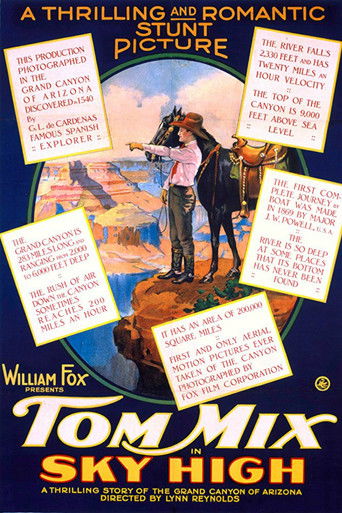
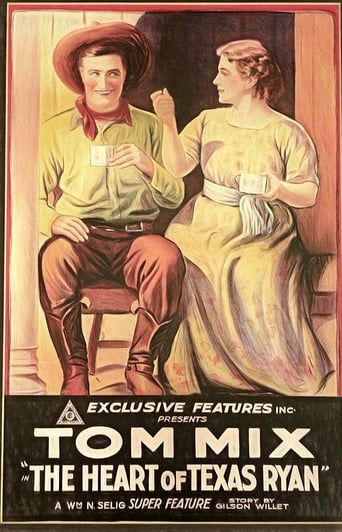
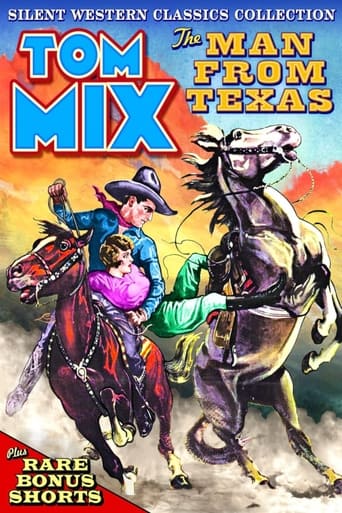
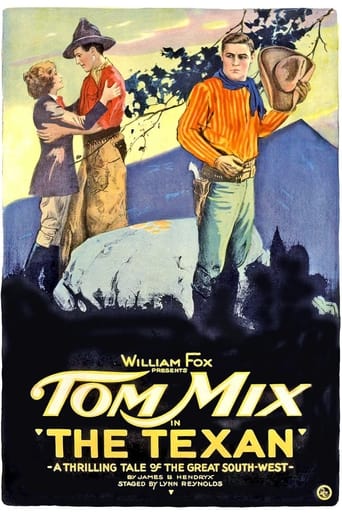
More about this film
About the production
Release dateApril 26, 1915
BudgetApproximately $500 - $1,000 (Estimated for Selig one-reelers of the era)
ProductionSelig Polyscope Company
Filmed inPrescott, Arizona, USA, Selig Studio, Glendale, California, USA
The film was produced during a transitional period for Tom Mix, who had recently been given his own production unit by William Selig. Unlike many of his later flamboyant features, this was a 'one-reeler' (approximately 1,000 feet of film) which focused more on gritty realism and range conflicts. The production utilized authentic Arizona locations, a hallmark of Mix's early work which aimed for a higher degree of realism than the Westerns filmed in New Jersey or New York. The script was based on a story by the prolific Western novelist William MacLeod Raine, marking an early collaboration between popular literature and the burgeoning film industry.
Themes
Cattlemen vs. Sheepmen ConflictFrontier JusticeThe 'Damsel in Distress'Racial StereotypingRedemption through Bravery
Themes & topics
Historical background
Silent-era audiences encountered An Arizona Wooing around 1915, as studios refined cross-cutting and star-driven storytelling.
Why this film matters
An Arizona Wooing shows how silent filmmakers conveyed plot through gesture, title cards, and editing.
Making of
During the production of 'An Arizona Wooing,' Tom Mix was beginning to exert total creative control over his films. He insisted on performing his own stunts, including the scenes where he is tied up and left in the desert. The production was part of a prolific streak where Mix's unit would churn out a new short film almost every week. The cast and crew lived in a 'moving camp' style, often staying in tents or local ranches in Yavapai County to capture the most authentic scenery possible. This 'guerrilla' style of filmmaking allowed Mix to incorporate real livestock and actual ranch hands as extras, adding a layer of documentary-like authenticity to the fictional plot.
What critics said
Press notices for An Arizona Wooing (1915) are sparse in digitized sources; interest today rests on preserved prints and comparison with related titles.
Did you know?
- is one of the few surviving examples of Tom Mix's early work with the Selig Polyscope Company.
- The story was written by William MacLeod Raine, a famous novelist known as the 'Dean of Western Writers.'
- Tom Mix not only starred in the film but also served as the director and handled the animal wrangling.
- The film features Pat Chrisman, who was a real-life friend of Tom Mix and a former 101 Ranch Wild West show performer.
- Unlike the 'clean-cut' hero image Mix would later adopt at Fox, his character here is a sheepman—a role usually looked down upon by traditional cattle-ranching Western heroes.
- The film was shot on location in Prescott, Arizona, which served as a major hub for Selig's Western productions in 1915.
- The villain, 'Mexican Joe,' was played by Pat Chrisman, who frequently played both Native American and Mexican characters in Mix's early shorts.
- At the time of release, the film was marketed as a 'Western Drama' rather than a comedy, distinguishing it from Mix's lighter 'Sagebrush Tom' series.
Visual style
The film utilizes standard silent-era static shots but is notable for its use of deep focus in outdoor landscapes. The cinematography emphasizes the isolation of the Arizona desert, using the vast, empty space to heighten the stakes of Tom's abandonment. Tinting was likely used in original prints—amber for daylight desert scenes and possibly blue for nighttime sequences.
Innovations
The film is an early example of successful location shooting in the American Southwest, proving that audiences preferred real vistas over studio backdrops. It also demonstrates early proficiency in 'cross-cutting' to build tension between the hero's plight and the heroine's kidnapping.
Music
As a silent film, there was no recorded soundtrack. Original screenings would have been accompanied by a live pianist or organist, typically playing stock Western 'hurry' music for the chase scenes and sentimental ballads for the romance between Tom and Jean.
Famous quotes
None (Silent film with intertitles; specific dialogue cards have not been widely transcribed in historical records beyond plot descriptions).
Memorable scenes
- The scene where Tom Warner is bound and left in the scorching sun, which highlights the physical vulnerability of the hero.
- The 'torture' scene where Mexican Joe taunts the helpless Tom, establishing Joe as a truly sadistic villain for the era.
- The final chase across the Arizona brush where Tom and the cattlemen ride to intercept the wedding.
What audiences thought
Audiences in 1915 were drawn to Tom Mix's genuine cowboy credentials. Unlike many 'drugstore cowboys' of the era, Mix's ability to handle horses and perform stunts made him an immediate favorite among rural and urban audiences alike. The film was a popular 'filler' in nickelodeons and early movie palaces, often shown alongside newsreels and comedies.
Film connections
Influenced by
- The Virginian (Novel by Owen Wister)
- The Great Train Robbery (1903)
- Real-life experiences of Tom Mix as a soldier and lawman
This film influenced
- The Lone Star Ranger (1923)
- The Searchers (1956) - specifically the 'rescue of the kidnapped woman' arc
- Modern revisionist Westerns that address the sheep/cattle wars
Film restoration
Preserved; a print of the film is held in the UCLA Film & Television Archive.
Where to watch
- UCLA Film & Television Archive (By appointment)
- Occasional screenings at silent film festivals (e.g., Pordenone Silent Film Festival)
- Public domain archives and specialized silent film DVD collections