Artistic Creation
"A sketch becomes a living woman"
Keys: Space play/pause · ←/→ 10s · F fullscreen · M mute · </> speed
About this film
An artist draws the head of a pretty girl, takes the drawing off the paper and places it on a small table, turning the image into the head of a real woman. He then continuous drawing the lady, one body part after the other.
Cast & crew
More films like this
More Comedy films
View all →







More from Walter R. Booth
View all →
More about this film
About the production
Release date1901
ProductionRobert W. Paul Productions
Filmed inLondon, England
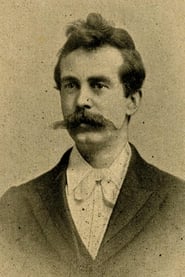
This film was created using stop-motion techniques and substitution splicing, which were revolutionary special effects methods for 1901. Walter R. Booth, who both directed and starred in the film, was known for his innovative trick films that pushed the boundaries of what was possible in early cinema. The film was likely shot in a single day due to the technical limitations of early film equipment and the complexity of the stop-motion effects required.
Themes
Creation and creativityThe magic of artTransformation and metamorphosisThe boundary between reality and illusionThe power of the artist
Themes & topics
Historical background
Fairground exhibitors screened Artistic Creation around 1901, when projected images still traveled as curiosity entertainment.
Why this film matters
Artistic Creation belongs to early staged screen fiction, when producers tested camera placement and trick cuts.
Making of
The creation of 'Artistic Creation' required meticulous planning and execution. Walter R. Booth, drawing on his background as a magician, understood the importance of precise timing and visual illusion. The film was shot using a hand-cranked camera, and each frame had to be carefully composed to create the seamless illusion of the drawing coming to life. The actress playing the created woman had to remain perfectly still while Booth photographed each stage of her 'creation,' moving only slightly between takes to simulate the gradual assembly of her body. The substitution splicing technique involved stopping the camera, making changes to the scene, then restarting filming to create instantaneous transformations that appeared magical to contemporary audiences.
What critics said
Press notices for Artistic Creation (1901) are sparse in digitized sources; interest today rests on preserved prints and comparison with related titles.
Did you know?
- Walter R. Booth was a former magician who brought his knowledge of illusion to filmmaking, making him particularly suited to create trick films like this one.
- The film was produced by Robert W. Paul, one of Britain's earliest film pioneers and inventors who ran a successful film production company.
- At only one minute long, was typical of the duration of early films, which were often shown as part of variety programs alongside live performances.
- The technique of bringing drawings to life through stop-motion would later be perfected by animators like Willis O'Brien and Ray Harryhausen.
- is considered one of the earliest examples of stop-motion animation in cinema history.
- The transformation effects were achieved through careful frame-by-frame photography and substitution splicing techniques.
- Walter R. Booth created over 100 short films between 1899 and 1915, many of which featured similar magical transformations and trick effects.
- The film was likely hand-colored in some releases, as was common with early films to enhance their visual appeal.
- This type of film was extremely popular with early cinema audiences who were amazed by the seemingly magical possibilities of the new medium.
- The complete woman created in the film was played by an actress who had to hold perfectly still between each photographed frame to create the illusion of gradual assembly.
Visual style
The cinematography in 'Artistic Creation' was pioneering for its time, utilizing multiple exposures and substitution splicing to create the illusion of transformation. The camera work was static, as was typical of early films, but the composition within the frame was carefully planned to maximize the impact of the special effects. The lighting was bright and even to ensure clear visibility of the magical transformations. The film used close-up shots to emphasize the drawing process and the gradual assembly of the human figure, which was innovative for a period when most films used wide shots exclusively.
Innovations
The film's primary technical achievement was its pioneering use of stop-motion animation and substitution splicing. These techniques allowed for the seamless transformation of 2D drawings into 3D reality, a feat that amazed contemporary audiences. The film demonstrated early mastery of special effects that would become standard in cinema, including careful frame-by-frame photography and precise editing to create impossible illusions. The successful integration of live action with animated elements was particularly innovative for 1901, predating more famous examples of similar techniques by several years.
Music
As a silent film from 1901, 'Artistic Creation' had no synchronized soundtrack. During exhibition, the film would have been accompanied by live music, typically a pianist or small orchestra in music halls. The musical accompaniment would have been chosen to match the mood of each scene - playful during the drawing process, magical during the transformations, and triumphant when the completed figure comes to life. The specific musical selections would have varied by venue and performer, as was common with early cinema exhibition.
Famous quotes
As a silent film, 'Artistic Creation' contains no spoken dialogue or famous quotes.
Memorable scenes
- The magical moment when the artist removes the drawn head from the paper and it transforms into a real three-dimensional head, demonstrating the film's innovative special effects and establishing the theme of artistic creation coming to life.
What audiences thought
Early cinema audiences were reportedly astonished by 'Artistic Creation' and similar trick films. The magical transformation effects were particularly impressive to viewers who had never seen such visual illusions before. The film was popular in music hall programs where it served as a highlight act. Contemporary audiences appreciated the humor and wonder of seeing drawings come to life, and the film's brevity made it ideal for the short attention spans typical of variety show audiences. The film's success helped establish the popularity of trick films in early cinema programming.
Film connections
Influenced by
- Georges Méliès' trick films
- Stage magic and illusion shows
- Victorian spiritualism
- Early animation experiments
- Theatrical special effects
This film influenced
- Early Disney animation
- Willis O'Brien's stop-motion work
- Ray Harryhausen's creature effects
- Modern CGI transformation scenes
- Music videos featuring animated elements
Film restoration
The film is preserved in the British Film Institute National Archive and has been digitally restored. It is also held in other film archives including the Library of Congress. The restoration has allowed modern audiences to appreciate the technical innovations of this early cinema masterpiece. The film survives in good condition considering its age, though some deterioration is visible in existing prints.
Where to watch
- British Film Institute's streaming platform
- YouTube (through BFI's official channel)
- Various DVD compilations of early cinema
- Film archive screenings at special events
- Educational film collections and libraries