As Seen Through a Telescope
"An elderly gentleman in a silk hat sits on a stool in front of a"
Keys: Space play/pause · ←/→ 10s · F fullscreen · M mute · </> speed
About this film
An elderly gentleman in a silk hat sits on a stool in front of a store on the main street of town. He has a telescope that focuses on the ankle of a young woman who is a short distance away. Her husband catches the gent looking. What will the two men do now?
Cast & crew
More films like this
More Comedy films
View all →







More from George Albert Smith
View all →
More about this film
About the production
Release dateOctober 1900
Box officeNo commercial box office records exist for films of this period
ProductionG.A.S. Films, Warwick Trading Company
Filmed inBrighton, England, Studio setting in Brighton
This film was shot on a single set designed to resemble a street scene, with painted backdrops typical of early cinema. The production utilized a stationary camera with the innovative use of a point-of-view shot through the telescope, which was technically advanced for 1900. The film was likely shot in a single take with minimal editing, as was common for the era. The actors were likely theater performers from Brighton's local scene, as George Albert Smith often used local talent.
Themes
VoyeurismPublic vs. private behaviorAge and desireComedy of embarrassmentGender dynamics
Themes & topics
telescopevoyeurismcomedyelderly manyoung womanhusbandconfrontationstreet scenepoint of viewphysical comedy
Historical background
Photography and projected motion were still experimental in 1900, when short actualities and staged scenes competed for public curiosity.
Why this film matters
Early works like As Seen Through a Telescope help map how filmmakers, exhibitors, and viewers developed the visual language of cinema during the medium's first decades. Later revivals, archive screenings, and digitization have kept such titles accessible to researchers and dedicated viewers long after their first commercial runs.
Making of
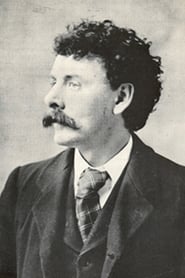
George Albert Smith, working from his studio in Brighton, created this film during his most productive period as a filmmaker. Smith was experimenting with narrative techniques and visual effects that would later become standard in cinema. The telescope effect was achieved by mounting the camera on an actual telescope and filming through it, creating a circular vignette that simulated the viewer's perspective. The actors were likely recruited from local theater companies, as Smith frequently worked with Brighton's theatrical community. The set was constructed in Smith's studio space, using painted backdrops to create the illusion of a street scene. The film was shot on 35mm film using a Lumière camera, which was standard equipment for British filmmakers of the period. Smith's background in magic lantern shows influenced his approach to visual storytelling and special effects.
What critics said
Trade and newspaper reviews from the silent period for As Seen Through a Telescope survive only in fragments, making precise reception history difficult to reconstruct. Modern assessment tends to emphasize historical value, craft, and cultural context rather than box-office performance.
Did you know?
- This film is considered one of the earliest examples of point-of-view (POV) cinematography in cinema history
- The telescope shot was created by attaching the camera to a telescope and filming through the lens, a groundbreaking technique for 1900
- George Albert Smith was a former hypnotist and magic lantern showman before becoming a filmmaker
- The film was part of Smith's series of 'trick films' that explored cinematic possibilities
- The young woman's ankle was considered risqué subject matter for 1900 audiences
- Smith's wife Laura Bayley often appeared in his films, though it's unknown if she appears in this one
- The film was distributed internationally and was particularly popular in the United States
- The kicking sequence was one of the earliest examples of physical comedy in British cinema
- Smith patented several film techniques, including the use of close-ups, which he pioneered around this time
- The film was originally titled 'As Seen Through a Telescope' but was sometimes marketed as 'The Telescope' in some territories
Visual style
The cinematography in this film was revolutionary for its time, featuring what may be cinema's first successful point-of-view shot. The telescope sequence creates a circular mask effect that simulates looking through an optical device, a technique that would become standard in cinema. The film uses a static camera position for most of its duration, which was typical of the era, but the insertion of the POV shot creates visual variety and narrative emphasis. The lighting appears to be natural or simple studio lighting, consistent with early film production. The composition follows theatrical conventions, with actors positioned clearly within the frame to ensure visibility to audiences.
Innovations
This film pioneered the point-of-view shot technique, which would become fundamental to cinema. The circular mask effect created by filming through the telescope was an innovative special effect that simulated optical devices realistically. Smith's use of close-up elements (the ankle through the telescope) was ahead of its time, as most early filmmakers kept everything at medium distance. The film also demonstrates early understanding of narrative pacing and visual storytelling, building from observation to confrontation to resolution in just one minute.
Music
As a silent film, it would have been accompanied by live music during exhibition. The typical accompaniment would have been a pianist or small orchestra playing popular tunes of the era or improvised music to match the on-screen action. For British showings, this might included music hall songs or classical pieces. No specific musical score was composed for the film, as was standard practice for productions of this period.
Famous quotes
No dialogue exists as this is a silent film
Memorable scenes
- The innovative point-of-view shot through the telescope showing the young woman's ankle, which was groundbreaking for 1900 and represents one of cinema's first subjective camera perspectives
What audiences thought
The film was very popular with audiences of its time, who were delighted by its technical cleverness and humorous premise. Contemporary accounts suggest that audiences laughed at the old man's predicament and were impressed by the novel telescope effect. The film's short length and clear visual storytelling made it accessible to audiences of all classes and literacy levels. It was frequently included in variety programs alongside magic lantern shows and live performances, where it served as a highlight of the moving picture portion of the entertainment.
Film connections
Influenced by
- Magic lantern shows
- Theatrical comedy
- Music hall entertainment
- Photographic techniques
- Optical devices
This film influenced
- The Kiss in the Tunnel (1899)
- Grandma's Reading Glass (1900)
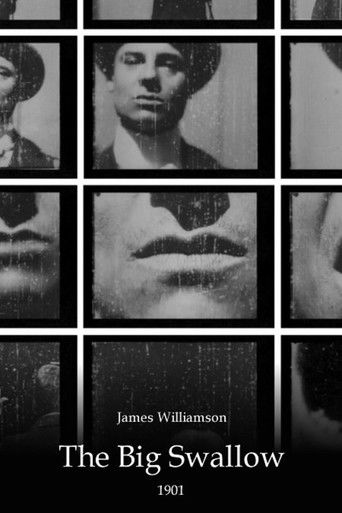
- The Big Swallow (1901)
- The Lonely Villa (1909)
- Rear Window (1954)
Film restoration
The film survives and has been preserved by the British Film Institute. Multiple copies exist in various film archives worldwide, including the Library of Congress and the Cinémathèque Française. The film has been digitally restored and is available in high quality for scholarly and public viewing. Its preservation status is considered excellent for a film of this era.
Where to watch
- British Film Institute's streaming service BFI Player
- YouTube (official uploads from film archives)
- The Internet Archive
- Various DVD compilations of early cinema
- Museum screenings and film festivals featuring early cinema