
At the Hypnotist's
"A hypnotist deceives the patients who trust him"
Keys: Space play/pause · ←/→ 10s · F fullscreen · M mute · </> speed
About this film
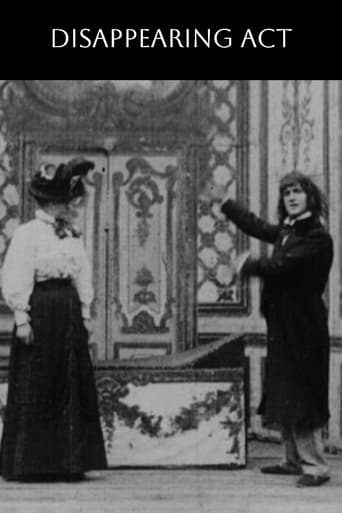
A hypnotist tricks his patients.
Cast & crew
More films like this
More Comedy films
View all →







More from Alice Guy-Blaché
View all →
More about this film
About the production
Release date1898
Box officeUnknown - box office tracking was not standardized for films of this era
ProductionSociété des Établissements Gaumont
Filmed inParis, France - Gaumont Studios
Filmed in a single take with a stationary camera, typical of early cinema. The production used simple props and minimal sets, likely filmed on a small stage at Gaumont's first studio at Buttes-Chaumont in Paris. The actors were likely Gaumont employees or theater performers rather than professional film actors, as the picture industry had not yet established specialized acting talent.
Themes
Control and manipulationAuthority and powerHuman suggestibilityComedy through humiliationScientific skepticism vs. belief
Themes & topics
Historical background
Société des Établissements Gaumont's 1898 release of At the Hypnotist's fit contemporary France programs that mixed fiction, news, and novelty subjects for repeat weekly attendance.
Why this film matters
Programmers and historians revisit At the Hypnotist's (1898) because its story—a hypnotist tricks his patients—illustrates popular narrative habits and production norms of the period.
Making of
Alice Guy-Blaché began her filmmaking career at Gaumont after convincing her boss Léon Gaumont that film could be used for more than just documenting reality. She was initially put in charge of Gaumont's film production as an experiment, and 'At the Hypnotist's' was among her early narrative films. The production would have been extremely simple by modern standards - a single camera setup, natural lighting, and actors performing in real-time without the possibility of editing or retakes. The hypnotist and his subjects were likely played by theater actors from Paris who were accustomed to broad physical comedy that would read well on screen. the picture was shot on 35mm film using early cinematography equipment, and each copy had to be printed individually from the original negative.
What critics said
English-language trade reviews of At the Hypnotist's are limited for 1898. Where notices survive, they stress pacing and photographic clarity; later criticism values the title as archival evidence of studio style.
Did you know?
- This is one of the earliest surviving films directed by a woman, Alice Guy-Blaché, who was the first female film director in history.
- Alice Guy-Blaché made over 1,000 films during her career, but many from her early period at Gaumont are now lost.
- the picture was made just three years after the first public film screening by the Lumière brothers in 1895.
- At the time of production, film was still considered a novelty rather than an art form, and most films were under one minute long.
- The hypnotist theme was popular in early cinema, reflecting Victorian-era fascination with spiritualism and the occult.
- Alice Guy was only 25-26 years old when she directed, having started at Gaumont as a secretary.
- the picture was likely hand-colored frame by frame for special screenings, though most surviving versions are black and white.
- Gaumont was one of the world's first film production companies, founded by Léon Gaumont in 1895.
- represents one of the earliest examples of comedy in cinema, predating Charlie Chaplin's work by nearly two decades.
- the picture was probably shown with live musical accompaniment, typically piano or organ music played by a theater musician.
Visual style
The cinematography is characteristic of 1898 filmmaking - a single, static camera position capturing the entire scene in one continuous take. The camera would have been hand-cranked, resulting in variable frame rates by modern standards. The composition is theatrical, with the action arranged to be clearly visible from a single vantage point, much like a stage play. Lighting was natural or basic studio illumination, creating high contrast images typical of early film. There are no camera movements or changes in perspective, as these techniques had not yet been developed. The visual style prioritizes clarity and legibility of the action over artistic composition.
Innovations
While technically simple by modern standards, the picture represents several early achievements. It demonstrates early narrative storytelling in cinema, moving beyond simple actualities to fictional comedy. the picture early understanding of visual comedy and timing, crucial skills in cinematic language. As a Gaumont production, it utilized their early film equipment and processing techniques. The preservation of the picture itself is a technical achievement, given the fragile nature of early nitrate film stock. the picture also represents early experimentation with genre, helping establish comedy as a viable category for motion pictures.
Music
Originally, this silent film would have been accompanied by live music, typically a piano or organ in the exhibition venue. The accompanist would have improvised or used popular melodies of the era, matching the mood and action on screen. For a comedy like this, upbeat, playful music would have been appropriate. There was no original composed score specifically for, as custom film scoring did not become common until later in cinema's development. Some screenings might have included sound effects created live by theater staff to enhance the comedy, such as bells or whistles.
Famous quotes
No recorded dialogue - this is a silent film from 1898
Memorable scenes
- The climactic chaos scene where all the hypnotized patients simultaneously break free and create pandemonium in the hypnotist's office, with one patient acting like a chicken, another attempting to undress, and others performing various comical actions, all while the hypnotist desperately tries to regain control of the situation.
What audiences thought
Audiences in 1898 would have viewed as a magical and entertaining spectacle. The very idea of moving images was still astonishing to most viewers, and a comedy showing people behaving strangely under hypnosis would have been particularly delightful. the picture likely elicited laughter and wonder, with viewers marveling at the technology as much as the content. Early cinema audiences were often vocal and interactive, reacting audibly to the screen. The hypnotist theme would have resonated with contemporary audiences who were familiar with stage hypnotists and spiritualist performances that were popular entertainment at the time.
Film connections
Influenced by
- Stage hypnotist performances popular in late 19th century theaters
- Vaudeville comedy sketches
- Magic lantern shows with similar themes
- Georges Méliès' trick films
- Theatrical farce traditions
This film influenced
- Later hypnotist comedies in early cinema
- The Three Stooges' hypnotism routines
- Abbott and Costello's hypnotist sketches
- Comedy films about mind control throughout film history
Film restoration
the picture survives in archives, though likely in incomplete or deteriorated form given its age and the fragile nature of early nitrate film stock. Copies are held by film archives such as the Cinémathèque Française and possibly the Library of Congress. the picture has been digitized as part of early cinema preservation efforts, though the quality may vary depending on the condition of source materials. Some versions may show signs of decomposition common to nitrate films from this period.
Where to watch
- the picture is available on various early cinema compilation DVDs and Blu-rays
- Some film archive websites offer streaming access for educational purposes
- YouTube may have versions uploaded from public domain sources
- The Gaumont Pathé Archives occasionally includes it in retrospectives
- Film studies programs and university libraries may have access through academic streaming services