Ateliers de La Ciotat
"Men working at the shipyards of La Ciotat"
Keys: Space play/pause · ←/→ 10s · F fullscreen · M mute · </> speed
About this film
Men working at the shipyards of La Ciotat.
Cast & crew
More films like this

More Documentary films
View all →


More from Louis Lumière
View all →


More about this film
About the production
Release date1896
BudgetNot documented - early Lumière films were produced with minimal costs as experimental works
Box officeNot tracked commercially - early films were shown as novelties rather than commercial releases
ProductionSociété Lumière
Filmed inLa Ciotat, France
Filmed using the Cinématographe, a revolutionary camera, projector, and developer all in one device invented by the Lumière brothers. The film was shot on 35mm film with a 1.33:1 aspect ratio, which became the standard for early cinema. As with most Lumière productions, this was likely filmed in a single take with a stationary camera positioned to capture the full scope of the shipyard activities. The natural lighting conditions were used, as artificial lighting was not yet employed in filmmaking.
Themes
Industrial laborHuman workTechnological progressDocumentary observationWorking class life
Themes & topics
Historical background
Ateliers de La Ciotat (1896) emerged during the earliest years of projected motion pictures, when exhibition habits and national film industries were still taking shape.
Why this film matters
Ateliers de La Ciotat remains accessible through digital archives, giving modern viewers a direct link to 1896 screen culture.
Making of
The making of 'Ateliers de La Ciotat' represents a pivotal moment in cinema history when the Lumière brothers were actively documenting various aspects of French life and industry. The filming process was remarkably simple by modern standards - the Cinématographe was mounted on a tripod and remained stationary throughout the recording. The filmmakers likely had to obtain permission from the shipyard management to film on location, though the workers themselves probably continued their regular duties with minimal awareness of the camera's significance. The choice to film industrial scenes was part of the Lumière brothers' broader vision to showcase the marvels of modern technology and progress through their new medium. The film was processed and developed using the same Cinématographe device that captured the images, demonstrating the remarkable efficiency of early film technology.
What critics said
Trade and revival screenings have kept Ateliers de La Ciotat (1896) on the map for collectors and scholars rather than mass first-run promotion.
Did you know?
- This film is part of the Lumière brothers' collection of 'actualités' (actuality films), which were among the first documentary-style films ever made
- La Ciotat was an important shipbuilding center in France, making it an ideal subject for early industrial documentation
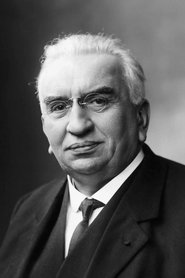
- The film was likely shot by either Louis Lumière himself or one of his trained operators
- Like most early Lumière films, it was originally shown as part of a program of 10-12 short films
- The shipyards of La Ciotat still exist today and have historical markers commemorating the Lumière films made there
- This film demonstrates the Lumière brothers' interest in capturing real-world scenes rather than staged narratives
- The workers in the film were likely unaware they were making history by being among the first people ever filmed
- The film was shot at approximately 16 frames per second, the standard speed for early cinema
- It was one of over 1,400 films the Lumière brothers produced between 1895 and 1905
- The Cinématographe camera used to film this could only hold about 17 meters of film, limiting shots to under a minute
Visual style
The cinematography of 'Ateliers de La Ciotat' is characteristic of early Lumière films, featuring a static camera position that captures a wide view of the shipyard activities. The composition was carefully chosen to maximize the amount of action visible within the frame, utilizing the natural depth of the location. The lighting is entirely natural, creating authentic shadows and highlights that contribute to the documentary feel. The camera work demonstrates the Lumière brothers' understanding of spatial composition and their ability to create visually interesting scenes without camera movement. The film's visual style established conventions for documentary cinematography that would influence filmmakers for decades.
Innovations
The film showcases several groundbreaking technical achievements of early cinema. It was captured using the Cinématographe, which was superior to competing devices like Edison's Kinetoscope because it combined camera, projector, and developer functions in one portable unit. The film demonstrates early mastery of exposure control and focus, achieving remarkable clarity for the period. The ability to capture movement with such fluidity and detail was revolutionary, as was the projection of these images to large audiences. The film's preservation of fine details and the natural movement of workers represent significant technical accomplishments in the earliest days of motion picture photography.
Music
The film was originally presented as a silent work, as synchronized sound technology would not be invented until the late 1920s. During early screenings, the film might have been accompanied by live musical performance, typically a pianist or small orchestra playing appropriate music. The choice of music would have been left to the individual venue or exhibitor, as there was no standardized practice for film accompaniment in 1896. Some presentations might have included sound effects created by live performers to enhance the industrial atmosphere of the shipyard scenes.
Memorable scenes
- The opening shot revealing the expansive shipyard with multiple workers engaged in various tasks, demonstrating the scale of industrial operations in 19th-century France
What audiences thought
Early audiences were reportedly astonished by the lifelike quality of the moving images, with many believing the scenes were being performed live behind the screen. The film, like other Lumière productions, was shown as part of variety programs and attracted crowds eager to experience the new technology. Viewers were particularly fascinated by the authenticity of the scenes and the ability to see real people and places captured on film. The industrial subject matter resonated with audiences who were experiencing rapid industrialization in their own lives. The film's straightforward presentation of real work scenes was considered remarkable and revolutionary at the time.
Film connections
Influenced by
- Photography
- Industrial documentation
- Scientific observation
- News photography
- Industrial Revolution documentation
This film influenced
- Workers Leaving the Lumière Factory (1895)
- La Sortie des usines Lumière à Lyon
- Demolition of a Wall (1896)
- The Arrival of a Train (1895)
- Other Lumière actualité films
Film restoration
The film has been preserved and is part of the Lumière Institute's collection in Lyon, France. Multiple copies exist in film archives worldwide, including the Cinémathèque Française. The film has been digitally restored and is available in high-quality formats for historical and educational purposes. As among the pivotal early films, it has received careful preservation treatment to ensure its survival for future generations.
Where to watch
- Lumière Institute website
- YouTube (official archive uploads)
- French National Audiovisual Institute (INA)
- Museum of Modern Art film collection
- British Film Institute archive
- Various documentary film streaming services specializing in classic cinema