
Autumn
"Silly Symphonies watch the forest ready for winter."
Keys: Space play/pause · ←/→ 10s · F fullscreen · M mute · </> speed
About this film
The season series of Silly Symphonies continues, with squirrels storing nuts and corn, crows stealing it, beavers building a dam, ducks migrating, and the like, as the first snows fall.
Cast & crew
More films like this
More Animation films
View all →



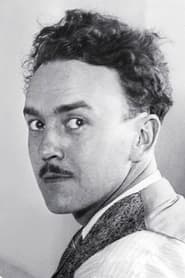
More from Ub Iwerks
View all →
More about this film
About the production
Release dateFebruary 15, 1930
BudgetApproximately $5,000 - $7,000
ProductionWalt Disney Productions
Filmed inWalt Disney Studios, Hollywood, Los Angeles, California
Autumn was the third entry in the 'Four Seasons' cycle of the Silly Symphonies series. It is historically significant as the final Disney film directed and animated by Ub Iwerks before his high-profile departure from the studio. The production faced significant tension due to a brewing contractual dispute between Walt Disney and distributor Pat Powers. Because Iwerks and musical director Carl Stalling left the studio in January 1930, the film's completion was rushed, and it was delivered to Columbia Pictures just one day before its scheduled release. This transition period marked a shift in Disney's production pipeline, as a new generation of animators had to step in to fill the void left by Iwerks.
Themes
The Cycle of NaturePreparation and IndustryCommunity and CooperationThe Inevitability of Change
Themes & topics
Silly SymphonyAutumnSquirrelsBeaversMigrationHarvestWinterSnowForest Animals
Historical background
By 1930, Autumn was shaped by the early sound era technology, distribution, and audience expectations.
Why this film matters
Autumn (1930) helps trace genre evolution, performer careers, and exhibition practices of its period.
Making of
The making of 'Autumn' was overshadowed by the professional divorce between Walt Disney and his top animator, Ub Iwerks. Iwerks, who had been the primary creative force behind the visual style of Mickey Mouse, felt undervalued and was lured away by Pat Powers with the promise of his own studio. Consequently, 'Autumn' represents the end of an era for Disney's early sound shorts. The animation team, which included future legends like Les Clark and Ben Sharpsteen, had to work under immense pressure to finalize the short as the studio's leadership was in flux. The film also showcases the studio's growing interest in 'perspective runs,' such as the ducks flying into the distance, which was a technical obsession of Iwerks at the time.
What critics said
Where contemporary reviews survive, Autumn is read against the tastes of 1930; revival screenings keep it in circulation.
Did you know?
- This was the very last Disney film that Ub Iwerks worked on as a director and lead animator before leaving to start his own studio.
- The squirrels in the film share a hybrid design, featuring Mickey Mouse's ears, Julius the Cat's eyes, and Oswald the Lucky Rabbit's body type.
- It is the third part of the 'Four Seasons' mini-series, following 'Springtime' (1929) and 'Summer' (1930), and preceding 'Winter' (1930).
- One gag involves a duck accidentally swallowing a shoelace and ending up with a boot on its head, a classic example of early animation surrealism.
- The film features 'superfluous' animation, such as detailed reflections in the water and falling leaves, which were used to enhance the atmosphere beyond simple character movement.
- The musical score by Carl Stalling includes a pastiche of light classics, including works by Edvard Grieg.
- Despite being an 'Autumn' themed film, it was released in February to satisfy the studio's distribution contract with Columbia Pictures.
- The departure of Iwerks and Stalling during this film's production led Columbia to send an angry letter to Walt Disney regarding late deliveries.
Visual style
While a black-and-white production, the film uses sophisticated grayscale shading to simulate the 'furry' texture of animals and the transparency of flowing water. Notable techniques include the use of multi-layered backgrounds to create a sense of depth as animals move through the forest. The 'camera' movements are simulated through complex panning of the background cels, particularly during the migration sequence.
Innovations
The film is noted for its early experimentation with 'overlapping action' and 'follow-through,' techniques that allowed characters to move more naturally rather than in a stiff, stop-and-go fashion. It also features some of the earliest attempts at animated perspective, specifically seen in the way the ducks fly away from the viewer toward the horizon.
Music
The soundtrack, composed by Carl Stalling, is a tightly synchronized 'mickey-mousing' score where every physical action is punctuated by a musical note. It utilizes a variety of orchestral instruments to mimic natural sounds, such as the whistling wind and the rhythmic tapping of the beavers' tails. The score draws from classical motifs to evoke the specific 'mood' of the harvest season.
Memorable scenes
- The beaver dam construction sequence, where the animals work in perfect rhythmic synchronization to the music.
- The final scene where the ducks fly south in a 'V' formation as the first snowflakes of winter begin to fall across the screen.
- The squirrel cracking open a nut only to find a dancing caterpillar inside.
What audiences thought
Audiences of the 1930s received the Silly Symphonies as high-quality 'prestige' shorts compared to the cruder animation of competitors. The lack of a recurring protagonist like Mickey Mouse was initially a hurdle for audience recognition, but the series eventually gained a following for its artistic merit and synchronized musical choreography.
Film connections
Influenced by
- The 'Four Seasons' musical tradition (Vivaldi)
- Aesop's Fables
- Early 20th-century vaudeville revues
This film influenced
- The Busy Beavers (1931)
- Bambi (1942)
- Fantasia (1940)
Film restoration
The film is well-preserved and has been digitally restored. It was included in the 'Walt Disney Treasures: More Silly Symphonies' DVD set released in 2006.
Where to watch
- Disney+
- Walt Disney Treasures: More Silly Symphonies (DVD)
- YouTube (Public Domain uploads)
- Internet Archive