Keys: Space play/pause · ←/→ 10s · F fullscreen · M mute · </> speed
Plot
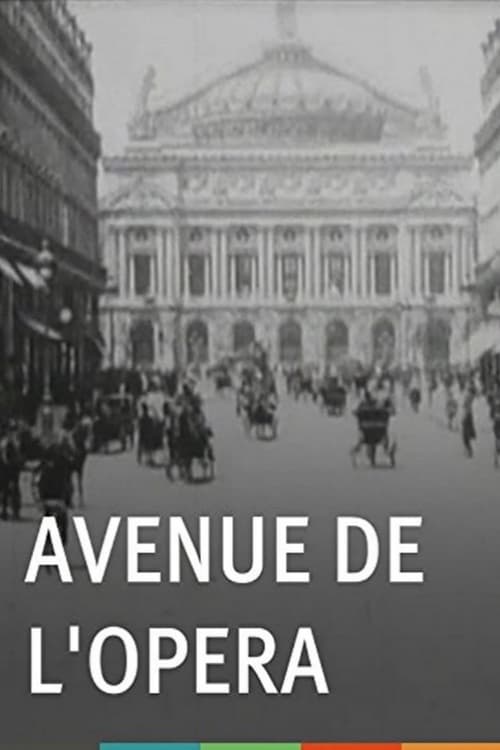
Avenue de l'Opéra is a pioneering short documentary film that captures the bustling activity on one of Paris's most famous thoroughfares. The film shows horse-drawn carriages, early automobiles, pedestrians, and street vendors moving along the Avenue de l'Opéra near the famous Paris Opera House. What makes this film particularly innovative is that it was presented in reverse, creating a surreal effect where all movement flows backward against the natural order. This simple yet brilliant technique transforms an ordinary street scene into a mesmerizing visual experiment that would have astonished audiences in 1900. The reverse motion creates an almost dreamlike quality, with carriages and people seemingly pulled backward by an invisible force, demonstrating early filmmakers' fascination with manipulating reality through the new medium of cinema.
Director
 Alice Guy-Blaché
About the Production
Release Date 1900
Budget Minimal, typical of early actualité films - likely under 100 francs
Box Office Not documented - early films were not tracked for commercial performance
Production Société des Établissements Gaumont
Filmed In Avenue de l'Opéra, Paris, France
This film was part of Alice Guy-Blaché's extensive series of 'actualités' (documentary scenes) for Gaumont. The reverse playback technique was achieved by either running the film backward through the projector or by reversing the film strips during processing. This was technically challenging for 1900 equipment and required careful planning to ensure the reverse motion would be visually coherent and engaging.
Themes & Topics
reverse motionstreet sceneParisdocumentaryexperimentalsilent filmactualitéurban lifeearly cinemahorse-drawn carriage
Historical Background
The year 1900 was pivotal in cinema history, occurring just five years after the Lumière brothers' first public screening in Paris. The film was made during the Belle Époque (1871-1914), a period of unprecedented peace, prosperity, and cultural flowering in France. Paris was the center of the artistic world, and new technologies like cinema, electricity, and the automobile were transforming daily life. The Exposition Universelle (World's Fair) was held in Paris in 1900, showcasing technological innovations and drawing millions of visitors. This context of rapid modernization and fascination with new technologies made audiences particularly receptive to cinematic experiments like reverse motion. The film also reflects the growing interest in documenting urban life as cities were being transformed by industrialization and modernization.
Why This Film Matters
Avenue de l'Opéra represents a crucial moment in the development of cinematic language, demonstrating early experimentation with film techniques beyond simple documentation. The reverse motion effect shows that filmmakers were already exploring how to manipulate time and space through cinema, concepts that would become fundamental to film art. As one of the earliest films by a female director, it holds special importance in film history, challenging the male-dominated narrative of early cinema. The film also serves as a valuable historical document of Parisian street life at the turn of the 20th century, capturing a moment of transition between horse-drawn and motorized transportation. Its experimental nature helped establish cinema as a medium for artistic expression rather than just documentary recording.
Making Of
Alice Guy-Blaché created this film while serving as the head of production at Gaumont, where she was responsible for overseeing the creation of hundreds of short films. The reverse motion technique was particularly challenging given the primitive equipment of the era - cameras were hand-cranked, and achieving smooth reverse playback required precise timing and coordination. Guy-Blaché had to consider how the movement would appear when reversed, planning the shots to ensure they would be visually interesting when played backward. The filming location on Avenue de l'Opéra was chosen for its constant activity and architectural beauty, providing a rich visual field that would become even more striking in reverse. This experimental approach demonstrates Guy-Blaché's artistic vision and technical innovation during cinema's earliest years.
What Critics Said
Contemporary critical reception of this specific film is not well-documented, as film criticism was in its infancy in 1900. However, reverse motion films were generally received as novelties and technical marvels by audiences and early film enthusiasts. Modern film historians and scholars recognize Avenue de l'Opéra as an important example of Alice Guy-Blaché's innovative approach to filmmaking. Critics today appreciate the film for its technical experimentation and its place in the broader context of early cinema's development. The film is often cited in discussions of Guy-Blaché's contributions to cinematic technique and her role as a pioneer in the field.
Did You Know?
- Alice Guy-Blaché is considered the first female film director in history and possibly the first person to make a narrative fiction film
- The reverse motion technique used in this film was highly innovative for 1900, predating more famous examples of reverse footage by several years
- Avenue de l'Opéra was one of the first streets in Paris to be modernized with wide boulevards, making it an ideal location for early film
- The film was created during the Belle Époque, a period of great artistic and technological innovation in Paris
- Guy-Blaché made over 1,000 films during her career, though many have been lost
- This film exemplifies the 'actualité' genre popular in early cinema, which showed real scenes from everyday life
- The reverse playback would have required manual cranking of the projector in the opposite direction, a difficult technical feat
- The Avenue de l'Opéra connects the Louvre to the Palais Garnier opera house, making it one of Paris's most prestigious streets
- Early films like this were often shown as part of variety programs in music halls and fairgrounds
- Guy-Blaché was the head of production at Gaumont from 1896 to 1906, making her the first woman to run a film studio
More film details Visual style, music, quotes, restoration, and more
Visual Style
The cinematography of Avenue de l'Opéra reflects the technical limitations and aesthetic choices of early cinema. The camera was likely stationary, positioned to capture a wide view of the street activity, a common approach in actualité films. The black and white imagery would have had the characteristic high contrast and grain of early film stock. The fixed camera position allows the reverse motion effect to be fully appreciated, as viewers can clearly observe the unnatural backward movement of people and vehicles. The composition takes advantage of the wide Avenue de l'Opéra, capturing both the architectural elements of the Haussmannian buildings and the dynamic street life.
Innovations
The primary technical achievement of Avenue de l'Opéra is its innovative use of reverse motion, which was highly advanced for 1900. This technique required either precise manual cranking of the projector in reverse or careful film processing to reverse the image order. The film demonstrates early understanding of cinematic manipulation of time and movement, concepts that would become fundamental to film language. The successful capture of street action with early camera equipment also represents a technical accomplishment, as filming outdoors with the bulky, hand-cranked cameras of the era required considerable skill. The film's preservation and survival for over 120 years is itself a testament to the quality of early film stock and storage techniques.
Music
As a silent film from 1900, Avenue de l'Opéra would have been accompanied by live music during its original screenings. The musical accompaniment would likely have been provided by a pianist or small ensemble, possibly playing popular tunes of the Belle Époque or improvising to match the visual spectacle. The reverse motion effect might have inspired particularly playful or whimsical musical choices. No original score exists for this film, though modern screenings are sometimes accompanied by contemporary classical music or period-appropriate compositions.
Memorable Scenes
- The entire film consists of a single memorable scene: the bustling Avenue de l'Opéra with all traffic and pedestrians moving in reverse, creating a surreal ballet of backward-flowing life that transforms ordinary street activity into a mesmerizing visual experiment
What Audiences Thought
Early audiences in 1900 would have been fascinated and possibly bewildered by the reverse motion effect, which created a magical, surreal quality that contrasted with their everyday experience. The novelty of seeing familiar street scenes played backward would have been a major attraction at fairgrounds and music halls where such films were shown. The film's short length and visual spectacle made it ideal for the variety-style programs popular with early cinema audiences. While specific audience reactions to this particular film are not recorded, reverse motion was generally a popular trick effect that demonstrated the mysterious possibilities of the new medium of cinema.
Film Connections
Influenced By
- Lumière brothers' actualités
- Georges Méliès' trick films
- Early documentary traditions
This Film Influenced
- Later reverse motion films
- Experimental cinema of the 1920s
- City symphony films of the 1920s
Film Restoration
The film is preserved in various film archives, including the Cinémathèque Française. As one of Alice Guy-Blaché's surviving works, it has been restored and digitized as part of efforts to preserve early cinema heritage. The survival rate of films from 1900 is extremely low (estimated at less than 10%), making this preserved film particularly valuable to film history.
Where to Watch
- Available on YouTube through various film history channels
- Included in some Alice Guy-Blaché retrospective collections
- Accessible through academic film archives and libraries
- Sometimes screened at film festivals focusing on early cinema
- Available on some streaming platforms specializing in classic films