
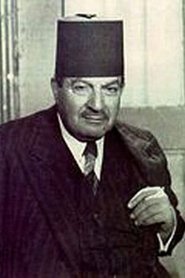



Barsoum Looking for a Job
"Two hungry friends bluff their way into a banker's feast"
Keys: Space play/pause · ←/→ 10s · F fullscreen · M mute · </> speed
About this film
Unemployed friends Sheik Metwalli and Barsoum compete for the same bank job while hunger gnaws at both men. When the director mistakes them for wealthy guests, they are wined and dined before the truth collapses. Egyptian comedy pits Muslim and Coptic pals against poverty and class pretense.
Cast & crew
More Comedy films
View all →






More about this film
About the production
Release date1923
Box officeUnknown - box office tracking was not systematically recorded in Egypt during this period
ProductionUnknown - likely an independent production as the Egyptian film industry was in its infancy
Filmed inCairo, Egypt
This film was produced during the very early days of Egyptian cinema when the industry was still establishing itself. The production would have faced significant technical challenges given the limited film infrastructure in Egypt at the time. As a silent film, it relied heavily on visual storytelling and expressive acting to convey the narrative and emotional depth.
Themes
Unemployment and economic hardshipFriendship across religious dividesClass division and social inequalityMistaken identity and social pretensionThe dignity of the poor
Themes & topics
unemploymentpovertyfriendshipbank jobmistaken identityclass differencesMuslim-Christian relationssocial commentaryeconomic hardshiparrestCairo1920s Egypt
Historical background
Made during the studio era of 1923, Barsoum Looking for a Job reached audiences through theatrical programs, fairground booths, or specialized distribution channels typical of its generation. It is the story of two friends, one a Muslim, Sheik Metwalli, and the other a Coptic Christian, Barsoum, both. Historians now read such works for what they reveal about production methods, national taste, and the expanding vocabulary of screen narrative.
Why this film matters
Archivists and programmers still screen Barsoum Looking for a Job when tracing how popular entertainment evolved. Its subject—it is the story of two friends, one a muslim, sheik metwalli, and the other a coptic christian,—gives later viewers tangible evidence of what drew crowds in the silent period. Home video, restorations, and festival sidebars keep the title circulating among students of film history.
Making of
The production of 'Barsoum Looking for a Job' took place during the formative years of Egyptian cinema, when filmmakers were working with extremely limited resources and technical equipment. Director Mohamed Bayoumi, who had experience in documentary filmmaking, brought a realistic approach to this narrative feature. The casting of both Muslim and Coptic Christian characters in leading roles was intentional, reflecting Egypt's religious diversity and promoting a message of unity. The film was shot on location in Cairo, capturing the authentic atmosphere of the city in the early 1920s. The actors would have had to rely heavily on physical expression and gestures to convey emotion, as this was a silent production. The lavish lunch scene would have been one of the more complex sequences to film, requiring multiple setups and careful choreography to show the contrast between the director's hospitality and his later anger.
What critics said
Original trade coverage treated Barsoum Looking for a Job as routine program filler rather than a landmark production—typical of steady studio output. Later criticism emphasizes preservation, stylistic comparison with contemporaries, and whatever cast or crew names later gained prominence. Contemporary writing is mostly historical: assessing completeness, influence, and place in a director's or studio's catalog.
Did you know?
- This is considered one of the earliest surviving narrative films from Egypt's silent film era
- The film's theme of Muslim-Christian friendship was quite progressive for 1923 Egyptian society
- Director Mohamed Bayoumi was one of the pioneers of Egyptian cinema, often called the 'father of Egyptian documentary'
- The film's title character Barsoum was played by Bishara Wakim, who would later become one of Egypt's most celebrated character actors
- The film addresses themes of unemployment and economic hardship that were particularly relevant in post-WWI Egypt
- Early Egyptian cinema often focused on social issues, and this film is a prime example of that tradition
- The film's depiction of class division and mistaken identity follows patterns established in European comedy films of the era
- Very few Egyptian films from this period survive, making this particular work historically significant
- The arrest at the film's conclusion was likely meant as social commentary on the treatment of the poor in Egyptian society
- This film predates what many consider the 'golden age' of Egyptian cinema by several decades
Awards & recognition
- No awards were documented for this film - the Egyptian film award system did not exist in 1923
Visual style
As a silent film from 1923, the cinematography would have relied on basic camera techniques available at the time. The visual style likely featured static shots with occasional camera movements following the conventions of early cinema. The filmmakers would have used lighting to create contrast between the poverty of the protagonists and the wealth of the bank director's home. Close-ups would have been used to capture the actors' expressions, crucial for conveying emotion in silent cinema. The street scenes would have provided authentic views of 1920s Cairo, making the film historically valuable for its documentary aspects. The cinematography would have been black and white, using the available film stocks of the period.
Innovations
While the film did not feature groundbreaking technical innovations by international standards, it represented significant achievements for the nascent Egyptian film industry. The production managed to create a coherent narrative feature-length film at a time when most Egyptian productions were short documentaries or simple scenes. The filmmakers successfully adapted cinematic storytelling techniques to address specifically Egyptian social and cultural themes. The film's existence demonstrated that Egyptian filmmakers could work with limited technical resources to produce content that resonated with local audiences. The coordination of multiple locations and complex scenes, particularly the lunch sequence, showed growing sophistication in Egyptian film production capabilities.
Music
As a silent film, there was no recorded soundtrack. However, like most silent films of the era, it would have been accompanied by live music during theatrical screenings. In Egypt, this typically meant either a piano accompanist or, in larger theaters, a small orchestra. The music would have been chosen to match the mood of each scene - lighter, comedic music for the mistaken identity scenes, and more dramatic music for the moments of hardship and the tragic conclusion. Some theaters in major Egyptian cities might have used traditional Egyptian instruments alongside Western ones to create a unique hybrid sound appropriate for the local setting.
Famous quotes
No specific quotes are documented from this silent film, as intertitles from early Egyptian cinema are not well-preserved in film archives
Memorable scenes
- The mistaken identity sequence where the bank director believes the unemployed friends are wealthy businessmen
- The lavish lunch scene where the protagonists enjoy their first good meal in a long time
- The dramatic reversal when the truth is revealed and the director chases them from his home
- The final poignant scene where the friends are arrested while resting on the sidewalk after their meal
What audiences thought
Audiences in 1923 Egypt reportedly responded positively to the film's depiction of familiar characters and situations. The story of unemployment and economic hardship resonated strongly with viewers who were experiencing similar challenges in post-WWI Egypt. The comedy elements, particularly the mistaken identity plot, provided entertainment while the social commentary gave the film substance. The friendship between the Muslim and Coptic Christian characters was appreciated as a positive representation of Egyptian unity. Contemporary accounts suggest that audiences found the film's ending particularly powerful, if tragic, as it reflected the harsh realities faced by the poor in Egyptian society. The film's success helped demonstrate that there was an audience for locally-produced Egyptian films with relevant social themes.
Film connections
Influenced by
- European silent comedy films of the 1920s
- Egyptian theatrical traditions
- Social realist literature from the period
- Early American silent films dealing with social issues
This film influenced
- Later Egyptian social comedy films
- Egyptian films addressing class and economic issues
- Egyptian films featuring interfaith friendships
Film restoration
The preservation status of this 1923 film is uncertain, which is typical for Egyptian films from this period. Many early Egyptian films have been lost due to poor storage conditions, political upheavals, and the lack of a systematic film preservation program in Egypt during the early decades of cinema. If copies survive, they would likely be in the archives of the Egyptian Film Organization or international film archives that specialize in early cinema. The film's historical significance makes it a priority for preservation efforts, but the technical challenges of restoring silent films from this period are substantial.
Where to watch
- This film is extremely rare and likely not commercially available. If it survives, it might be accessible through specialized film archives, particularly the Egyptian Film Organization's archives in Cairo, or through academic institutions specializing in early Arab cinema. Film historians and researchers might be able to view it through special arrangements with these institutions. The film is not available on commercial streaming platforms or home video formats due to its age and rarity.