
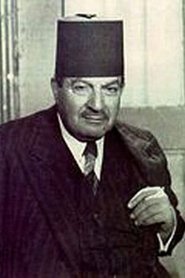
Films
1 film
About Bishara Wakim
The 1923 film Barsoum Looking for a Job is the only title linked here for Bishara Wakim. His career, though brief, coincided with the birth of the Egyptian film industry, which was among the first in the Middle East and North Africa region. Wakim appeared in 'Barsoum Looking for a Job' (1923), one of the earliest Egyptian narrative films, during a time when silent films were the dominant medium. His participation in this early production places him among the foundational figures of Egyptian cinema. The film itself was significant as it represented one of the first attempts by Egyptian filmmakers to create locally-produced content for Egyptian audiences. While his filmography appears limited to this single known work, his contribution to this early cinematic endeavor marks him as part of the generation that helped establish Egypt's film industry, which would later become prolific in the Arab world. The limited documentation of his career reflects the challenges of preserving film history from this era of Egyptian cinema.
The Craft
Milestones
- Appeared in 'Barsoum Looking for a Job' (1923), one of Egypt's earliest narrative films
- Participated in the foundational era of Egyptian cinema
- Contributed to the development of indigenous Egyptian filmmaking
Best Known For
Iconic Roles
Must-See Films
Why They Matter
Impact on Culture
Bishara Wakim's contribution to Egyptian cinema, though documented in only one known film, represents the collective effort of early Egyptian performers who helped establish the foundation of what would become. His participation in 'Barsoum Looking for a Job' during the silent era places him among the pioneers who demonstrated that Egyptian stories and Egyptian actors could successfully create films for local audiences. This early period was crucial for developing an indigenous film culture that would later flourish and compete with imported films. The work of actors like Wakim in the 1920s helped prove the viability of a national cinema that could reflect Egyptian culture, language, and social realities.
Lasting Legacy
Bishara Wakim's legacy is tied to the birth of Egyptian cinema and the silent film era in the Middle East. While his individual contribution may be difficult to trace in detail due to limited documentation from this period, his appearance in one of Egypt's earliest narrative films marks him as part of the foundational generation of Egyptian actors. The preservation of his name in film historical records, however minimal, ensures recognition of the many performers who participated in cinema's early development in Egypt. His work represents the countless artists who helped establish film as a cultural medium in Egypt, paving the way for the golden age of Egyptian cinema that would emerge in the following decades.
Who They Inspired
Due to the limited documentation of Bishara Wakim's career and the early period in which he worked, specific influences on other performers or filmmakers cannot be definitively traced. However, as an early participant in Egyptian cinema, he contributed to the establishment of a tradition of Egyptian actors working in Egyptian-produced films, which would influence generations of performers who followed. The very existence of Egyptian actors in Egyptian films during this period helped create a model for national cinema that would be emulated throughout the Arab world.
Off Screen
Very little information is available about Bishara Wakim's personal life, which is common for actors from the very early period of Egyptian cinema when documentation was limited and many performers worked anonymously or with minimal public recognition.
Did You Know?
- Appeared in one of the earliest known Egyptian narrative films from the silent era
- His film 'Barsoum Looking for a Job' (1923) represents a effort in Egyptian cinema
- The 1920s marked the birth of the Egyptian film industry, making Wakim one of its first practitioners
- Early Egyptian cinema often faced challenges in funding, distribution, and film preservation
- Silent films in Egypt typically featured intertitles in Arabic to serve local audiences
- Many early Egyptian films from the 1920s have been lost due to poor preservation conditions
- Egypt would become
- The name 'Barsoum' in the film title suggests a Coptic Egyptian character, reflecting Egypt's diverse society
Frequently Asked Questions
Who was Bishara Wakim?
Screen credits include 'Barsoum Looking for a Job' (1923), one of Egypt's earliest narrative films. He was among the performers who helped establish Egyptian cinema during its formative years in the early 1920s.
What films is Bishara Wakim best known for?
Titles linked here include Barsoum Looking for a Job (1923).
When was Bishara Wakim born and when did he die?
Specific birth and death dates for Bishara Wakim are not documented in available film historical records, which is common for many early Egyptian cinema actors from the 1920s when documentation was limited.
What awards did Bishara Wakim win?
No awards or formal recognitions for Bishara Wakim have been documented, which reflects the early period of Egyptian cinema when formal award systems for film achievement had not yet been established in the region.
What was Bishara Wakim's acting style?
Specific details about Bishara Wakim's acting style are not available in historical records, but as a silent film actor in early Egyptian cinema, he would have used the exaggerated gestures and facial expressions typical of the silent era to convey emotions and story elements.
What was the significance of 'Barsoum Looking for a Job' (1923)?
The film is historically significant as one of Egypt's earliest narrative films, representing the efforts of Egyptian filmmakers to create locally-produced content for Egyptian audiences during the silent era of the early 1920s.