
Keys: Space play/pause · ←/→ 10s · F fullscreen · M mute · </> speed
Plot
The film follows a group of hunters in Pärnumaa county as they embark on a bear hunting expedition. The comedic narrative centers on the hunters' misadventures and humorous attempts to track down a bear in the Estonian countryside. Various slapstick situations arise as the bumbling hunters encounter obstacles and misunderstandings during their pursuit. The bear itself proves to be more clever than the hunters, leading to a series of entertaining confrontations. The film culminates in a comedic resolution where the hunters' efforts result in unexpected and amusing outcomes rather than the successful capture of their prey.
Director
 Johannes Pääsuke
About the Production
Release Date 1914
Production Tartu Film Studio
Filmed In Pärnumaa county, Estonia
This was Johannes Pääsuke's first narrative film project, created using early cinema equipment. The film was shot on location in Pärnumaa county, making it one of the earliest examples of location filming in Estonian cinema. The production faced significant challenges due to the primitive film technology available in Estonia at the time and the lack of established film infrastructure in the region.
More Comedy Films
View all →






Themes & Topics
Historical Background
The film was created in 1914, a pivotal year in European history that marked the beginning of World War I. Estonia was part of the Russian Empire at this time, and the region was experiencing growing cultural nationalism and interest in preserving Estonian identity through art and media. The emergence of cinema coincided with the Estonian national awakening movement, making Pääsuke's work particularly significant for cultural preservation. The film industry was in its infancy globally, and Estonia was just beginning to develop its own cinematic voice amidst the political tensions that would soon engulf Europe.
Why This Film Matters
As Estonia's first narrative film, 'Bear Hunt in Pärnumaa' represents the birth of Estonian cinema and marks a crucial milestone in the country's cultural history. The film demonstrated that Estonian stories and settings could be captured on film, paving the way for future Estonian filmmakers. It also served as an early example of Estonian humor and storytelling traditions being adapted to the new medium of cinema. The film's focus on local Estonian life and landscapes helped establish a sense of national identity through cinema, which would become increasingly important during Estonia's struggle for independence.
Making Of
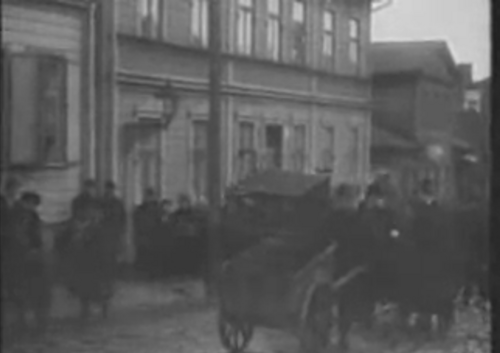
Johannes Pääsuke, a young photographer turned filmmaker, undertook this ambitious project with limited resources and experience. The film was created during a time when Estonia had virtually no film industry, forcing Pääsuke to be innovative in his approach. He had to transport heavy camera equipment through rural Pärnumaa county, often by horse-drawn carriage. The cast likely consisted of local residents rather than professional actors, as there was no established acting community in Estonia at the time. The production faced numerous technical challenges, including the need to manually crank the camera and change film reels frequently in outdoor conditions.
What Critics Said
Contemporary critical reception is difficult to document due to the lack of established film criticism in Estonia in 1914. However, the film was noted as a technical achievement for its time and place. Modern film historians and critics recognize it as a groundbreaking work that established the foundation for Estonian cinema. The film is now studied for its historical significance rather than its artistic merits, as it represents the nascent stages of Estonian filmmaking.
Did You Know?
- This is widely recognized as the first Estonian narrative feature film
- Director Johannes Pääsuke was only 21 years old when he made this film
- Pääsuke was also a photographer and ethnographer, documenting Estonian culture
- The film was created just before World War I, which would dramatically affect Estonia
- Only fragments of the original film are believed to survive today
- Pääsuke died in 1918 at age 25, making his filmography tragically brief
- The film was shot on 35mm film, which was expensive and difficult to obtain in Estonia at the time
- It was produced during the period when Estonia was part of the Russian Empire
- The bear in the film was likely a trained animal, as wild bear hunting would have been too dangerous to film
- Pääsuke went on to make several documentaries about Estonian life before his early death
More film details Visual style, music, quotes, restoration, and more
Visual Style
The cinematography was typical of early 1910s filmmaking, utilizing static camera positions and long takes. The black and white film stock of the era would have created high contrast images. Pääsuke, coming from a photography background, likely paid careful attention to composition and lighting within the technical constraints of the time. The outdoor location shooting presented both opportunities for natural lighting and challenges in controlling exposure conditions.
Innovations
The film represents a significant technical achievement for its time and location, being one of the first narrative films produced in Estonia with limited resources and infrastructure. Pääsuke's ability to create a coherent narrative film in these conditions demonstrated considerable technical skill. The location filming in rural Estonia was particularly ambitious for the period and required innovative solutions to logistical challenges.
Music
As a silent film, it would have been accompanied by live music during theatrical screenings, typically piano or organ music. The specific musical score or accompaniment is not documented, but it would have followed the common practice of the era with mood-appropriate music that enhanced the comedic elements of the story.
Memorable Scenes
- The opening scene showing hunters preparing for their expedition
- Comical chase sequences between hunters and the bear
- Final resolution where the hunters' plans go awry
What Audiences Thought
Early audiences in Estonia were likely fascinated by the novelty of seeing local people and locations on film. The comedy format would have made the film accessible to viewers of all backgrounds. Contemporary reports suggest that audiences were particularly entertained by seeing familiar Estonian landscapes and situations captured in the new medium of cinema. The film's status as a local production would have generated significant interest and pride among Estonian viewers.
Film Connections
Influenced By
- Early European comedy films
- Slapstick traditions of silent era
This Film Influenced
- Subsequent Estonian narrative films of the 1920s and 1930s
Film Restoration
The film is considered partially lost, with only fragments surviving in various film archives. Some footage is preserved in the Estonian Film Archives and other European film institutions, but the complete film no longer exists in its original form. Efforts have been made to restore and preserve the surviving fragments of this historically significant work.
Where to Watch
- Estonian Film Archives (for research purposes)
- Occasional screenings at film festivals specializing in silent or Baltic cinema
- Museum exhibitions about Estonian film history