Bobby Bumps and the Stork
"Hand enters the cartoon"
Keys: Space play/pause · ←/→ 10s · F fullscreen · M mute · </> speed
About this film
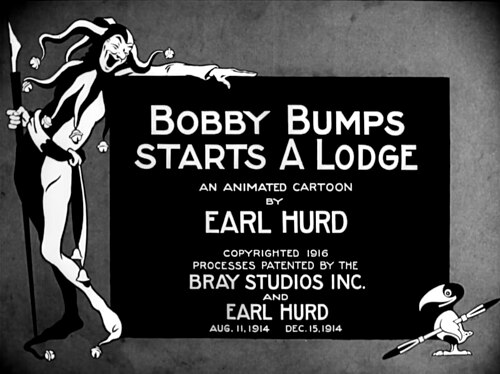
Bray cartoon Bobby Bumps interacts with live-action hand in a stork delivery gag. Silent cartoon. Like Max Fleischer's "Out Of The lnkwell" series, features various interactions between cartoon characters and a human hand.
Cast & crew
More films like this

More Animation films
View all →


More from Earl Hurd
View all →
More about this film
About the production
Release date1916-07-15
ProductionBray Productions
Filmed inNew York, New York
This film was part of the Bobby Bumps series created by Earl Hurd, which was one of the first successful animated series. The production utilized the patented cel animation process co-invented by Hurd, allowing for more efficient animation production. The film featured the innovative technique of showing the animator's hand interacting with the cartoon character, predating similar techniques used by Max Fleischer.
Themes
Innovation and experimentationThe magic of animationChildhood mischiefThe relationship between creator and creationVisual comedy and slapstick humor
Themes & topics
storkanimationsilent filmcartoonmischievous boyanimator's handearly animationBray Productionscel animationshort film
Historical background
1916 placed Bobby Bumps and the Stork within United States cinema as Bray Productions navigated wartime markets, immigration audiences, and the shift from intertitles to sound.
Why this film matters
Archivists revisit Bobby Bumps and the Stork (1916) for Earl Hurd style, genre norms at Bray Productions, and the exhibition context of 6 programming.
Making of
Earl Hurd created Bobby Bumps as one of animation's first recurring characters, working at the pioneering Bray Productions studio. The production utilized the revolutionary cel animation technique that Hurd co-patented, which involved drawing characters on transparent celluloid sheets and photographing them over static backgrounds. The animator's hand visible in the film was actually Hurd's own, demonstrating the interactive nature of early animation. The studio operated on an assembly-line system that was revolutionary for its time, with different artists handling different aspects of production. The stork character was likely chosen for its visual appeal and comedic potential, as birds were relatively easy to animate and provided opportunities for flight gags.
What critics said
Retrospective writing on Bobby Bumps and the Stork stresses craft by Earl Hurd, print survival, and repertory value rather than opening-week gross alone.
Did you know?
- Earl Hurd co-held the patent for cel animation along with J.R. Bray, which revolutionized the animation industry
- The Bobby Bumps series was one of the first animated series to feature a recurring character
- The technique of showing the animator's hand interacting with characters was innovative for its time
- Bray Productions was one of the first professional animation studios in the United States
- The film was released during World War I, a period when animation was gaining popularity as entertainment
- Bobby Bumps was known for his mischievous personality and signature bowler hat
- The series ran from 1915 to 1925, producing numerous shorts
- This film represents early experimentation with meta-narrative in animation
- The stork was a popular character in early animation, often associated with baby delivery gags
- The preservation of early Bray films is limited, making surviving copies particularly valuable
Visual style
The cinematography of Bobby Bumps and the Stork utilized the standard black and white film stock of the era, captured through frame-by-frame photography of cels. The visual style featured clean line drawings typical of early American animation, with simple but effective character designs. The interaction between the animated world and the live-action hand created a unique visual dynamic that was innovative for its time. The film employed basic camera techniques, as the focus was on the animation itself rather than complex cinematography. The stork character would have featured fluid movement to showcase the animators' skill and the possibilities of the cel animation process.
Innovations
The film's primary technical achievement was its use of cel animation, a process co-patented by Earl Hurd that revolutionized the animation industry. This technique allowed for more efficient production by separating moving elements from static backgrounds. The innovative inclusion of the animator's hand interacting with the animated world demonstrated early experimentation with meta-fictional storytelling in animation. The film also showcased the assembly-line production system developed at Bray Productions, which would become the standard model for animation studios. The smooth movement of the stork character demonstrated the growing sophistication of animation techniques in capturing realistic motion.
Music
As a silent film, Bobby Bumps and the Stork would have been accompanied by live musical performance during theatrical exhibition. The typical score would have been provided by a theater pianist or organist, using standard compilation scores available for animated shorts. The music would have been synchronized with the on-screen action, with lively, upbeat tempos during chase sequences and slower, more playful melodies during quieter moments. The lack of synchronized dialogue meant that the animation had to rely heavily on visual storytelling and expressive character movement to convey the narrative.
Memorable scenes
- The opening sequence showing the animator's hand drawing Bobby Bumps into existence
- The comical chase sequence between Bobby and the stork
- The moment when the animator's hand intervenes in the cartoon action
- The final scene where Bobby and the stork reach a humorous resolution
What audiences thought
Audiences in 1916 responded enthusiastically to the Bobby Bumps series, finding the animated shorts delightful and novel. The interactive elements with the animator's hand were particularly popular, as they offered viewers a behind-the-scenes glimpse into the magic of animation. The character's mischievous antics resonated with audiences of all ages, making Bobby Bumps a recognizable figure in early cinema. The series' success led to its continued production for nearly a decade, demonstrating sustained audience interest in the character and his adventures.
Film connections
Influenced by
- Winsor McCay's Gertie the Dinosaur
- Early newspaper comic strips
- Vaudeville comedy routines
- Silent film slapstick comedy
This film influenced
- Max Fleischer's Out of the Inkwell series
- Felix the Cat cartoons
- Early Disney shorts
- Mickey Mouse cartoons
Film restoration
Like many early animated shorts, the preservation status of Bobby Bumps and the Stork is uncertain. Some films from the Bobby Bumps series have survived through archives and private collections, while others may be lost. The Library of Congress and other film archives hold some Bray Productions films, but comprehensive preservation efforts for early animation were not established until decades later. Film preservationists continue to search for and restore surviving prints of early animated works.
Where to watch
- Library of Congress archives
- Film preservation society screenings
- Animation history collections
- Some early animation compilation DVDs
- Online animation archives specializing in silent era cartoons