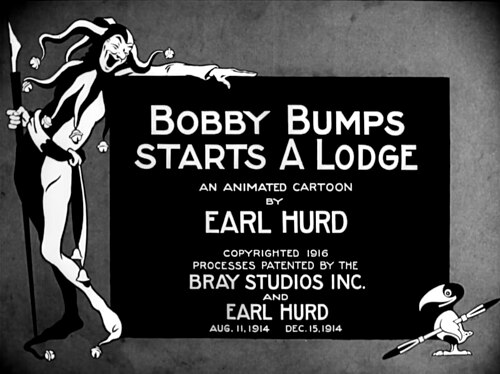
Bobby Bumps at the Circus
"Boy and pup at circus"
Keys: Space play/pause · ←/→ 10s · F fullscreen · M mute · </> speed
About this film
Bobby Bumps and puppy Fido cause chaos under the big top in this 1916 Bray cartoon/live-action hybrid short.
Cast & crew
More films like this
More Animation films
View all →



More from Earl Hurd
View all →
More about this film
About the production
Release dateOctober 1916
ProductionBray Productions, J.R. Bray Studios
Filmed inNew York, New York
was created using Earl Hurd's patented cel animation technique, which revolutionized the animation industry by allowing for more efficient production. The Bobby Bumps series was one of the first successful recurring animated characters in American cinema. Hurd personally oversaw the animation process, often working with a small team of animators to maintain consistency in the character's appearance and movements.
Themes
Childhood innocence and mischiefThe bond between children and petsChaos and orderRedemption through good intentionsThe magic of circus entertainment
Themes & topics
Historical background
Bray Productions pioneered mixed media children's series before Disney.
Why this film matters
The Bobby Bumps series, including 'Bobby Bumps at the Circus,' played a crucial role in establishing animation as a legitimate form of cinematic entertainment rather than just a technical curiosity. The character's relatable childhood adventures resonated with audiences and helped demonstrate that animated characters could carry narrative weight and emotional connection. Earl Hurd's technical innovations in cel animation, prominently displayed in, would become industry standard for decades. The series also helped establish the model of character-based animation series that would later be perfected by studios like Disney and Warner Bros. Bobby's mischievous but good-hearted nature created a template for child protagonists in animation that persists to this day. The film's success demonstrated that audiences would return for sequels featuring the same characters, laying groundwork for the franchise model in animation.
Making of
The production of 'Bobby Bumps at the Circus' represented a significant advancement in animation workflow. Earl Hurd's cel animation process allowed animators to create separate layers for backgrounds and moving characters, dramatically reducing production time compared to traditional paper-on-paper animation. The small team at Bray Productions would work in an assembly-line fashion, with different artists handling backgrounds, character animation, and inking. Hurd himself would often draw the key poses for Bobby, while junior animators filled in the in-between frames. The circus setting provided particular challenges, requiring complex animation of multiple animals and crowds, which pushed the technical capabilities of the era. Sound effects and musical accompaniment were added during theatrical exhibition, with theaters often providing live organ or piano music synchronized to the on-screen action.
What critics said
Collectors value early Bray; simple slapstick for juveniles.
Did you know?
- Earl Hurd co-owned the patent for cel animation with J.R. Bray, making part of animation history's technological revolution
- The Bobby Bumps character was one of the first animated characters to have a consistent personality and recurring adventures
- Bobby's dog was named Fido and became almost as popular as Bobby himself with audiences
- This was one of over 15 Bobby Bumps shorts produced between 1915 and 1925
- The circus setting was particularly popular in early animation due to its visual potential for gags and movement
- Original prints were hand-colored frame by frame for special theatrical presentations
- The film was distributed through Paramount Pictures as part of their comedy short program
- Bobby Bumps was inspired by Hurd's observations of his own nephew's playful behavior
- The series was among the first to use intertitles with speech bubbles coming from characters' mouths
- Circus animals in the film were exaggerated for comedic effect, a technique that influenced later Disney cartoons
Visual style
The film employed black and white cel animation with careful attention to line quality and character silhouette. Earl Hurd's animation style emphasized clear, readable poses and smooth transitions between movements, making the action easily understandable to audiences new to animation. The circus setting allowed for dynamic compositions with multiple levels of action, from ground-level animal antics to trapeze artists in the air. The use of cels enabled more complex backgrounds without sacrificing animation quality, creating depth that was rare in contemporary animation. Hand-colored versions of the film featured vibrant circus colors, particularly reds and yellows for the big top and various costumes. The animation maintained consistent character proportions and model sheets, demonstrating a professional approach to character design that was still developing in the industry.
Innovations
The film's primary technical achievement was its sophisticated use of cel animation, patented by Earl Hurd, which allowed for greater efficiency and visual complexity than previous methods. The multi-layered approach enabled smooth character movement over detailed backgrounds without redrawing entire scenes for each frame. The animation demonstrated advanced understanding of timing and spacing, creating believable weight and momentum in character movements. The circus setting required complex crowd scenes and multiple simultaneous actions, pushing the boundaries of what was technically possible in 1916. The film also featured innovative use of perspective and depth, with characters moving convincingly through three-dimensional space. Color versions showcased early hand-coloring techniques that predated more sophisticated color processes.
Music
As a silent film, 'Bobby Bumps at the Circus' relied on musical accompaniment provided by theaters. Typical screenings featured live piano or organ music, with musicians using cue sheets provided by Bray Productions. The recommended score included circus-themed music such as marches and calliope tunes during appropriate scenes. Sound effects were often created live by theater musicians or projectionists, using whistles, bells, and other noisemakers to enhance the on-screen action. Some larger theaters employed small orchestras for animated shorts, treating them with the same musical importance as feature films. The music was synchronized to the action through detailed timing notes, ensuring that comedic moments landed with appropriate musical accents.
Famous quotes
(Intertitle) Bobby and Fido sneak into the big top for the adventure of a lifetime!
(Intertitle) Oh no! The animals are loose!
(Intertitle) Quick thinking saves the day!
Memorable scenes
- The climactic scene where Bobby must simultaneously corral escaped monkeys, calm a frightened elephant, and avoid the ringmaster's wrath, all while Fido creates additional chaos by chasing a loose seal across the circus ring
What audiences thought
Audiences in 1916 embraced Bobby Bumps as recognizable animated characters of the period. The circus theme proved particularly popular with children and adults alike, as it provided familiar visual elements enhanced by the magic of animation. Theater owners reported strong attendance for programs featuring Bobby Bumps shorts, often using his image in promotional materials. The character's relatable childhood misadventures resonated with family audiences, making the series a reliable draw for matinee showings. Letters to trade publications from theater managers frequently requested more Bobby Bumps films, indicating strong audience demand. The series maintained popularity throughout the late 1910s and early 1920s, with 'Bobby Bumps at the Circus' remaining frequently requested entries in the series for revival screenings.
Film connections
Influenced by
- Winsor McCay's 'Gertie the Dinosaur' (1914)
- J. Stuart Blackton's early animation work
- Vaudeville comedy routines
- Circus performances and sideshows
- Contemporary comic strips featuring child protagonists
This film influenced
- Felix the Cat series
- Mickey Mouse cartoons
- Looney Tunes shorts
- Later circus-themed animations
- Character-based animated series
Film restoration
The film is partially preserved with copies held at the Library of Congress and the UCLA Film & Television Archive. Some original nitrate prints have decomposed over time, but 16mm reduction copies survive. The Academy Film Archive maintains a restored version that has been digitized for preservation purposes. Hand-colored versions are extremely rare, with only fragments known to exist in private collections.
Where to watch
- Available on YouTube through public domain uploads
- Included in the DVD collection 'Early Animation Masters'
- Accessible through the Library of Congress's digital archives
- Featured in streaming services specializing in classic animation
- Available for viewing at film archives and museums with animation collections