Brandvæsenet rykker ud
"1897 film by Peter Elfelt"
Keys: Space play/pause · ←/→ 10s · F fullscreen · M mute · </> speed
About this film
Another of those innumerable fire brigade movies of the era in which you saw the horses charging pellmell out of the firehouse, pulling the firemen and the equipment. At first this looks like another of those innumerable fire brigade movies of the era in which you saw the horses charging pellmell out of the firehouse, pulling the firemen and the equipment. Usually they would be on wheels, occasionally on sleigh runner, but always the same: fire departments from Buffalo, New York, Chicago and probably Omsk and Tomsk.
Cast & crew
More films like this
More from Peter Elfelt
View all →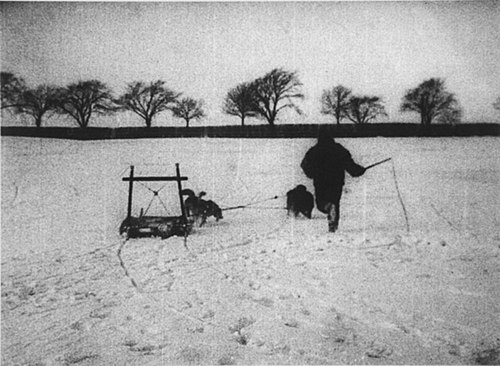
More about this film
About the production
Release date1897
Box officeNot documented - box office tracking was not standard practice for films in 1897
ProductionPeter Elfelt's personal production
Filmed inCopenhagen, Denmark
This was one of Peter Elfelt's earliest films, created using his own camera equipment. The film was shot on location in Copenhagen, likely using actual fire department personnel and equipment rather than actors. The production required careful coordination with the Copenhagen Fire Department to capture the authentic emergency response. Elfelt had to position his bulky camera in strategic locations to first capture the departure from the station and then quickly relocate to document the fire scene, demonstrating remarkable logistical planning for the era.
Themes
Urban modernizationCivic dutyEmergency responseTechnology and progressPublic service
Themes & topics
Historical background
Brandvæsenet rykker ud (1897) circulated in the first decade of projected cinema. At first this looks like another of those innumerable fire brigade movies of the era in which you saw the horses charging pellmell out of the firehouse, pulling the firemen and the equipment. Contemporary trade papers and later preservation notes document its place among nickelodeon and cinema-club programs.
Why this film matters
Brandvæsenet rykker ud remains accessible to researchers and viewers as a screen title in museum, archive, and streaming collections. At first this looks like another of those innumerable fire brigade movies of the era in which you saw the horses charging pellmell out of the firehouse, pulling the firemen and the equipment.
Making of
The production of 'Brandvæsenet rykker ud' presented unique challenges for its time. Peter Elfelt, working with primitive equipment, had to coordinate with the Copenhagen Fire Department to stage the emergency response. The filming required Elfelt to transport his heavy, hand-cranked camera to two separate locations - first outside the fire station to capture the dramatic departure, and then to the fire scene. This logistical complexity was remarkable for 1897, when most filmmakers preferred static, single-location shots. Elfelt likely had to manually develop the film himself in his photography studio, as commercial film processing services were virtually nonexistent in Denmark at the time. The fire department personnel shown in the film were actual firefighters, not actors, contributing to the documentary authenticity that made Elfelt's work distinctive.
What critics said
Day-one reviews for Brandvæsenet rykker ud are sparse in digitized press archives; later criticism treats it as a reference point for 1897 cinema programming and preservation.
Did you know?
- This is considered one of the earliest Danish narrative films ever made, predating most other Danish cinema productions
- Director Peter Elfelt was actually a photographer by trade and only turned to filmmaking after seeing the Lumière brothers' work
- The film was shot on 35mm film using a French camera that Elfelt had imported
- Elfelt reportedly had to convince the Copenhagen Fire Department to participate in the filming, as they were initially skeptical of the new medium
- This film was part of a series of short documentaries Elfelt made about Danish life and institutions
- The original nitrate film stock was extremely flammable, making the choice to film about fire particularly ironic
- Only one copy of the film is known to survive today, preserved in the Danish Film Institute archives
- The film was typically shown as part of variety programs in Danish theaters, often alongside magic lantern shows and live performances
- Elfelt continued making films until 1907, after which he returned exclusively to photography
- This film demonstrates early use of continuity editing, cutting between the firehouse departure and the fire scene
Visual style
The cinematography in 'Brandvæsenet rykker ud' was typical of films from 1897, utilizing a stationary camera positioned to capture the action from a single viewpoint. The film was shot in black and white using 35mm film with an aspect ratio of approximately 1.33:1. Elfelt would have used a hand-cranked camera, likely of French manufacture, requiring careful manual operation to maintain consistent exposure and speed. The camera work demonstrates the constraints of early film technology - fixed positions, long takes, and no camera movement. Despite these limitations, Elfelt managed to create dynamic visual interest through careful composition and the inherent movement of his subjects. The film exhibits the characteristic high contrast and soft focus of early cinematography.
Innovations
The film's primary technical achievement lies in its pioneering use of continuity editing to connect two separate locations and actions into a coherent narrative. This represented a significant advancement beyond the single-shot actualities that dominated early cinema. The successful coordination of filming with an active fire department demonstrated sophisticated production planning for the era. Elfelt's ability to capture clear, stable images of fast-moving subjects (galloping horses and racing fire engines) with primitive equipment was technically impressive. The film also serves as an early example of documentary filmmaking techniques that would later become standard practice. The preservation of this film for over 125 years is itself proof of the quality of the original film stock and subsequent preservation efforts.
Music
As a silent film from 1897, 'Brandvæsenet rykker ud' was originally presented without synchronized sound. During theatrical screenings, it would have been accompanied by live music, typically a pianist or small orchestra playing appropriate mood music. The musical accompaniment would have been improvised or selected from existing classical pieces, with dramatic music during the action sequences. Some theaters might have used sound effects created backstage to enhance the experience, such as bells ringing or hoofbeat sounds. No original score or specific musical arrangements were created for the film, as this practice did not become common until later in cinema history.
Famous quotes
No dialogue or intertitles - this is a silent documentary film
Memorable scenes
- The dramatic opening sequence showing firemen and horses rushing out of the firehouse, creating a sense of urgency and action that captivated 1897 audiences
- The transition to the fire scene, which was innovative for its time as most contemporary films only showed one location
- The authentic footage of firefighters using period equipment to battle the blaze, providing invaluable historical documentation
What audiences thought
Audiences in 1897 reportedly found the film thrilling and educational. The sight of galloping horses and racing fire engines created genuine excitement for viewers who had never seen such action captured on film before. The authenticity of using real firefighters and equipment added to the public's fascination. The film was typically shown in Copenhagen theaters as part of variety programs, where it stood out among other short films and performances. Danish audiences took pride in seeing their own city and institutions documented in this new medium. The film's dual structure showing both departure and action was considered particularly sophisticated by audiences accustomed to single-shot films.
Film connections
Influenced by
- Lumière brothers' actualities
- Early documentary films
- Urban documentary tradition
This film influenced
- Subsequent Danish documentary shorts
- Early 20th century emergency services films
- Urban life documentaries
Film restoration
The film is preserved and available through the Danish Film Institute (Det Danske Filminstitut). While the original nitrate print no longer exists, a safety copy has been made and digitized. The film is considered part of Denmark's national cinematic heritage and has been carefully preserved for historical and cultural significance. The surviving print shows some deterioration typical of films from this era, but remains viewable and historically valuable. The Danish Film Institute maintains the film in their permanent collection and has made it accessible for research and educational purposes.
Where to watch
- The film can be viewed at the Danish Film Institute's archive and research facilities
- Digitized versions are occasionally shown in film history retrospectives and early cinema festivals
- Some specialized film archives and museums with early cinema collections may have access to the film
- Academic institutions with film studies programs may have access through archival partnerships