Carmencita
"Twenty-one seconds of Spanish footwork on film."
Keys: Space play/pause · ←/→ 10s · F fullscreen · M mute · </> speed
About this film
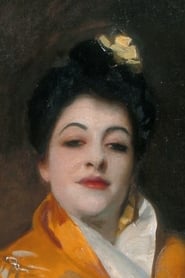
Spanish dancer Carmencita performs her vaudeville routine for Edison's camera, twirling a full skirt and executing kicks and arm gestures against a black backdrop. She is widely credited as the first woman filmed in an American motion picture.
Cast & crew
More films like this
More Documentary films
View all →

More from William K.L. Dickson
View all →

More about this film
About the production
Release dateMarch 1894
Box officeNot applicable - produced for Kinetoscope exhibition, not theatrical release
ProductionEdison Manufacturing Company
Filmed inEdison's Black Maria Studio, West Orange, New Jersey
Filmed in Edison's revolutionary Black Maria studio, which featured a retractable roof to maximize natural sunlight. The studio was built on a circular turntable that could be rotated to follow the sun's path throughout the day. Carmencita was filmed against a black backdrop to emphasize her movements and costume. The entire production process was experimental, as Edison's team was still developing the techniques for motion picture recording and exhibition.
Themes
Themes & topics
firstwomanappearfrontedisonmotionpicturecamera
Historical background
William K.L. Dickson recorded Carmencita at the Black Maria in March 1894 after she had been drawing crowds at Koster & Bial's Music Hall.
Why this film matters
The dance actuality helped establish filmed performance as Kinetoscope content and preserved Carmencita's stage persona.
Making of
Production details for Carmencita are sparse in surviving records. Direction is attributed to William Kennedy Dickson.
What critics said
New York papers praised the clarity of her movement; the Library of Congress later selected the film for preservation.
Did you know?
- Directed by William Kennedy Dickson.
- Production country: United States.
- Release year commonly listed as 1894.
- Carmencita is an 1894 American short black-and-white silent documentary film directed and produced by William K.L.
- TMDB identifier: 16612.
Visual style
The cinematography was accomplished using Edison's Kinetograph camera, which captured images at approximately 16 frames per second on 35mm film stock. The single static camera position was typical of early films, capturing the performer from a frontal perspective. The lighting relied entirely on natural sunlight entering through the Black Maria's retractable roof, creating dramatic shadows and highlights on Carmencita's costume. The black background of the studio served to emphasize the dancer's movements and create visual contrast. The camera's hand-crank operation resulted in slight variations in speed, giving the footage a characteristic early cinema rhythm. The composition was carefully framed to capture Carmencita's full body while maximizing the limited film length.
Innovations
Carmencita represents several important technical achievements in early cinema. It was one of the first successful demonstrations of the Kinetograph camera's ability to capture human movement with clarity. The film the effectiveness of Edison's 35mm film format, which would become the industry standard for decades. The production demonstrated the viability of the Black Maria studio design, particularly its innovative use of natural lighting. The film's survival and preservation highlight the durability of early celluloid film stock. The successful capture of a dynamic dance routine proved that motion pictures could effectively document performance art, expanding the medium's potential beyond simple actuality footage.
Music
The original film was silent, as synchronized sound technology would not be developed for decades. When exhibited on Kinetoscope devices, viewers would often hear live music played in the arcade or exhibition space. During its initial run, piano players or small orchestras might have performed appropriate Spanish-themed music to accompany the viewing. Modern screenings of the film are typically accompanied by period-appropriate music, often Spanish guitar pieces or ragtime melodies popular in the 1890s. The lack of recorded sound was standard for all films of this era, with the visual spectacle being the primary attraction for audiences.
Memorable scenes
- The complete 21-second performance where Carmencita executes her signature dance routine with flowing movements and graceful gestures, culminating in a final pose that demonstrates both her skill and the camera's ability to capture motion
What audiences thought
Patrons who saw Carmencita during initial runs judged it alongside other documentary film releases of the day.
Film connections
Influenced by
- Edison's earlier experimental films
- Vaudeville performance traditions
- Spanish dance culture
This film influenced
- Annabelle Butterfly Dance (1894)
- Sandow (1894)
- The Kiss (1896)
- Various early dance films
Film restoration
Preserved and restored. The film survives in excellent condition and is held by the Library of Congress as part of the Gordon Hendricks collection. It has been digitized and made available through various archival websites. The preservation of is particularly significant given its historical importance as one of the earliest motion pictures featuring a woman performer.
Where to watch
- Library of Congress website
- YouTube (official uploads)
- Internet Archive
- Museum of Modern Art film collection
- Various film history educational platforms