Carmencita
Actor
Born: 1868 in Seville, Spain Died: 1910 Active: 1894-1894 Birth Name: Carmen Dauset Moreno
Films
1 film
About Carmencita
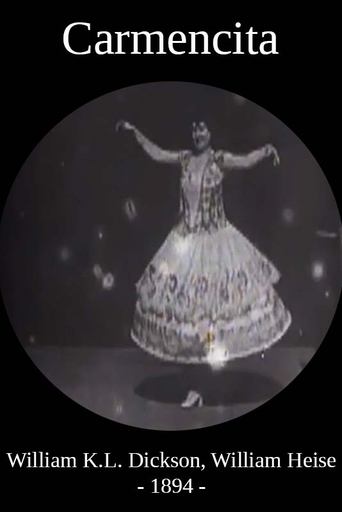
Renowned Spanish dancer who achieved historic significance as the subject of one of the earliest motion pictures ever created. Born in Spain, she rose to prominence as a talented performer specializing in Spanish dance traditions, particularly the bolero. Her career flourished in the late 19th century when she became a sensation at Koster and Bial's Music Hall in New York City, one of the premier entertainment venues of the Gilded Age. It was during her performances there that she caught the attention of Thomas Edison's film studio, leading to her appearance in the 1894 short film 'Carmencita.' This brief but historic recording captured her performing a dance routine, making her one of the very first performers to be captured on motion picture film and widely regarded as the first woman to appear in an American film. While her film career was limited to this single appearance due to the nascent state of cinema, her contribution to film history remains significant as a pioneer who helped establish the foundation for the motion picture industry.
The Craft
On Screen
As a dancer rather than a traditional actor, Carmencita's performance style was characterized by graceful, energetic Spanish dance movements. Her technique incorporated traditional Spanish elements including the use of castanets, elaborate costume work, and rhythmic footwork. In her film appearance, she displayed the confidence and stage presence of a seasoned performer, adapting her theatrical dance style for the new medium of motion pictures. Her movements were expressive and dynamic, perfectly suited to capture the attention of early film audiences.
Milestones
- First woman to appear in an American motion picture
- Subject of one of the earliest surviving films
- Performed at prestigious Koster and Bial's Music Hall in New York
- Featured in Edison Manufacturing Company's early film experiments
- Helped establish dance as an early film subject
Best Known For
Iconic Roles
Must-See Films
Accolades
Special Recognition
- Inducted into the National Film Registry (1996) for 'Carmencita'
- Recognized as a film pioneer by cinema historians
Working Relationships
Worked Often With
Studios
Why They Matter
Impact on Culture
Carmencita's impact on cinema is profound despite her brief filmography, representing a pivotal moment in the birth of motion pictures. Her appearance in the 1894 film 'Carmencita' marked one of the first times a woman was captured on film in America, helping to establish female performers as subjects of the new medium. The film demonstrated the potential of motion pictures to capture and preserve performance art, showing how dance could be effectively presented through cinema. Her work helped pave the way for future dance films and established a precedent for filming theatrical performances. As a Spanish performer, she also contributed to early cinema's cultural diversity, bringing international artistic traditions to American audiences during a period when most entertainment was domestically focused.
Lasting Legacy
Carmencita's legacy endures as a foundational figure in film history, representing the transition from stage performance to motion picture entertainment. Her film 'Carmencita' has been preserved and recognized for its historical significance, being selected for inclusion in the National Film Registry in 1996. She is frequently cited in film history texts and documentaries about the birth of cinema, often mentioned alongside other Edison studio pioneers. Her name appears in discussions about early film subjects, women in cinema, and the documentation of performing arts through motion pictures. While she may not have had the extensive career of later film stars, her contribution as one of cinema's first performers ensures her place in the historical record of motion picture development.
Who They Inspired
Carmencita influenced the early film industry by demonstrating the commercial and artistic potential of filming dance performances. Her successful appearance encouraged Edison and other early filmmakers to explore dance and movement as subjects for motion pictures, leading to numerous similar films in the late 1890s. She helped establish that theatrical performances could be successfully adapted to the new medium, influencing how early filmmakers approached capturing live entertainment. As one of the first women to appear in American films, she also helped establish female performers as viable subjects for motion pictures, paving the way for the actresses who would follow in the emerging film industry.
Off Screen
Carmencita, born Carmen Dauset Moreno, maintained a relatively private personal life despite her public performances. She emigrated from Spain to the United States as a young woman, bringing her cultural heritage and dance traditions to American audiences. Her career as a performer allowed her to travel and entertain across the United States during the late 19th century. She married and eventually retired from performing, settling into a more private life away from the spotlight. Her later years were spent away from public performance, though her contribution to film history continued to be recognized by cinema scholars and historians.
Education
Formal education details not documented; trained in traditional Spanish dance from childhood
Family
- Details not publicly documented
Did You Know?
- The film 'Carmencita' was only 21 seconds long, typical of early Edison films
- She was reportedly paid $27.50 for her performance in the film
- The film was shot at the Black Maria, Edison's first film studio
- Carmencita was one of the first performers to be filmed multiple times by Edison
- Her dance performance included the use of castanets, a traditional Spanish percussion instrument
- The film was one of the first to be copyrighted under the new motion picture copyright laws
- Contemporary reviews described her as 'the greatest Spanish dancer in the world'
- Her performance was so popular that Edison created multiple versions of the film
- The film caused a minor scandal due to the revealing nature of her costume for the time
- She performed regularly at Koster and Bial's Music Hall, where Edison first discovered her
In Their Own Words
No documented quotes survive from Carmencita, as interviews with performers were rare during the early film era
Frequently Asked Questions
Who was Carmencita?
Spanish dancer who made history as one of the first women to appear in an American motion picture. Her 1894 film, simply titled 'Carmencita,' was produced by Thomas Edison's company and captured her performing a traditional Spanish dance. She is remembered as a figure in the birth of cinema.
What films is Carmencita best known for?
Titles linked here include Carmencita (1894).
When was Carmencita born and when did she die?
Born 1868; died 1910.
What awards did Carmencita win?
During her lifetime, Carmencita did not receive formal awards as the film industry had not yet established award systems. However, her film 'Carmencita' was posthumously recognized for its historical significance when it was selected for inclusion in the National Film Registry in 1996. She is honored by film historians as a figure in early cinema.
What was Carmencita's dancing style?
Carmencita specialized in traditional Spanish dance, particularly the bolero, incorporating castanets and elaborate costume work into her performances. Her style was characterized by energetic, rhythmic movements and the confident stage presence of a seasoned theatrical performer. She adapted her dance technique effectively for the new medium of motion pictures, creating a performance that was both technically skilled and visually engaging for early film audiences.
Why is Carmencita important to film history?
Carmencita is crucial to film history as one of the very first performers captured on motion picture film and likely the first woman to appear in an American film. Her 1894 performance helped demonstrate the commercial and artistic potential of the new medium, particularly for documenting dance and theatrical performances. Her work paved the way for future dance films and established precedents for filming female performers.
Where was Carmencita filmed?
Carmencita was filmed at the Black Maria, Thomas Edison's first film studio in West Orange, New Jersey. The Black Maria was specifically designed for Edison's early film experiments and featured a retractable roof to allow natural sunlight for filming. This innovative studio was where many of the earliest motion pictures were created, including Carmencita's historic performance.