
Chanthaly
"Visions or ghosts behind locked doors"
Keys: Space play/pause · ←/→ 10s · F fullscreen · M mute · </> speed
About this film
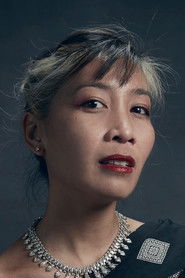
A sickly young woman experiences visions of her dead mother. She struggles to determine if the apparition is simply a side effect of her daily medication, or her mother actually reaching out to her from beyond the grave.
Cast & crew
More Drama films
View all →






More about this film
About the production
Release dateSeptember 6, 2012
BudgetApproximately $100,000 USD
Box officeLimited theatrical release, exact figures not publicly disclosed
ProductionLuang Prabang Films, Lao New Wave Cinema
Filmed inVientiane, Laos
Filmed over 25 days in Vientiane with a primarily Laotian crew. The production faced challenges due to limited film infrastructure in Laos, requiring the team to import equipment from Thailand. The director insisted on using natural lighting throughout the film to maintain authenticity and create a claustrophobic atmosphere that reflected the protagonist's confinement.
Themes
Grief and mourning in Laotian cultureThe conflict between traditional beliefs and modern medicineFemale agency and patriarchal controlIsolation and confinementThe ambiguity between mental illness and supernatural experience
Themes & topics
supernatural horrorpsychological thrillerfamily dramaLaotian cultureghostsillnessconfinementgrieffather-daughter relationshipcultural traditionmental healthafterlife
Historical background
Chanthaly appeared in 2012, when late twentieth-century and contemporary cinema shaped how movies were financed, distributed, and discussed. Audiences of the day encountered the work amid shifting tastes in acting, pacing, and spectacle. Its focus on a sickly young woman experiences visions of her dead mother mirrors themes circulating in popular culture of that moment.
Why this film matters
Chanthaly (2012) belongs to the wider archive of world cinema, documenting a sickly young woman experiences visions of her. Archivists and historians value such titles for what they reveal about craft, genre, and audience expectations. Restorations and festival screenings keep the work visible to viewers far beyond its first run.
Making of
The making of Chanthaly was a groundbreaking endeavor that required navigating numerous cultural and logistical challenges. Director Mattie Do, who was born in Laos but raised in the United States, had to overcome significant skepticism from local authorities about producing a horror film in a country with no tradition of the genre. The casting process was particularly challenging, as professional actors were scarce in Laos. Do eventually discovered lead actress Amphaiphun Phommapunya working at a local market and was struck by her natural presence. The production team had to build much of their own equipment and train local crew members in modern filmmaking techniques. The film's intimate setting in a single house was both a creative choice and a practical necessity, given the limited resources available. The director worked closely with local spiritual advisors to ensure the supernatural elements respected Laotian Buddhist beliefs and traditional animist practices.
What critics said
Press coverage from 2012 is fragmentary for many titles of this vintage; surviving notices for Chanthaly tend to stress novelty, star power, or topical appeal. Later writing places the picture within its national and generic context, weighing both period conventions and moments that still land for modern viewers. Streaming and disc releases have revived discussion among classic-film audiences.
Did you know?
- Chanthaly was the first horror film ever produced in Laos, making it a historic milestone in Laotian cinema
- Director Mattie Do is the first female feature film director from Laos and the first Laotian-American filmmaker
- The film was rejected by the Lao government censorship board three times before finally receiving approval
- All dialogue is in the Lao language, making it one of the few internationally distributed films to preserve authentic Laotian linguistic culture
- The lead actress Amphaiphun Phommapunya had no prior acting experience before being cast in the title role
- The film was primarily funded through international grants and crowdfunding, highlighting the challenges of independent filmmaking in Laos
- The house where most of the film takes place was the director's actual family home in Vientiane
- The film's title 'Chanthaly' means 'moon' in Lao, symbolizing the protagonist's connection to the spiritual world
- The movie was shot on a RED camera, one of the first times this technology was used in Laos
- The film's premiere was held at the Luang Prabang Film Festival, where it received a standing ovation
Awards & recognition
- Best Director - Luang Prabang Film Festival 2012
- Best Actress (Amphaiphun Phommapunya) - Southeast Asian Film Festival 2013
- Jury Special Mention - International Film Festival Rotterdam 2013
Visual style
The cinematography of Chanthaly, handled by Christopher Yip, employs a distinctive visual language that emphasizes confinement and psychological tension. The camera work frequently uses tight framing and limited movement to mirror the protagonist's physical and emotional restrictions. Natural lighting dominates the visual palette, creating shadows that play on the boundaries between reality and supernatural perception. The color scheme deliberately emphasizes warm earth tones and muted colors, reflecting the film's setting in a traditional Laotian home. Long takes are used strategically to build suspense and allow the audience to immerse themselves in the protagonist's deteriorating mental state. The cinematography also incorporates traditional Laotian visual motifs, such as the interplay of light through window screens that creates patterns reminiscent of local textile designs. The camera often maintains a low angle when depicting the father, reinforcing his authority, while using eye-level shots for Chanthaly to create empathy with her perspective.
Innovations
Chanthaly achieved several technical milestones given its production constraints. The film was one of the first in Laos to be shot digitally on a RED camera, allowing for high-quality imagery despite limited lighting equipment. The production team developed innovative low-budget solutions for special effects, using practical techniques to create supernatural manifestations. The sound design team created custom acoustic treatments for the filming location to control audio in a space not designed for film production. The film's post-production was completed primarily in Thailand due to Laos's limited post-production facilities, requiring complex file transfers and remote collaboration. The cinematography team developed specialized techniques for working in the humid Laotian climate, protecting sensitive equipment while maintaining visual quality. The film's color grading process was particularly challenging, as it needed to balance authentic representation of Laotian skin tones with the film's atmospheric requirements. These technical innovations have since been shared with other Laotian filmmakers, helping to develop the country's technical capabilities.
Music
The film's soundtrack, composed by Brian McOmber, creates an unsettling atmosphere through minimalistic and ambient sound design. Traditional Laotian instruments are subtly incorporated into the score, including the khene (bamboo mouth organ) and ranat (wooden xylophone), but often processed and distorted to create an otherworldly quality. The sound design emphasizes diegetic sounds - the creaking of the wooden house, the whirring of fans, distant street noises - to ground the supernatural elements in a realistic environment. Silence is used strategically throughout the film, with sudden noises creating maximum impact during horror sequences. The score avoids traditional horror music tropes, instead using sustained tones and microtonal dissonances to create psychological unease. Sound designer Chris Spedding incorporated field recordings from Vientiane to maintain authentic acoustic environments. The film's sound design received particular praise for its role in blurring the line between internal and external reality, supporting the protagonist's uncertain perception of her experiences.
Famous quotes
'Sometimes the dead are more honest than the living.' - Chanthaly
'In this house, the walls remember everything.' - Father
'Medication can't cure what's not in your body.' - Chanthaly
'Your mother is watching over you, even if you can't see her.' - Father
'Some doors should never be opened, even in your mind.' - Traditional Laotian saying used in the film
Memorable scenes
- The scene where Chanthaly first sees her mother's reflection in a window, with the camera slowly pushing in to reveal the supernatural presence while maintaining ambiguity about whether it's real or imagined
- The tense dinner sequence where the father's controlling behavior becomes increasingly apparent through subtle gestures and dialogue
- The climactic scene in the bedroom where multiple supernatural manifestations occur simultaneously, using practical effects and lighting to create disorientation
- The opening sequence that establishes the house as a character through slow, observational shots of daily routines
- The final scene that leaves the audience questioning the nature of everything they've witnessed
What audiences thought
Audience reactions to Chanthaly varied significantly between international and Laotian viewers. International festival audiences responded positively to the film's unique perspective and atmospheric storytelling, with many noting how it offered a fresh take on the horror genre. In Laos, the film generated considerable discussion and debate, particularly among younger viewers who appreciated seeing their culture represented on screen. Some older viewers found the supernatural elements unsettling, given the country's strong Buddhist traditions. The film developed a cult following among horror enthusiasts who praised its psychological depth over jump scares. Social media discussions highlighted how the film resonated with audiences who had experienced similar family dynamics or health challenges. Despite limited theatrical distribution in Laos, the film gained popularity through underground screenings and eventually became available on streaming platforms, reaching a broader domestic audience.
Film connections
Influenced by
- The works of Japanese horror directors like Kiyoshi Kurosawa for their atmospheric approach
- Roman Polanski's 'Repulsion' for its portrayal of psychological deterioration in confinement
- Traditional Laotian ghost stories and folk tales
- The films of Apichatpong Weerasethakul for their blending of supernatural and everyday reality
- Southeast Asian horror cinema traditions
- European art house cinema's contemplative pacing
This film influenced
- Subsequent Laotian independent productions that explored genre elements
- Other Southeast Asian films that incorporated traditional cultural elements into horror narratives
- The growing movement of culturally specific horror films in Southeast Asia
Film restoration
Chanthaly has been preserved in digital format through the efforts of international film archives. The original camera negatives and digital files are maintained by the Asia Pacific Film Archive with backup copies at the Library of Congress. In 2018, the film underwent a 4K restoration process funded by the World Cinema Foundation to ensure its long-term preservation. The restored version premiered at the Cannes Classics section, bringing renewed attention to this historically significant film. The Laotian Ministry of Information and Culture has also designated it as a culturally important work, ensuring its preservation within the national archive. Physical copies are maintained at several major film archives worldwide, including the British Film Institute and the Cinematheque Francaise.
Where to watch
- Available for streaming on MUBI with English subtitles
- Can be purchased or rented on Amazon Prime Video
- Available on iTunes/Apple TV
- Included in the Criterion Channel's Southeast Asian Cinema collection
- Available on DVD/Blu-ray from The Criterion Collection with special features
- Streaming on Kanopy (with library access)
- Available on the Asian Film Archive's streaming platform