Cock Fight, No. 2
"Wagers behind the wire cage"
Keys: Space play/pause · ←/→ 10s · F fullscreen · M mute · </> speed
About this film
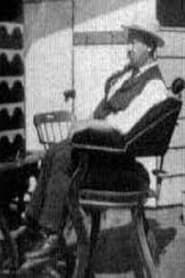
Two gamecocks are fighting inside a wire cage, while two spectators look on in the background. The two men agree to make a bet on the outcome.
Cast & crew
More films like this
More Documentary films
View all →
More from William Heise
View all →
More about this film
About the production
Release dateJune 1894
BudgetMinimal - approximately $25-50 for the animals and basic setup costs
Box officeNot applicable - Kinetoscope films were not sold to theaters but rented for individual viewing machines
ProductionEdison Manufacturing Company
Filmed inBlack Maria Studio, West Orange, New Jersey
Filmed in Edison's revolutionary Black Maria studio, which featured a retractable roof to capture natural sunlight. The film was made using the Kinetograph camera, which could only capture about 30 seconds of footage at a time. The cockfight was likely staged specifically for the camera, as authentic fights could last much longer than the camera's capacity. This was one of many 'actuality' films Edison produced to showcase real-life events and activities for the novelty-seeking audiences of early cinema.
Themes
Animal crueltyGamblingViolence as entertainmentHuman fascination with blood sportsEarly documentary realism
Themes & topics
cockfightgamblinganimal fightingblood sportbettingviolencespectatorshipearly cinemaactuality film
Historical background
Cock Fight, No. 2 reached screens around 1894, produced in its country of origin. Programs then mixed actualities, dances, and staged scenes in single-reel slots.
Why this film matters
Researchers cite Cock Fight, No. 2 when tracing screen culture of its decade. Its brevity makes it useful for teaching how early narratives were staged.
Making of
The production of 'Cock Fight, No. 2' took place in Edison's innovative Black Maria studio, a tar-paper-covered building that could rotate on tracks to follow the sun's movement, ensuring optimal lighting for filming. Director William Heise worked with a small team to stage the cockfight within the camera's limited field of view. The birds were likely trained fighting cocks brought in specifically for the production. The two 'spectators' were probably studio employees who were instructed to simulate betting behavior to add human interest to the scene. The entire filming process would have been extremely primitive by modern standards - the heavy Kinetograph camera was mounted on a tripod, and each film strip could only capture about 30 seconds of action before needing to be replaced. The sound of the camera's mechanical operation would have been audible throughout the filming, though of course no synchronized sound was recorded.
What critics said
Reviewers in 1894 weighed Cock Fight, No. 2 on clarity, pacing, and audience response rather than prestige status. No single canonical review dominates later reference works for the title.
Did you know?
- This was one of the first films to depict animal violence, sparking early debates about appropriate content in motion pictures
- The Black Maria studio where this was filmed was the world's first movie production studio, built specifically for Edison's film experiments
- William Heise was one of Edison's most important early cinematographers, directing over 300 films between 1892-1898
- The film was exhibited on Edison's Kinetoscope, where viewers would peep into a cabinet to watch the short film individually
- Cockfighting was still legal in many parts of the United States in 1894, though it was becoming increasingly controversial
- This film was part of Edison's strategy to capture 'actuality' scenes that would seem exotic or sensational to urban audiences
- The two spectators in the background were likely Edison studio employees rather than genuine spectators
- The film's title 'No. 2' suggests there may have been a previous cockfight film, though records of 'Cock Fight, No. 1' are unclear
- Early films like this were often shot at 16 frames per second, much slower than modern standards, giving them a jerky appearance when viewed today
- The wire cage visible in the film was a practical necessity to keep the fighting cocks contained within the camera's limited frame
Visual style
The cinematography in 'Cock Fight, No. 2' represents the most basic techniques available to early filmmakers. The camera was stationary, capturing the scene from a single, fixed perspective typical of early Edison productions. The lighting came entirely from natural sunlight through the Black Maria's retractable roof, creating harsh shadows and high contrast. The composition places the fighting cocks in the foreground with the human spectators visible in the background, creating depth within the limited frame. The film was shot on 35mm film using Edison's proprietary Kinetograph camera at approximately 16 frames per second, resulting in the characteristic jerky motion of early cinema. The entire scene is captured in a single continuous take, as editing techniques had not yet been developed.
Innovations
While 'Cock Fight, No. 2' may seem primitive by modern standards, it represented significant technical achievements for its time. The film was produced using Edison's Kinetograph, one of the first practical motion picture cameras, which featured a unique intermittent mechanism allowing for the capture of discrete frames. The film stock itself was an innovation - Edison's laboratory developed the 35mm film format with four perforations per frame that would become the industry standard for decades. The ability to capture motion at all was revolutionary, and the relatively clear image of the fast-moving fighting cocks demonstrated the camera's capabilities. The film also showcases the effectiveness of the Black Maria studio's design, which allowed for consistent lighting in an era before artificial movie lights were available.
Music
No soundtrack was recorded for this film, as synchronized sound technology would not be developed until the late 1920s. When exhibited in Kinetoscope parlors, the film would have been viewed silently, though the noisy mechanical operation of the viewing machine would have been audible to the viewer. In modern screenings, the film is typically accompanied by period-appropriate music or left silent to preserve its historical authenticity.
Famous quotes
No recorded dialogue - the film predates synchronized sound technology
Memorable scenes
- The opening shot showing two gamecocks fighting aggressively inside a wire cage while two men in the background gesture and appear to exchange money, creating a tableau of violence and wagering that shocked and fascinated early film audiences
What audiences thought
Audiences in 1894 were fascinated by the novelty of moving images, and films depicting unusual or sensational subjects were particularly popular. Cockfighting was still familiar to many Americans in the 1890s, making this film both exotic and recognizable. Viewers would have paid approximately 25 cents to watch the film on a Kinetoscope, typically as part of a program of several short films. The brief duration and shocking content likely made it memorable for early filmgoers. Modern audiences viewing the film today often express discomfort with the animal violence, though they appreciate it as an important historical artifact showing the origins of documentary cinema.
Film connections
Influenced by
- Earlier Edison Kinetoscope films showing everyday activities
- Photographic traditions of documenting unusual events
- Popular entertainment forms of the 1890s including circuses and sideshows
This film influenced
- Other Edison 'actuality' films depicting controversial subjects
- Early documentary films seeking to capture real events
- Later films depicting animal sports and betting
Film restoration
Preserved - The film exists in the Library of Congress and other film archives. It has been digitized and is available through various historical film collections and online platforms specializing in early cinema.
Where to watch
- Library of Congress National Film Registry website
- YouTube via official film archive channels
- Early Cinema collections on educational platforms
- Museum of Modern Art (MoMA) film collection
- Edison National Historic Site digital archives