
Keys: Space play/pause · ←/→ 10s · F fullscreen · M mute · </> speed
Plot
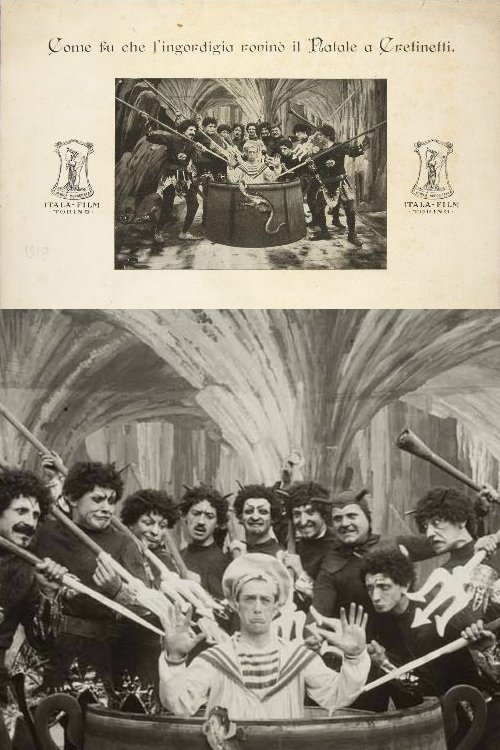
In this delightful Christmas comedy, the perpetually greedy Cretinetti receives a magnificent Christmas feast but his insatiable appetite leads to disastrous consequences. After consuming an enormous amount of food, Cretinetti's stomach becomes so distended that he cannot move, causing chaos throughout his household as family members try to help him. The gluttonous protagonist's Christmas celebration spirals into farcical disaster as his greed prevents him from enjoying the holiday with his loved ones. Ultimately, Cretinetti learns a valuable lesson about moderation and the true meaning of Christmas through his painful and humiliating experience. The film combines physical comedy with moral messaging in classic silent cinema style.
Director
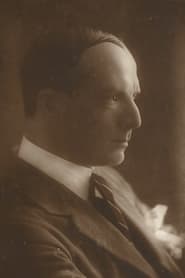
 André Deed
Cast
About the Production
Release Date December 1910
Production Itala Film
Filmed In Turin, Italy
This film was part of the popular Cretinetti comedy series produced by Itala Film, one of Italy's most prestigious early film production companies. The production utilized the company's state-of-the-art studios in Turin, which were among the most advanced in Europe at the time. The Christmas-themed set design was particularly elaborate for the period, featuring detailed decorations and props that emphasized the film's holiday setting. Physical comedy sequences required precise timing and coordination between André Deed and supporting actors, with multiple takes needed to achieve the desired comedic effect.
More Comedy Films
View all →






More from André Deed
View all →
Themes & Topics
Historical Background
This film was produced during the golden age of Italian cinema, when Italy was one of the world's leading film-producing nations. In 1910, the Italian film industry was experiencing unprecedented growth, with companies like Itala Film competing internationally with French and American studios. The period saw the emergence of film genres and star systems, with characters like Cretinetti becoming some of the first recognizable film personalities. Christmas was becoming increasingly commercialized in Europe, and films like this reflected and shaped emerging holiday traditions. The technical sophistication of Italian studios at this time was remarkable, with Turin serving as a major center of film production. This film also represents the early internationalization of cinema, with a French star creating iconic work in Italy for global distribution.
Why This Film Matters
This film represents an important milestone in the development of film comedy and the creation of recurring comic characters. Cretinetti became one of the first truly international film stars, with his films distributed across Europe and the Americas. The Christmas theme established a template for holiday comedies that would influence filmmakers for decades. The film's moral message about greed and redemption, delivered through comedy rather than melodrama, showed how cinema could entertain while imparting values. The physical comedy techniques pioneered by Deed in this and other Cretinetti films helped establish the visual language of film comedy that would be refined by later silent comedians. The film also demonstrates how early cinema was already exploring the commercial potential of holiday-themed entertainment.
Making Of
The making of this film showcased the sophisticated production capabilities of Itala Film in 1910. André Deed, having established himself as a comedy sensation in France, brought his physical comedy skills to Italian cinema where he found even greater success. The filming required elaborate practical effects to depict Cretinetti's expanding stomach, which were achieved through padding and camera tricks that were innovative for the time. The Christmas feast scenes were filmed over multiple days to maintain the freshness of the food props, a significant expense for a short comedy of this era. Deed's method of combining slapstick with subtle character work influenced the development of film comedy across Europe. The production team faced challenges in creating believable physical comedy effects within the technical limitations of 1910 filmmaking equipment.
What Critics Said
Contemporary critics praised the film for its inventive physical comedy and timely Christmas theme. Italian trade journals of the period highlighted André Deed's remarkable comic timing and the film's impressive production values. French critics, familiar with Deed's earlier work, noted how his comedy had evolved and matured in the Italian productions. Modern film historians consider this film a significant example of early comedy cinema, particularly for its sophisticated blend of physical humor and moral messaging. The film is often cited in studies of early international film co-production and the development of the film star system. Preservationists and silent film scholars regard it as an important artifact from a crucial period in cinema history.
Did You Know?
- Cretinetti was known as 'Foolshead' in English-speaking countries, making this character one of the earliest international comedy film stars
- André Deed was actually French but achieved his greatest fame working in Italian cinema
- The film was released just in time for Christmas 1910, making it one of the earliest Christmas-themed movies ever made
- Itala Film was considered the Italian equivalent of Pathé or Gaumont during this period
- The physical comedy techniques used by Deed influenced later silent comedians including Charlie Chaplin and Buster Keaton
- This film was part of a series of over 50 Cretinetti shorts produced between 1909 and 1911
- The original Italian title plays with wordplay that was difficult to translate directly into other languages
- Emilio Ghione, who appears in the cast, would later become a famous director and star of Italian serial films
- The film's theme of gluttony and redemption was common in early moral tales but rare in comedy format
- Only a few prints of this film are known to survive, making it a rare piece of cinema history
More film details Visual style, music, quotes, restoration, and more
Visual Style
The cinematography, while typical of 1910, showed the sophistication of Itala Film's technical capabilities. The camera work employed medium shots to capture the physical comedy while maintaining clarity of the actors' expressions. The Christmas feast scenes utilized careful lighting to highlight the elaborate food displays and create a festive atmosphere. Camera positioning was strategic to emphasize the physical comedy, particularly in scenes showing Cretinetti's expanding stomach. The film used simple but effective editing techniques to enhance the comedic timing, with cuts timed to punctuate physical gags. The visual style balanced the need for clear storytelling with the artistic presentation of the Christmas setting.
Innovations
The film showcased several technical innovations for its time, particularly in the realm of special effects for comedy. The expanding stomach effect was achieved through clever use of padding and camera angles that created a convincing illusion. The production utilized Itala Film's advanced lighting equipment to properly illuminate the elaborate Christmas sets, a significant technical achievement for 1910. The film's editing demonstrated sophisticated understanding of comedic timing, with cuts precisely synchronized to physical gags. The seamless integration of multiple camera setups for different scenes showed the growing technical sophistication of Italian film production. The practical effects used in the feast scenes demonstrated innovative approaches to creating visual comedy within the technical constraints of early cinema.
Music
As a silent film, it would have been accompanied by live musical performance during theatrical exhibition. Typical screenings would feature piano or organ accompaniment, with musicians improvising appropriate music for the comedic and holiday themes. For Christmas scenes, popular carols and festive melodies would likely have been incorporated. The physical comedy sequences would have been accompanied by lively, rhythmic music to enhance the comedic effect. Some prestigious theaters might have employed small orchestras for the accompaniment. The music would have been crucial in establishing the film's tone and helping audiences understand the emotional beats of the story.
Famous Quotes
Cretinetti's exaggerated gestures and expressions served as visual dialogue throughout the film
The title itself became a catchphrase representing the consequences of excess during holidays
Memorable Scenes
- The elaborate Christmas feast scene where Cretinetti's eyes grow larger at the sight of the food spread
- The sequence showing Cretinetti's stomach progressively expanding as he continues eating
- The chaotic aftermath where family members attempt to help the immobilized Cretinetti
- The final scene where Cretinetti, having learned his lesson, modestly enjoys a simple Christmas meal
What Audiences Thought
The film was enormously popular with audiences across Europe upon its release in December 1910. Christmas crowds flocked to see the latest Cretinetti adventure, making it one of the season's box office successes. Audiences particularly enjoyed the elaborate Christmas feast scenes and the increasingly absurd physical comedy as Cretinetti's greed led to his downfall. The character's universal appeal transcended language barriers, making the film popular in both Italian and international markets. Contemporary accounts describe audiences laughing uproariously at the screening, with some theaters reportedly having to show the film multiple times per day to meet demand. The film's moral message about Christmas and greed resonated strongly with audiences of the period.
Film Connections
Influenced By
- Georges Méliès' fantasy films
- French comedy traditions
- Italian commedia dell'arte
- Max Linder's comedy style
- Early Pathé comedies
This Film Influenced
- Later Charlie Chaplin Christmas shorts
- Buster Keaton's physical comedy films
- Harold Lloyd's situational comedies
- Italian comedy films of the 1920s
- Christmas-themed comedy shorts throughout the silent era
Film Restoration
The film is partially preserved with fragments existing in several film archives including the Cineteca Italiana in Milan and the Cinémathèque Française. Complete prints are extremely rare, with most surviving versions missing some footage. The film has been partially restored by film preservationists, though some deterioration is evident due to the age of the nitrate film stock. Some archives hold digital copies of the surviving footage. The film remains a precious artifact of early Italian cinema and is occasionally screened at silent film festivals and museum retrospectives.
Where to Watch
- Occasionally screened at silent film festivals and museum retrospectives
- Available through some film archive collections for academic research
- Rare screenings at specialized cinema history events
- Some footage may be accessible through European film archive websites
- Included in some comprehensive collections of early Italian cinema