Corbett and Courtney Before the Kinetograph
"It was only the second boxing match to be filmed, following The Leonard-Cushing Fight which."
Keys: Space play/pause · ←/→ 10s · F fullscreen · M mute · </> speed
About this film
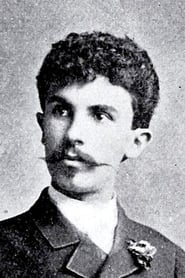
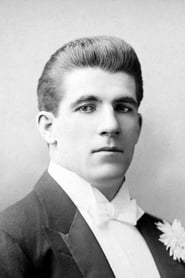
Corbett and Peter Courtney meet in a boxing exhibition. It was only the second boxing match to be filmed, following The Leonard-Cushing Fight which had been filmed by Dickson on June 14, 1894.
Cast & crew
More films like this
More Documentary films
View all →
More from William K.L. Dickson
View all →
More about this film
About the production
Release dateNovember 1894
Box officeNot applicable - this was exhibited in individual Kinetoscope viewing machines, not traditional theaters
ProductionEdison Manufacturing Company
Filmed inEdison's Black Maria Studio, West Orange, New Jersey
Filmed in Edison's revolutionary Black Maria studio, which featured a retractable roof to allow natural sunlight for illumination. The camera was hand-cranked at approximately 40 frames per second. The boxers performed on a specially constructed platform within the studio's confined space. The entire sequence was captured in one continuous take, as editing technology did not exist at the time. The film was shot on 35mm celluloid film using Edison's Kinetograph camera, which was stationary and could not move during filming.
Themes
Sports documentationTechnological innovationCelebrity culturePhysical performanceAmerican entertainment
Themes & topics
Historical background
Made in 1894, in United States, under William Kennedy Dickson, Corbett and Courtney Before the Kinetograph belongs to documentary filmmaking during early cinema when shorts dominated nickelodeon programs. Corbett and Courtney Before the Kinetograph is an 1894 American short black-and-white silent film produced by William K.L.
Why this film matters
Within documentary history, William Kennedy Dickson's name attaches to the work; surviving prints help researchers study silent-era craft; archival value lies in recorded reality rather than fiction.
Making of
The filming took place in Edison's innovative Black Maria studio, a tar-paper-covered building that could rotate to follow the sun. The boxers had to perform within the extremely limited space of the studio, which measured only about 12 by 16 feet. William K.L. Dickson, Edison's Scottish-born assistant who had invented much of the early film technology, operated the hand-cranked camera. The performers were paid $35 each for their participation, a significant sum for the time. The filming required careful choreography as the camera's field of view was very narrow, and the boxers had to stay within the frame throughout the entire sequence. The studio's retractable roof had to be opened to allow sufficient natural light, as artificial lighting technology was not yet developed for motion pictures.
What critics said
Contemporary reviews of Corbett and Courtney Before the Kinetograph are sparse in open sources; later catalog entries chiefly summarize plot and credits.
Did you know?
- This was one of the first sports films ever made, helping establish boxing as a popular subject for early motion pictures
- James J. Corbett was the reigning heavyweight champion of the world when this film was made, having defeated John L. Sullivan in 1892
- Exhibited in Edison's Kinetoscope parlors, where viewers paid 25 cents to watch films individually through peep-hole machines
- The Black Maria studio where this was filmed was the world's first film production studio, built specifically for Edison's motion picture experiments
- Peter Courtney was not a professional boxer but rather a sparring partner and instructor who worked with Corbett
- Was part of a series of boxing films Edison produced, including other matches with different boxers
- The film's title uses the term 'Kinetograph' rather than 'camera' because Edison wanted to brand his technology
- Boxing was considered somewhat controversial at the time, making this film somewhat daring for its era
- The film was shot on 35mm film, which became the industry standard for decades
- William K.L. Dickson, Edison's primary assistant, was the actual director and cinematographer for most Edison films of this period
Visual style
The cinematography represents the most basic form of early motion picture photography. The camera was stationary, mounted on a tripod at approximately eye level with the subjects. The entire film consists of one continuous shot with no camera movement or editing. The lighting came entirely from natural sunlight through the Black Maria's retractable roof, creating harsh shadows and high contrast typical of early films. The composition places the two boxers centrally in the frame, with just enough space for them to move and demonstrate their techniques. The frame rate was approximately 40 frames per second, faster than the later standard of 24 fps, which gives the movement a somewhat jerky quality when viewed today. The shallow depth of field and primitive lens technology create a slightly soft focus appearance.
Innovations
Represents several important technical achievements for its era. It successfully captured rapid human movement using Edison's Kinetograph camera, which was a significant challenge given the slow film speeds and primitive equipment of the time. The film demonstrates the practical application of continuous motion photography, proving that complex physical activities could be recorded and reproduced. The use of the Black Maria studio's natural lighting system was innovative for its time. The film also shows early understanding of framing and composition for motion pictures, with the subjects positioned to maximize visibility within the camera's limited field of view. The preservation of the film itself is technically remarkable, as many early films have been lost due to the unstable nature of early celluloid.
Music
No soundtrack was recorded, as synchronized sound technology would not be developed until the late 1920s. The film was originally presented as a silent visual experience. In modern exhibitions, it may be accompanied by period-appropriate music or sound effects, but these are not part of the original presentation.
Famous quotes
No dialogue was recorded in this silent film
Memorable scenes
- The entire one-minute sequence showing Corbett and Courtney demonstrating boxing techniques in the confined space of Edison's Black Maria studio, with both men moving within the frame while throwing punches and defensive maneuvers, representing one of the earliest captured sports performances in cinema history.
What audiences thought
Early audiences were fascinated by the ability to see moving images of famous people, particularly sports stars like Corbett. The film was extremely popular in Kinetoscope parlors, where viewers would line up to pay for the experience of watching the 'living pictures.' The novelty of seeing a world champion boxer in motion was a major draw, and the film helped establish the commercial viability of motion pictures as entertainment. Contemporary accounts suggest that viewers were amazed by the realism and detail captured in the film, with many returning multiple times to watch the same short sequence. The success of this and similar boxing films convinced Edison and other early filmmakers that sports content had strong commercial appeal.
Film connections
Influenced by
- Edison's earlier experimental films
- Eadweard Muybridge's motion studies
- Étienne-Jules Marey's chronophotography
This film influenced
- Edison's subsequent boxing films
- Early sports documentaries
- Modern boxing films and broadcasts
Film restoration
And has been preserved by the Library of Congress and other film archives. It has been digitized and is available for viewing through various educational and archival sources. The film is considered to be in good condition for its age, though it shows some deterioration typical of films from this period.
Where to watch
- Library of Congress website
- YouTube (through archival uploads)
- Museum of Modern Art film collection
- Edison National Historic Site
- Various educational film databases
- Kino Lorber's 'The Movies Begin' DVD collection
- British Film Institute archives