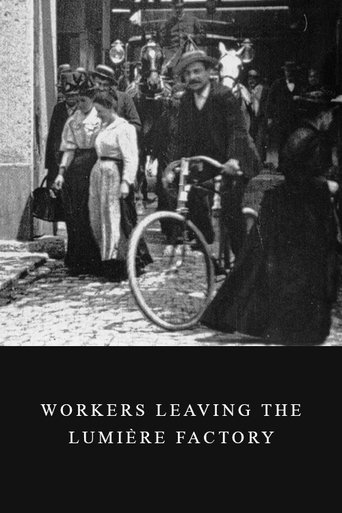
Cordeliers' Square in Lyon
"Cordeliers square in motion"
Keys: Space play/pause · ←/→ 10s · F fullscreen · M mute · </> speed
About this film
Pedestrian and horse-drawn vehicles traffic, across the Place des Cordeliers, in Lyon. Exhibitors circulated the 1895 print in short programs.
Cast & crew
More films like this
More Documentary films
View all →


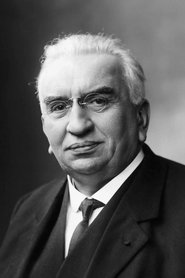
More from Louis Lumière
View all →

More about this film
About the production
Release dateDecember 28, 1895
ProductionSociété Lumière
Filmed inPlace des Cordeliers, Lyon, France
Filmed using the Lumière brothers' Cinématographe camera, which was both a camera, developer, and projector all in one device. The camera was hand-cranked and could capture approximately 16 frames per second. The film was shot on 35mm film with a 1.33:1 aspect ratio. Louis Lumière personally operated the camera for this production, positioning it to capture the maximum activity in the square. The static camera position was typical of early Lumière films, reflecting the influence of photography and the technical limitations of early motion picture equipment.
Themes
Urban lifeEveryday realityTransportationPublic spacesDocumentation of reality
Themes & topics
squareLyonFrancepedestrianshorse-drawn carriagetrafficurbandocumentarystreet scenepublic spacecity lifetransportation1890ssilent film
Historical background
Cordeliers' Square in Lyon reached screens around 1895, produced in its country of origin. Programs then mixed actualities, dances, and staged scenes in single-reel slots.
Why this film matters
Researchers cite Cordeliers' Square in Lyon when tracing screen culture of its decade. Its brevity makes it useful for teaching how early narratives were staged.
Making of
Louis Lumière set up his Cinématographe camera on a tripod in a carefully chosen position to capture the maximum activity in Place des Cordeliers. The filming process required the camera to be hand-cranked at a steady pace to maintain consistent exposure. Local residents of Lyon were likely unaware they were being filmed, as motion pictures were completely unknown to the public at this time. The Lumière brothers had to develop the film immediately after shooting using their portable developing equipment. The static camera position was both a technical necessity and an artistic choice, influenced by the composition of contemporary photography. The film was processed and printed at the Lumière factory in Lyon before being prepared for the historic Paris screening. The square was chosen for its architectural interest and the natural flow of traffic that would create visual interest in the composition.
What critics said
Reviewers in 1895 weighed Cordeliers' Square in Lyon on clarity, pacing, and audience response rather than prestige status. No single canonical review dominates later reference works for the title.
Did you know?
- This film was part of the historic first public screening of motion pictures at the Salon Indien du Grand Café in Paris on December 28, 1895
- The Place des Cordeliers shown in the film is one of Lyon's oldest public squares, dating back to the Middle Ages
- Among the ten films shown at the first Lumière screening, this was one of several 'actualités' (documentary scenes) depicting everyday life
- The film was shot just months after the Lumière brothers patented their Cinématographe device on February 13, 1895
- Some viewers at the first screening reportedly tried to step aside from the approaching horse-drawn carriages, not understanding they were watching a projected image
- The square shown in the film was named after the Cordeliers (Franciscan) monastery that once stood nearby
- This film represents one of the earliest examples of urban documentary filmmaking
- The Lumière brothers preferred filming real scenes like this rather than staged scenes, unlike their competitor Georges Méliès
- The film was shot in the same year as other groundbreaking Lumière productions including 'Workers Leaving the Lumière Factory' and 'The Arrival of a Train'
- Place des Cordeliers remains a major public square in Lyon today, though its appearance has changed significantly since 1895
Visual style
The cinematography of this film represents the earliest techniques of motion picture photography. Shot with the Lumière Cinématographe, the film utilizes a static wide shot that captures the entire square in a single frame. The composition follows traditional photographic principles, with careful attention to architectural elements and the arrangement of space within the frame. The camera was positioned at an elevated angle to provide a clear view of the traffic patterns and pedestrian movement. The black and white imagery shows the characteristic high contrast of early film stock, with strong highlights and deep shadows. The exposure was carefully calculated to capture detail in both the buildings and the moving subjects. The frame rate of approximately 16 frames per second gives the movement a slightly staccato quality that is characteristic of early cinema. The static camera approach reflects the influence of photography and the technical limitations of early motion picture equipment.
Innovations
This film showcases several groundbreaking technical achievements of early cinema. It was captured using the Lumière Cinématographe, a revolutionary device that combined camera, printer, and projector in a single portable unit. The film was shot on 35mm film with a perforated edge design that became an industry standard. The Cinématographe's intermittent movement mechanism allowed for smooth capture of motion pictures at approximately 16 frames per second. The device's claw mechanism for film transport was more advanced than competing systems, reducing film wear and tear. The projection system used a powerful lamp and lens system that could create bright images suitable for public exhibition. The film demonstrates early mastery of exposure control and composition in the new medium of motion pictures. The portable nature of the Cinématographe allowed for location filming, which was revolutionary compared to studio-bound systems. The film also showcases early understanding of continuity and the capture of real-time events.
Music
This film was produced during the silent era of cinema and had no synchronized soundtrack. During its original exhibition at the Salon Indien du Grand Café, the film would have been accompanied by live music, likely provided by a pianist or small orchestra. The musical accompaniment would have been chosen to complement the visual content and create atmosphere. In some presentations, sound effects might have been created live to enhance the viewing experience, such as hoofbeats to accompany the horse-drawn carriages. Modern screenings and presentations of the film sometimes feature period-appropriate musical scores or newly composed soundtracks that reflect the mood and historical context of the piece. The absence of recorded sound was typical of films from this period, as synchronized sound technology would not be developed until the late 1920s.
Famous quotes
The cinema is an invention without a future. - Louis Lumière (often attributed, though apocryphal)
My invention can be exploited... as a scientific curiosity, but it has no commercial value whatsoever. - Auguste Lumière (early assessment of cinema)
Memorable scenes
- The continuous flow of horse-drawn carriages and pedestrians crossing the square in opposite directions, creating a natural choreography of urban movement that captures the rhythm of 19th-century city life
What audiences thought
The first audiences who viewed this film at the Salon Indien du Grand Café in Paris were reportedly mesmerized by the lifelike quality of the moving images. Many spectators had never seen any form of moving pictures before, and the experience was described as overwhelming and magical. Some audience members reportedly reacted physically to the horse-drawn carriages, attempting to move out of their path, demonstrating the unprecedented realism of the images. The film, along with others in the program, generated tremendous excitement and word-of-mouth publicity, leading to long queues for subsequent screenings. The success of this and other Lumière films quickly led to international demand for their invention and productions. Modern audiences viewing the film today often express fascination with its historical value and the window it provides into everyday life of the past, though the simple, unadorned nature of the film may seem understated compared to contemporary cinema.
Film connections
Influenced by
- Photography
- Urban painting
- Documentary tradition
- Observational cinema
- Street photography
This film influenced
- Other Lumière actualités
- City Symphony films
- Documentary cinema
- Urban documentaries
- Direct cinema movement
Film restoration
The film is preserved and archived at the Institut Lumière in Lyon, France. It has been digitized and restored as part of efforts to preserve early cinema heritage. The original 35mm nitrate film stock has been carefully preserved in climate-controlled archives. Multiple copies and digital versions exist in film archives worldwide, including the Cinémathèque Française and the Library of Congress. The film remains accessible to researchers and the public through various cinematic institutions and online platforms dedicated to early cinema.
Where to watch
- Institut Lumière museum in Lyon
- YouTube (official Institut Lumière channel)
- Criterion Channel (early cinema collections)
- Kanopy (educational streaming)
- Museum of Modern Art (MoMA) film screenings
- British Film Institute (BFI) Player
- Early Cinema archives and special collections