Danse indienne
"Indigenous dancers on early film"
Keys: Space play/pause · ←/→ 10s · F fullscreen · M mute · </> speed
About this film
American Indians dancing.
Cast & crew
More Documentary films
View all →
More from Gabriel Veyre
View all →


More about this film
About the production
Release date1900
ProductionLumière Company
Filmed inFrance (likely at an exhibition or with performers brought to Europe)
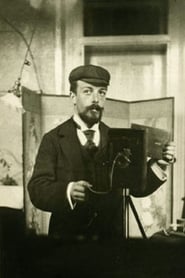
Gabriel Veyre was a photographer and filmmaker working for the Lumière brothers, who sent him on expeditions to document various cultures and locations. This film was likely created as part of the Lumière Company's actualités series, which were short documentary films showcasing real-life scenes. The film was shot using the Lumière Cinématographe, which served as both camera and projector.
Themes
Themes & topics
Historical background
When Danse indienne debuted in 1900, Lumière Company was among the companies feeding nickelodeons and larger houses alike.
Why this film matters
Museum programs pair Danse indienne with other 1900 works when discussing american indians dancing.
Making of
Gabriel Veyre was a talented photographer who joined the Lumière brothers in 1896 and quickly became one of their principal cinematographers. For this film, he likely worked with Native American performers who were part of the popular ethnographic exhibitions of the era, such as those at World's Fairs or traveling shows. The filming process would have been challenging - the Cinématographe camera was heavy, required manual cranking at a consistent speed, and could only capture about 50 seconds of footage per film strip. Veyre would have needed to position his camera carefully to capture the dancers in motion while ensuring adequate lighting, as artificial lighting was still primitive. The performers may have been asked to repeat their dances multiple times to achieve the best results.
What critics said
Archival catalogs list Danse indienne without citing major awards, matching its 1900 profile.
Did you know?
- Gabriel Veyre was one of the Lumière brothers' most important cinematographers, traveling extensively to document cultures worldwide
- The film represents one of the earliest motion picture documentations of Native American dance
- Early films like this were often shown as part of variety programs alongside magic lantern shows and live performances
- The Lumière Company produced over 1,400 short films between 1895 and 1905
- Veyre later became a pioneer in color photography, working with the autochrome process
- This film is part of a broader tradition of ethnographic cinema that began in the earliest days of motion pictures
- The performers were likely part of traveling shows or exhibitions that brought Native Americans to Europe
- Early documentary films like this were often called 'actualités' by the Lumière company
- The film was hand-cranked, as electric motors for cameras were not yet common
- Only a single print of many early Lumière films survived, making preservation efforts crucial
Visual style
Shot using the Lumière Cinématographe, the film features the characteristic stationary camera position typical of early cinema. The camera would have been mounted on a tripod, capturing the dancers from a single perspective. The black and white images would have had high contrast and relatively soft focus due to the limitations of early film stock. The framing would have been wide to capture the full range of the dancers' movements, as zooming was not possible with the equipment of the era. The lighting would have been natural, requiring filming outdoors or in well-lit interiors.
Innovations
The film represents the technical achievement of capturing motion at the turn of the 20th century using the Lumière Cinématographe. This device was revolutionary as it combined camera, developer, and projector in one unit. The film was shot at approximately 16 frames per second on 35mm film, which was standard for the era. The ability to capture and preserve cultural performances like Native American dance was groundbreaking, representing one of the first times such movements could be studied repeatedly rather than being lost to memory. The film also demonstrates early understanding of documentary principles, capturing real events rather than staged performances.
Music
As a silent film, 'Danse indienne' would have been accompanied by live music during exhibition. The accompaniment might have included piano, organ, or small ensemble music, often improvised or selected from existing classical pieces. Some venues may have used music intended to evoke 'exotic' or 'primitive' themes, reflecting the limited and often stereotypical understanding of Native American music in Europe at the time. The choice of musical accompaniment would have significantly influenced how audiences perceived and understood the images on screen.
Memorable scenes
- The entire film consists of a single continuous shot showing Native American performers in traditional dress executing ceremonial dances, their movements captured in the flickering images of early cinema - a rare visual document of indigenous performance from the dawn of film history.
What audiences thought
Early 20th century audiences were captivated by any moving image, and films showing 'exotic' cultures were particularly popular. Viewers would have been fascinated by the opportunity to see Native American dances, which most would only have read about or seen in illustrations. The film would have been shown as part of a program of short actualités, each lasting about a minute, providing audiences with brief glimpses of scenes from around the world. The novelty of the medium itself would have been the primary draw, with the specific content serving to showcase the camera's ability to capture movement and distant cultures.
Film connections
Influenced by
- Lumière actualités tradition
- Ethnographic photography
- World's Fair exhibitions
- Travelogue literature
- Anthropological documentation methods
This film influenced
- Later ethnographic documentaries
- Robert Flaherty's 'Nanook of the North'
- Edward Curtis's film work
- Early National Geographic documentaries
Film restoration
The film is preserved in the Lumière Institute's collection in Lyon, France. As part of the Lumière company's early works, it has been archived and digitized as part of film preservation efforts. Some prints may also exist in other film archives worldwide that hold Lumière collections. The film represents one of the surviving examples of early ethnographic cinema from this period.
Where to watch
- The film may be viewable through the Lumière Institute's archives
- Some film archives with Lumière collections may hold copies
- Specialized early cinema screenings and retrospectives
- Academic film studies programs with access to early cinema collections