Danse mexicaine
"All for jarabe"
Keys: Space play/pause · ←/→ 10s · F fullscreen · M mute · </> speed
About this film
A man and a woman dance "jarabe tapatío" while some people watch.
Cast & crew
More films like this
More Documentary films
View all →

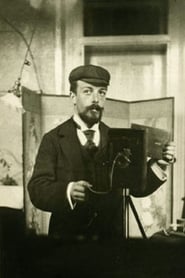
More from Gabriel Veyre
View all →

More about this film
About the production
Release date1896
ProductionLumière Company
Filmed inMexico
Filmed by Gabriel Veyre, one of the Lumière brothers' pioneering cinematographers who traveled the world documenting local cultures and scenes. This was part of Veyre's extensive work in Mexico during 1896, where he created some of the earliest moving images of Mexican life and culture. The film was shot using the Lumière cinematograph, which served as both camera and projector, making it a marvel of portable technology for its time.
Themes
Themes & topics
Historical background
Made in its country of production around 1896, Danse mexicaine belongs to the first decade of projected film. Its story of a man and a woman dance "jarabe tapatío" while some people watch spoke to audiences of the day through familiar genres and topical settings.
Why this film matters
Archivists and historians still cite Danse mexicaine when tracing how the first decade of projected film filmmakers staged dance and jarabe on screen.
Making of
Production details for Danse mexicaine are sparse in surviving records. Direction is attributed to Gabriel Veyre.
What critics said
Reviews from 1896 weighed Danse mexicaine on pacing, performance, and novelty. Later criticism reads its emphasis on dance, jarabe, tapat through modern standards of craft and representation.
Did you know?
- Directed by Gabriel Veyre.
- Release year commonly listed as 1896.
- TMDB identifier: 386329.
Visual style
The cinematography in 'Danse mexicaine' represents the state of the art in 1896, utilizing the Lumière cinematograph with a fixed wide-angle lens. The composition is static, as camera movement was not yet possible, requiring careful placement to capture the entire dance performance. The single continuous shot demonstrates the technical constraints of early filmmaking, where each film reel could only hold about 50 seconds of footage. The lighting is entirely natural, requiring outdoor filming during daylight hours. Despite these limitations, Veyre managed to frame the dancers effectively, positioning them centrally while including the onlookers to provide context and scale. The black and white imagery, while unable to capture the vibrant colors of the traditional costumes, still conveys the movement and energy of the performance through careful attention to the dancers' positions and gestures.
Innovations
The film represents several important technical achievements for its era. It was shot using the Lumière cinematograph, a revolutionary device that combined camera, projector, and developer in one portable unit. The use of 35mm film with perforations (invented by the Lumières) established a standard that would dominate cinema for decades. The film demonstrates early mastery of exposure and focus, challenging technical feats in outdoor shooting conditions. The ability to capture rapid dance movements without blur was particularly impressive for 1896 technology. The film also the international portability of early cinema equipment, proving that movies could be made anywhere in the world, not just in studio settings.
Music
The film was originally presented as a silent work, as synchronized sound technology would not be invented for another three decades. During early cinema exhibitions, live musical accompaniment was typically provided, often featuring local musicians who would play appropriate music to match the on-screen action. For 'Danse mexicaine,' it's likely that traditional Mexican music was performed live during screenings, possibly including actual jarabe tapatío music on guitar, violin, and harp. Some exhibitors might have used phonograph recordings if available, though live music was more common. The absence of recorded sound means that modern viewers must imagine the music that would have accompanied the dance, though contemporary presentations often add authentic Mexican folk music to enhance the viewing experience.
Memorable scenes
- The entire film consists of one memorable scene: the authentic performance of the jarabe tapatío dance, with the male dancer's dramatic footwork and the female dancer's flowing skirt movements creating a captivating visual display of traditional Mexican culture
What audiences thought
Patrons who saw Danse mexicaine during initial runs judged it alongside other silent film releases of the day.
Film connections
Influenced by
- Lumière brothers' actuality films
- Early ethnographic photography
- Travelogue traditions
- Stage performances and vaudeville
This film influenced
- Subsequent Mexican documentary films
- Early 20th century ethnographic cinema
- Cultural preservation films
- Traditional dance documentaries
Film restoration
The film is preserved in the Lumière Institute's collection in Lyon, France, and has been digitally restored. It represents one of the fortunate survivors from cinema's earliest years, as approximately 75% of films from the 1890s are believed to be lost. The restoration has allowed modern audiences to view this important historical document in relatively good quality, considering its age and the primitive technology used to create it.
Where to watch
- The film is available through various online archives including the Lumière Institute's digital collections, the French National Audiovisual Institute (INA), and some educational film databases. It occasionally appears in retrospectives of early cinema and Mexican film history. Some specialized streaming services focusing on classic and archival films may also include it in their collections.