
Daydreams
"Braid of the beloved dead"
Keys: Space play/pause · ←/→ 10s · F fullscreen · M mute · </> speed
About this film
Sergei mourns dead wife Yelena until a street stranger resembles her in a 1915 Russian short. Sergei’s beloved wife Yelena has passed away, and the bereaved husband is inconsolable. He remains obsessed with pictures of Yelena and with a braid of her hair that he has saved. One day, while walking in the street, he passes by a woman who bears a striking resemblance to Yelen.
Cast & crew
More films like this
More Drama films
View all →







More from Yevgeni Bauer
View all →
More about this film
About the production
Release dateOctober 1915
Box officeUnknown - box office records from 1915 Russia are not preserved
ProductionKhanzhonkov Film Company
Filmed inMoscow, Russian Empire
Directed by Yevgeni Bauer during his most prolific period at the Khanzhonkov studio, where he was one of the highest-paid directors in Russia. The film was part of Bauer's psychological series exploring themes of obsession and memory. Production took place during World War I, which affected film resources and personnel availability in Russia.
Themes
Grief and lossObsessionMemory and traumaThe blurred line between reality and fantasyPsychological projection
Themes & topics
widowerdoppelgängerobsessiongriefmemorypsychological dramadeathlossfantasydelusion
Historical background
1915 placed Daydreams within Russian Empire cinema as Khanzhonkov Film Company navigated wartime markets, immigration audiences, and the shift from intertitles to sound.
Why this film matters
Archivists revisit Daydreams (1915) for Yevgeni Bauer style, genre norms at Khanzhonkov Film Company, and the exhibition context of 42 minutes programming.
Making of
Yevgeni Bauer was known for his meticulous attention to detail and innovative directing techniques. For 'Daydreams,' he employed sophisticated lighting techniques to create dreamlike sequences and psychological states. The film was shot during a challenging period in Russian history, with World War I affecting production resources. Bauer worked closely with his cinematographer Boris Zavelev to achieve the film's distinctive visual style, using deep focus and complex camera movements that were ahead of their time. The casting of Elena Verkhovetskaya as both Yelena and her doppelgänger Tina was a deliberate choice to explore themes of duality and psychological projection. The production took place at the Khanzhonkov studio's facilities in Moscow, which were among the most advanced in Europe at the time.
What critics said
Retrospective writing on Daydreams stresses craft by Yevgeni Bauer, print survival, and repertory value rather than opening-week gross alone.
Did you know?
- Director Yevgeni Bauer was considered among the leading sophisticated filmmakers of his time, known for his complex visual style and psychological depth
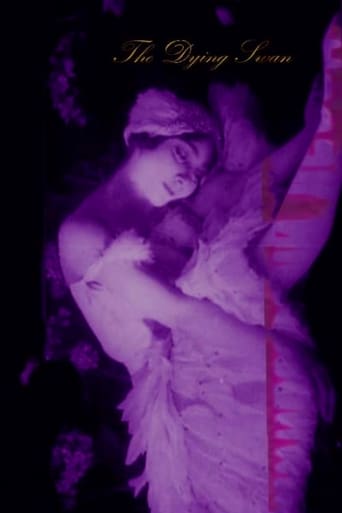
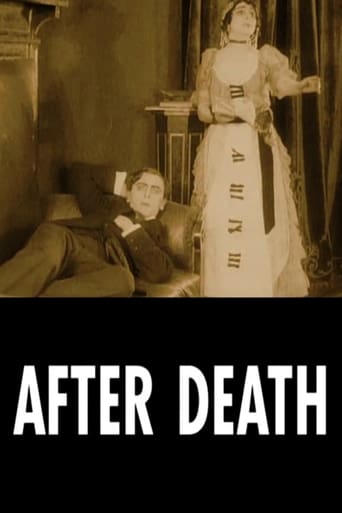
- The film was part of a trilogy of psychological dramas Bauer made in 1915, including 'The Dying Swan' and 'After Death'
- Bauer was one of the first directors to use moving camera shots extensively in Russian cinema
- The film's exploration of psychological themes was unusually sophisticated for its time, predating similar themes in German Expressionist cinema
- Alexander Wyrubow, who played Sergei, was a regular collaborator with Bauer and appeared in many of his films
- The film was made just two years before the Russian Revolution, which would dramatically transform the country's film industry
- Bauer died unexpectedly in 1917 from pneumonia after falling on set, making 'Daydreams' one of his last major works
- The film's original Russian title was 'Мечты' (Mechty), which translates more literally as 'Dreams' rather than 'Daydreams'
- The Khanzhonkov studio was the most prestigious film company in pre-revolutionary Russia
- Many of Bauer's films were considered lost for decades before being rediscovered in various archives
Visual style
The cinematography by Boris Zavelev was groundbreaking for its time, featuring sophisticated use of lighting to create psychological effects. Bauer and Zavelev employed chiaroscuro lighting to distinguish between reality and Sergei's dream states, using deep shadows and dramatic highlights to convey emotional turmoil. The film made extensive use of deep focus, allowing multiple planes of action to remain sharp simultaneously. Camera movements were more dynamic than typical for the period, with tracking shots following Sergei's psychological journey. The visual composition was carefully planned to reflect the protagonist's mental state, with distorted angles and framing used during moments of psychological crisis. The film's visual style influenced later developments in expressionist cinema and film noir.
Innovations
Bauer pioneered several technical innovations in 'Daydreams' that were ahead of their time. The film featured some of the earliest uses of subjective camera techniques to represent psychological states. Bauer employed sophisticated editing techniques to create dream sequences and flashbacks, using dissolves and superimpositions to blur the line between reality and fantasy. The film's lighting design was particularly advanced, using artificial lighting to create mood and psychological effects rather than simply illuminating the scene. The production design was meticulous, with sets carefully constructed to reflect Sergei's psychological state. The film also featured innovative makeup techniques to create the doppelgänger effect, though this was primarily achieved through casting and performance rather than technical effects.
Music
As a silent film, 'Daydreams' would have been accompanied by live musical performance during its original theatrical run. The specific musical selections would have been chosen by the theater's musical director to match the film's mood and action. Typical accompaniment might have included works by Russian composers such as Tchaikovsky or Rachmaninoff, particularly pieces dealing with themes of loss and memory. Modern screenings of the film have been accompanied by newly composed scores that attempt to capture the psychological intensity of Bauer's vision. The lack of recorded sound actually enhanced the film's dreamlike quality, forcing viewers to engage more deeply with the visual storytelling.
Famous quotes
As a silent film, 'Daydreams' contained no spoken dialogue, but its visual storytelling conveyed powerful emotional narratives through gesture, expression, and composition
Memorable scenes
- The moment Sergei first encounters Tina, the woman who resembles his dead wife, shot through a dreamlike haze with soft focus lighting
- Sergei's ritual with Yelena's braid of hair, filmed in close-up to emphasize his obsessive grief
- The psychological breakdown scene where reality and fantasy merge, using innovative superimposition techniques
- The final confrontation between Sergei and Tina, where his delusions collapse under the weight of reality
What audiences thought
The film was well-received by Russian audiences in 1915, who appreciated Bauer's reputation for sophisticated storytelling and visual artistry. The psychological themes resonated with audiences who were experiencing the trauma of World War I. The film's exploration of grief and loss struck a chord with viewers who had lost loved ones to the war. Modern audiences who have seen the film through screenings at film festivals and museum retrospectives have been impressed by its contemporary feel and psychological sophistication. The film's rediscovery has generated significant interest among cinema enthusiasts and scholars, leading to increased appreciation for Bauer's work and pre-revolutionary Russian cinema in general.
Film connections
Influenced by
- Freudian psychology
- Russian literature (particularly Dostoevsky's psychological novels)
- German Expressionism (which it predated but influenced)
- Symbolist art movement
- Theatrical melodrama tradition
This film influenced
- German Expressionist films of the 1920s
- Film noir of the 1940s and 1950s
- Psychological thrillers of the 1960s
- Alfred Hitchcock's 'Vertigo' (1958)
- David Lynch's psychological films
Film restoration
The film was considered lost for many years but was partially rediscovered in Russian archives. A restored version has been assembled from surviving fragments, though some sequences may still be missing. The restoration was undertaken by the Gosfilmofond archive in Russia, which holds many of Bauer's surviving works. The restored version allows modern audiences to appreciate the film's technical innovations and artistic achievements, though some deterioration from age is still visible in certain scenes.
Where to watch
- Available on specialized streaming platforms dedicated to classic cinema
- Screenings at film museums and cinematheques
- Included in DVD/Blu-ray collections of early Russian cinema
- Available through academic film archives and university libraries
- Occasionally screened at classic film festivals