Dickson Experimental Sound Film
"It is the first known film with live-recorded sound and appears to be the first motion p"
Keys: Space play/pause · ←/→ 10s · F fullscreen · M mute · </> speed
About this film
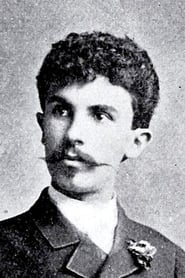
William K. Film made by William Dickson in late 1894 or early 1895. It is the first known film with live-recorded sound and appears to be the first motion picture made for the Kinetophone, the proto-sound-film system developed by Dickson and Thomas Edison.
Cast & crew
More films like this
More Music films
View all →
More from William K.L. Dickson
View all →
More about this film
About the production
Release dateLate 1895 (exact date unknown)
Box officeNot commercially released - no box office earnings
ProductionEdison Manufacturing Company
Filmed inEdison's Black Maria Studio, West Orange, New Jersey, USA
This film was created as a technical demonstration rather than for commercial exhibition. The production involved the complex challenge of synchronizing a Kinetoscope camera with a phonograph recording device. The Black Maria studio, Edison's innovative film production facility, was specifically designed with a retractable roof to allow natural sunlight for filming. The synchronization was achieved through a mechanical system that connected the camera's hand crank to the phonograph's recording mechanism, attempting to maintain consistent speed between both devices. The entire production team consisted of only a few technicians, with Dickson serving as both director and performer.
Themes
Technological innovationArtistic experimentationPerformanceMusic and danceSynchronization
Themes & topics
Historical background
Dickson Experimental Sound Film (1895) circulated in the first decade of projected cinema. Film made by William Dickson in late 1894 or early 1895. Contemporary trade papers and later preservation notes document its place among nickelodeon and cinema-club programs.
Why this film matters
Dickson Experimental Sound Film remains accessible to researchers and viewers as a screen title in museum, archive, and streaming collections. The Dickson Experimental Sound Film is a film made by William Dickson in late 1894 or early 1895.
Making of
The creation of this film represented a monumental technical challenge in 1895. William K.L. Dickson, working under Thomas Edison at the Edison Laboratory, had been experimenting with synchronizing sound and image since the early 1890s. The primary difficulty was maintaining consistent speed between the hand-cranked camera and the phonograph recording device. Dickson developed a mechanical synchronization system using belts and pulleys to connect the camera's crank mechanism to the phonograph's recording cylinder. The filming took place in Edison's revolutionary Black Maria studio, which featured a roof that could be opened to admit sunlight and could be rotated to follow the sun's path throughout the day. The performers had to maintain their positions carefully to stay within the limited frame of the early camera, and the violinist had to play loudly enough to be picked up by the primitive recording equipment. The entire process required multiple takes to achieve even rough synchronization, and the surviving film represents the best of these attempts.
What critics said
Day-one reviews for Dickson Experimental Sound Film are sparse in digitized press archives; later criticism treats it as a reference point for 1895 cinema programming and preservation.
Did you know?
- This is widely considered the oldest surviving film with synchronized recorded sound
- The film was created to test Edison's Kinetophone system, which was never commercially successful
- William K.L. Dickson was Thomas Edison's primary assistant in developing motion picture technology
- The two dancers have been identified as William Kennedy Laurie Dickson (possibly) and an unidentified colleague
- The violin piece performed is believed to be a popular song of the era, possibly 'The Song of the Cabin Boy'
- The synchronization was achieved through a complex pulley system connecting the camera and phonograph
- The film was not intended for public exhibition but rather as a technical test
- The wax cylinder sound recording has survived and can be synchronized with the film today
- The Black Maria studio where this was filmed was the world's first film production studio
- This film predates what is traditionally considered the beginning of the sound era by over 30 years
Visual style
The cinematography of this film reflects the extreme limitations of early motion picture technology. The film was shot using a single stationary camera, resulting in a completely static composition typical of 1890s cinema. The framing is tight, capturing only the upper bodies of the performers, which was necessary due to the low sensitivity of the film stock and the need for bright, direct sunlight. The Black Maria studio's design allowed for optimal lighting conditions, with its retractable roof and reflective walls maximizing available sunlight. The camera was hand-cranked, resulting in variable frame rates that created the characteristic flickering motion of early films. There are no camera movements, cuts, or any cinematic techniques beyond the basic recording of motion. The visual quality is grainy and low-contrast by modern standards, but was considered remarkable for its time. The composition places Dickson and his violin to one side while the dancers occupy the center, creating a simple but effective visual balance that allows viewers to observe both the musical performance and the dance simultaneously.
Innovations
The Dickson Experimental Sound Film represents several groundbreaking technical achievements for its time. Most significantly, it demonstrated the first successful synchronization of motion pictures with recorded sound, a feat that would not be commercially viable for another three decades. The film utilized an innovative mechanical synchronization system developed by Dickson, which connected the Kinetoscope camera's hand crank to the phonograph's recording mechanism through a series of belts and pulleys. This system attempted to maintain consistent speed between the visual and audio recording devices, though with limited precision. The film also showcases early use of the Edison Kinetoscope camera, which used 35mm film with four perforations per frame - a standard that would eventually become universal in the film industry. The recording was made on a wax cylinder using Edison's improved phonograph technology, representing one of the earliest uses of audio recording for artistic purposes. The entire production process, from the specialized lighting of the Black Maria studio to the dual recording setup, pushed the boundaries of available technology in 1895 and laid groundwork for future developments in cinema.
Music
The soundtrack consists of live violin music performed by William K.L. Dickson during filming, recorded simultaneously on a wax cylinder phonograph. The specific piece being played has not been definitively identified, though film historians speculate it might be a popular 19th-century song or possibly an original composition by Dickson himself. The recording quality is extremely primitive by modern standards, with significant surface noise and limited frequency response typical of wax cylinder recordings. The violin sound is thin and lacks bass response, but the melody is clearly discernible. The synchronization with the visual image is rough but functional, with the music generally matching the dancers' movements despite occasional drift. This soundtrack represents one of the earliest surviving examples of music specifically recorded for synchronization with moving images. The recording has been digitally restored and can be played in sync with the film today, allowing modern audiences to experience this early attempt at audiovisual unity much as it was intended in 1895.
Famous quotes
There are no spoken lines in this film, as it predates the era of dialogue in cinema
Memorable scenes
- The entire 17-second sequence of Dickson playing violin while two men dance, representing the first synchronized sound and image recording in film history
What audiences thought
The Dickson Experimental Sound Film was never shown to general audiences during its time, as it was created purely as a technical demonstration within Edison's laboratory. The only viewers would have been Edison employees and possibly visiting investors or scientists. These viewers reportedly expressed fascination with the synchronization, though they also recognized the technical limitations that prevented commercial application. Modern audiences who have seen the film, typically through film screenings at museums or archives, react with wonder at seeing this early attempt at sound cinema. The film is now accessible through various digital archives and is often featured in documentaries about film history, where contemporary audiences express amazement that such sophisticated experimentation was occurring as early as 1895. The film's brevity and simplicity are generally understood in the context of its experimental nature, and viewers appreciate it as a window into the earliest days of cinema innovation.
Film connections
Influenced by
- Edison's earlier phonograph experiments
- Eadweard Muybridge's motion studies
- Étienne-Jules Marey's chronophotography
This film influenced
- Edison's later Kinetophone experiments
- Lee De Forest's Phonofilm experiments
- Vitaphone sound shorts
- The Jazz Singer
Film restoration
The film is preserved by the Library of Congress in the United States National Film Registry. Both the visual film element and the original wax cylinder sound recording have survived, making it one of the few films from this era with both picture and sound intact. The film has been digitally restored and is available through various archival channels. The preservation of both elements is particularly remarkable given the fragility of early film stock and wax cylinder recordings. The restoration has allowed modern audiences to experience the film with its original synchronization, providing a unique window into early cinema experimentation.
Where to watch
- Library of Congress National Screening Room
- YouTube (through official archival channels)
- Museum of Modern Art film collection
- Early Cinema archives and educational platforms
- Various documentary collections on film history