Films
1 film
About Charles D'Almaine
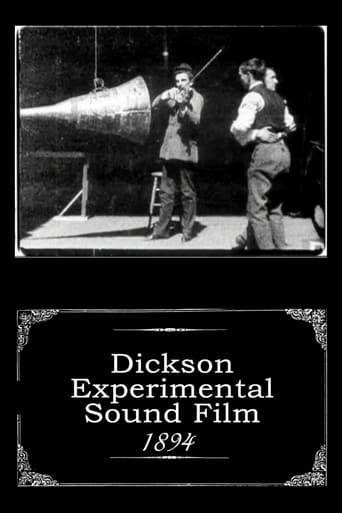
Made cinematic history by participating in one of the earliest known attempts at synchronized sound film. In 1895, he performed in William Kennedy Laurie Dickson's Dickson Experimental Sound Film at Thomas Edison's Black Maria studio. This experimental short film featured D'Almaine playing violin while two men danced, representing one of the first successful attempts to synchronize recorded sound with moving images. As a professional musician during the late 19th century, D'Almaine was likely recruited by Edison's team for his musical abilities rather than any acting experience. His participation in this technological milestone places him among the very first performers to appear in a sound film, predating the commercial sound era by over three decades. While little is known about his broader career, his contribution to this experiment represents an important moment in cinema history.
The Craft
Milestones
- Performed in Dickson Experimental Sound Film (1895), one of the earliest synchronized sound films
- Participated in Thomas Edison's experimental film work at the Black Maria studio
- Contributed to sound technology development in cinema
Best Known For
Iconic Roles
Must-See Films
Working Relationships
Worked Often With
Studios
Why They Matter
Impact on Culture
Charles D'Almaine's contribution to cinema history, while brief, represents a crucial moment in the development of film technology. By participating in the Dickson Experimental Sound Film, he became part of the first successful attempt to synchronize recorded sound with moving images, a breakthrough that would eventually revolutionize the film industry three decades later. His violin performance helped demonstrate that musical accompaniment could be synchronized with visual action, laying groundwork for the future of sound cinema. This experimental film, though never commercially released, proved the technical feasibility of synchronized sound and influenced subsequent developments in film technology.
Lasting Legacy
Charles D'Almaine's legacy is tied to his role as one of the first performers to appear in a synchronized sound film. While his name is not widely recognized, his contribution to the Dickson Experimental Sound Film places him in the historical record as an early pioneer of sound cinema. The film itself is preserved in the Library of Congress and recognized as a significant milestone in film history, ensuring that D'Almaine's contribution to early cinema experimentation is documented and remembered by film historians and preservationists.
Who They Inspired
As one of the earliest performers in synchronized sound film, Charles D'Almaine's influence is primarily historical rather than artistic. His participation helped demonstrate the technical possibilities of combining sound and image, influencing the eventual development of commercial sound films. The success of the Dickson Experimental Sound Film, in which he performed, provided proof of concept that would inspire future innovations in sound technology throughout the silent era and beyond.
Off Screen
Very little is documented about Charles D'Almaine's personal life, which is typical for many performers from the earliest days of cinema. As a professional violinist in the 1890s, he was likely part of the musical community that existed during the transition from the 19th to 20th century. His participation in Edison's experimental film suggests he may have been based in or near the New York/New Jersey area where Edison's laboratory was located.
Did You Know?
- The Dickson Experimental Sound Film was created 32 years before 'The Jazz Singer' (1927), the first feature-length talkie
- The film was shot at Edison's Black Maria studio, the first film production studio in the world
- D'Almaine was likely recruited specifically for his violin skills rather than acting ability
- The sound for the film was recorded on a wax cylinder while the image was captured on film
- The film was never commercially released but was created as a technical experiment
- The film runs for approximately 17 seconds
- D'Almaine performed alongside two dancers in the experimental short
- The film was directed by William Kennedy Laurie Dickson, Edison's chief film engineer
- This was one of the very first films to attempt lip-sync synchronization
- The film is preserved in the Library of Congress's motion picture collection
Frequently Asked Questions
Who was Charles D'Almaine?
Screen credits include the 1895 Dickson Experimental Sound Film, one of the earliest known attempts at synchronized sound cinema. He was recruited by Thomas Edison's team to perform in this groundbreaking experimental film at the Black Maria studio.
What films is Charles D'Almaine best known for?
Titles linked here include Dickson Experimental Sound Film (1895).
When was Charles D'Almaine born and when did he die?
Unfortunately, specific birth and death dates for Charles D'Almaine are not documented in historical records, which is common for many performers from the very earliest days of cinema. His only known film work dates from 1895.
What awards did Charles D'Almaine win?
Charles D'Almaine did not receive any formal awards or recognition during his lifetime, as he was a performer from the experimental era of cinema before such honors existed. His significance is purely historical as an early pioneer of sound film.
What was Charles D'Almaine's role in film history?
D'Almaine's role was as a musical performer who helped demonstrate the technical feasibility of synchronized sound in cinema. His violin performance in the Dickson Experimental Sound Film proved that music could be synchronized with moving images, influencing the future development of sound technology in film.