

Don't Change Your Husband
"Chinese silent of a wife tempted by another man."
Keys: Space play/pause · ←/→ 10s · F fullscreen · M mute · </> speed
About this film
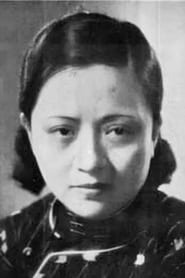
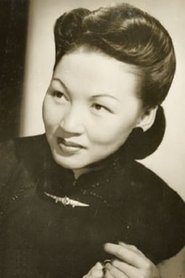
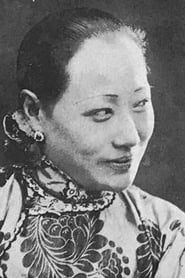
Xie Lijun, a young married woman, is bored by her husband Wang Qiping and attracted to Chen Mengtian, a superficially more appealing and apparently richer man. Chen tells her not to worry if her husband discovers their involvement: he will simply have a lawyer friend start divor.
Cast & crew
More films like this
More Drama films
View all →







More about this film
About the production
Release date1929
ProductionMingxing Film Company
Filmed inShanghai, China
the production was produced during the transitional period when Chinese cinema was moving from silent films to sound pictures. The production likely faced challenges related to early sound recording technology and the political instability in China during the late 1920s. Shanghai was the center of Chinese film production during this era, often referred to as the 'Hollywood of the East.'
Themes
Marital dissatisfactionInfidelityModern vs. traditional valuesUrban alienationFemale desire and agency
Themes & topics
adulterydivorcemarriageboredomattractionwealthlawyerurban life1920s ChinaShanghai
Historical background
Don't Change Your Husband (1929) reached screens through Mingxing Film Company. Exhibitors of the time built early sound programs that mixed shorts, features, and live acts, so a clear premise helped Don't Change Your Husband travel between cities and exchange markets.
Why this film matters
Archivists and revival programmers still cite Don't Change Your Husband (1929) when tracing studio habits, casting pools, and the visual rhetoric audiences once took for granted. Even modest surviving prints help map how Don't Change Your Husband fit beside competing releases of its day.
Making of
The production of the production took place during a tumultuous period in Chinese history, with the country experiencing political fragmentation and the aftermath of the Northern Expedition. Director Yunqing Xie was part of a generation of Chinese filmmakers who were influenced by both traditional Chinese storytelling and Western cinematic techniques. The casting of Tianxiu Tang, Chen Yitang, and Wang Naidong reflected the star system that was developing in Chinese cinema during this era. The film was likely shot on location in Shanghai, which was the undisputed center of Chinese film production, housing major studios like Mingxing and Lianhua. The technical challenges of early sound recording would have been significant, as China was still developing its film infrastructure and often had to import equipment and expertise.
What critics said
Trade coverage around 1929 discussed Don't Change Your Husband for pacing, clarity, and program fit rather than blockbuster grosses. Later writers value it as evidence of period style and as a reference point beside other films from the same era.
Did you know?
- the production was made during what is considered the first golden age of Chinese cinema (1920s-1930s)
- The year 1929 marked a crucial transition period for Chinese cinema as sound technology was being introduced
- Shanghai in the 1920s was a cosmopolitan city with significant foreign influence, which likely affected the film's themes and production style
- Early Chinese films often dealt with themes of modernity versus tradition, reflecting China's rapid social changes
- The film's title and theme of marital dissatisfaction reflect growing Western influences on Chinese urban society
- Many Chinese films from this period have been lost due to war, political upheaval, and poor preservation conditions
- The 1920s saw the emergence of female-centered narratives in Chinese cinema, addressing women's changing roles in society
Visual style
Specific details about the cinematography of the production are not available, which is typical for Chinese films from this era. However, Chinese cinema in the late 1920s was developing its own visual style, influenced by both traditional Chinese aesthetics and Western cinematic techniques. The film likely used the standard black and white film stock of the period, with lighting and composition techniques that were becoming more sophisticated as Chinese cinematographers gained experience. As this was during the transition to sound, the cinematography might have been constrained by the limitations of early sound recording equipment, which often required cameras to be stationary in soundproof booths. The visual style would have reflected the urban setting of Shanghai, potentially incorporating both traditional Chinese architectural elements and modern Western influences.
Innovations
If the production was produced with sound elements in 1929, it would represent an early example of Chinese sound cinema, which was a significant technical achievement for the Chinese film industry. The production would have required adapting to new sound recording technologies, which were expensive and difficult to obtain in China at the time. The technical challenges included synchronizing sound with image, dealing with the noise of early recording equipment, and ensuring adequate sound quality in theaters that were not yet fully equipped for sound projection. Even if the film was primarily silent, it would have benefited from the advances in cinematography, lighting, and editing techniques that Chinese filmmakers had developed during the 1920s. The film's production would have contributed to the technical knowledge and expertise that enabled Chinese cinema to flourish in the 1930s.
Music
As a 1929 film, this was produced during the early transition period to sound cinema in China. If the film included sound elements, it would have been among the early Chinese sound films, which used various experimental sound technologies. The soundtrack, if present, would likely have consisted of synchronized musical accompaniment and possibly some dialogue or sound effects. Chinese filmmakers in this period often incorporated traditional Chinese music alongside Western-style orchestral arrangements. The musical score would have been performed live in theaters for silent screenings or recorded using the primitive sound recording technology available at the time. The transition to sound was challenging for Chinese cinema due to technical limitations and the need to accommodate multiple Chinese dialects.
Famous quotes
Don't worry if your husband discovers our involvement. I will simply have a lawyer friend start divorce proceedings.
Memorable scenes
- The scene where Chen Mengtian reassures Xie Lijun about handling the divorce proceedings with his lawyer friend, demonstrating the modern, casual approach to marriage dissolution that was emerging in urban Chinese society.
What audiences thought
Contemporary audience reception information for this specific film is not well-documented, which is common for Chinese films from the 1920s. However, films dealing with themes of romance, marriage, and social change were popular among urban Chinese audiences in Shanghai and other major cities during this period. The subject matter of marital dissatisfaction and infidelity would have been particularly relevant to modernizing urban populations who were experiencing shifts in traditional family structures and values. The film's release during the transition to sound cinema might have affected its reception, as audiences were increasingly drawn to the novelty of sound films. The star power of the lead actors, particularly Tianxiu Tang, would have been a significant factor in attracting audiences to theaters.
Film connections
Influenced by
- Western melodramas
- Hollywood romantic dramas of the 1920s
- Chinese literary traditions of family drama
- May Fourth Movement writings on women's liberation
Film restoration
The preservation status of the production is unknown, but like many Chinese films from the 1920s, it is likely lost or exists only in fragmentary form. The vast majority of Chinese films from this period have been lost due to poor storage conditions, war damage, and political upheavals. The China Film Archive in Beijing and other international film archives may hold materials related to the production, but complete prints are rare for Chinese cinema of this era.
Where to watch
- the production is not currently available on any streaming platforms or home video releases. As with many Chinese films from the 1920s, it may only be accessible through specialized film archives or academic institutions that maintain collections of early Chinese cinema. The China Film Archive in Beijing would be the most likely repository for any surviving materials related to the production.