Keys: Space play/pause · ←/→ 10s · F fullscreen · M mute · </> speed
Plot
This early Lumière actuality film captures a bustling scene at the August Bridge in Dresden, Germany. The camera, positioned to observe the flow of daily life, shows pedestrians, horse-drawn carriages, and early automobiles crossing the historic bridge. The continuous single shot documents the rhythm of urban transportation and pedestrian movement in late 19th-century Germany. Like many Lumière films, it presents an unmediated view of reality without editing or narrative intervention. The film serves as both a documentary record of Dresden's urban landscape and a demonstration of the new medium's ability to capture authentic moments of everyday life.
Director
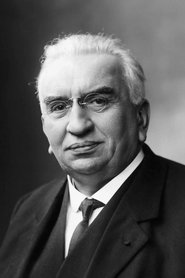 Louis Lumière
About the Production
Release Date 1896
Budget Not documented - early Lumière films were produced with minimal costs
Box Office Not tracked for early actuality films
Production Société Lumière
Filmed In August Bridge (Augustbrücke), Dresden, Germany
Filmed using the Lumière Cinématographe, which served as both camera and projector. The camera was likely positioned on a tripod to capture the steady view of bridge traffic. This was one of many actuality films the Lumière brothers shot during their travels across Europe to document various locations and demonstrate their invention. The film was shot on 35mm film stock with an aspect ratio of approximately 1.33:1.




Themes & Topics
bridgestreet sceneactualitéDresdenpedestrianshorse-drawn carriageurbandocumentarysingle takestatic camera
Historical Background
The year 1896 was pivotal in cinema history, marking the first full year of commercial film exhibition following the Lumière brothers' legendary first public screening in Paris on December 28, 1895. This period saw the rapid expansion of cinema as a new form of entertainment and documentation across Europe and the world. The industrial revolution had transformed cities like Dresden, with new forms of transportation and increasing urbanization creating scenes worthy of capture by this new technology. The August Bridge itself represented the engineering achievements of the 19th century, connecting parts of the growing city. These early actuality films served not only as entertainment but as valuable historical documents of urban life before the 20th century brought further changes. The film was created during a time when moving images were still a novelty, and audiences were fascinated by the ability to see real places and people projected on a screen.
Why This Film Matters
This film represents an important milestone in documentary filmmaking and the development of cinema as a medium for capturing reality. As one of the earliest moving images of Dresden, it provides invaluable historical documentation of the city's urban landscape in the late 19th century. The film exemplifies the Lumière brothers' philosophy of using cinema to document the world around them, establishing a foundation for documentary filmmaking that would evolve throughout the 20th century. These early actualities helped establish the concept of film as a time capsule, preserving moments of everyday life that would otherwise be lost to history. The film also demonstrates how cinema quickly became an international medium, with French filmmakers documenting German cities for global distribution, foreshadowing cinema's role as a cross-cultural documentarian.
Making Of
The filming of 'Dresden, August-Brücke' was likely conducted by one of the Lumière brothers' trained cameramen rather than Louis Lumière himself, as the company had begun sending operators to various locations by 1896. The Cinématographe device used for filming was revolutionary for its time, combining camera, developer, and projector in one portable unit. The cameraman would have arrived in Dresden with the equipment, found a suitable vantage point on or near the August Bridge, and filmed the passing traffic and pedestrians. These actuality films were shot quickly and efficiently, often with just one take being sufficient for the Lumière brothers' purposes. The film was then processed and shipped back to Lyon for inclusion in the company's growing catalog of films that were distributed worldwide.
What Critics Said
Contemporary critical reception of early Lumière actualities like 'Dresden, August-Brücke' was overwhelmingly positive, with audiences and critics marveling at the technology's ability to capture and reproduce reality. The films were praised for their clarity, realism, and the novelty of seeing moving images of real places and people. Modern film historians and critics view these works as foundational texts in cinema history, recognizing their importance in establishing documentary film practices and the language of cinematic realism. The film is now studied as an example of early documentary techniques and as a valuable historical document of late 19th-century urban life.
Did You Know?
- This film is part of the Lumière brothers' extensive collection of actuality films, which numbered over 1,400 by 1905
- The August Bridge shown in the film was originally built in the 1730s and was an important crossing point over the Elbe River
- Like most early Lumière films, it was shot in a single continuous take without any camera movement
- The film was likely shown as part of the Lumière brothers' traveling exhibitions that brought cinema to audiences worldwide
- This actuality represents one of the earliest moving images of Dresden, making it historically significant for German urban history
- The Lumière brothers often sent cameramen to various European cities to create such actuality films for their growing catalog
- Early films like this were typically shown alongside other short subjects in programs lasting 15-20 minutes
- The film demonstrates the Lumière philosophy of capturing 'nature caught in the act' rather than staged scenes
- Dresden was one of many European cities documented by Lumière cameramen in their first years of operation
- The film would have been hand-cranked during projection, potentially varying the speed from showing to showing
More film details Visual style, music, quotes, restoration, and more
Visual Style
The cinematography in 'Dresden, August-Brücke' is characteristic of early Lumière actualities: a static camera position capturing a continuous, unedited view of the scene. The composition was carefully chosen to maximize the visual interest of passing traffic and pedestrians. The black and white imagery, captured on 35mm film, provides remarkable clarity for the period. The fixed perspective and long take create a sense of observational detachment, allowing viewers to study the details of the scene. The lighting was entirely natural, as artificial lighting was not yet used in filmmaking, resulting in the authentic appearance of the outdoor scene.
Innovations
The film represents several important technical achievements of early cinema. It was shot using the Lumière Cinématographe, a groundbreaking device that combined camera, developer, and projector functions. The film used 35mm film with perforations, a format that would become the industry standard. The projection speed was approximately 16-18 frames per second, faster than Edison's Kinetoscope. The ability to capture outdoor scenes with available light demonstrated the portability and practicality of the Cinématographe system. The film's clarity and stability of image were remarkable for the period, showcasing the technical superiority of the Lumière process.
Music
This film was produced during the silent era and would have been originally exhibited without any synchronized soundtrack. During exhibition in 1896, it might have been accompanied by live music, typically a pianist or small ensemble playing popular tunes of the period. Some exhibitors might have provided sound effects or narration to enhance the viewing experience. Modern presentations of the film are typically accompanied by period-appropriate music or left silent to maintain historical authenticity.
Memorable Scenes
- The continuous shot showing various modes of 19th-century transportation including horse-drawn carriages, early bicycles, and possibly early automobiles crossing the historic August Bridge in Dresden, capturing the rhythm of urban life in Imperial Germany.
What Audiences Thought
Audiences in 1896 were fascinated by early actuality films like this one, often reacting with astonishment to seeing moving images of real places and people. The film would have been shown as part of a program of short subjects, with audiences particularly enjoying scenes from foreign cities they might never visit. The simple, direct presentation of reality in these films appealed to viewers' curiosity about the world. Modern audiences viewing the film through archives and museums appreciate it as a historical window into the past, finding value in its documentation of urban life, transportation methods, and fashion from the period.
Film Connections
Influenced By
- Lumière brothers' philosophy of capturing reality
- Early photography traditions of urban documentation
- 19th-century interest in technological progress and urbanization
This Film Influenced
- Subsequent Lumière actualities of urban scenes
- Early city symphony films of the 1920s
- Documentary tradition of urban observation
- Modern street photography and videography
Film Restoration
Preserved in the Lumière Institute archives and various film archives worldwide. The film has been digitized and is part of the preserved collection of early Lumière works. As one of the Lumière brothers' actualities, it has been carefully maintained as part of cinema's foundational heritage.
Where to Watch
- Available through the Lumière Institute's official website and digital archives
- Included in various collections of early cinema released on DVD and Blu-ray
- Accessible through some film archive streaming services specializing in classic cinema
- Often screened at film museums and cinematheques during programs of early cinema
- Available on some educational platforms for film studies