Duniya Na Mane
"Child bride seeks a younger husband in secret"
Keys: Space play/pause · ←/→ 10s · F fullscreen · M mute · </> speed
About this film
A young girl who is forced to marry an aging lawyer. She is implored to find a young husband before her would be husband snuffs the idea out.
Cast & crew
More films like this
More from Shantaram Rajaram Vankudre
View all →

More about this film
About the production
Release date1937
BudgetNot available in historical records
Box officeNot available in historical records, but was commercially successful
ProductionPrabhat Film Company
Filmed inPrabhat Studios, Pune, Maharashtra, India
The film was produced during the golden era of Prabhat Film Company and was one of their most ambitious projects. Director V. Shantaram invested significant resources in ensuring the film's technical excellence and social impact. The production team conducted extensive research into the social issues depicted, consulting with social reformers of the time. The film's realistic approach to its subject matter was revolutionary for Indian cinema of the 1930s.
Themes
Women's empowerment and autonomyCritique of patriarchal social structuresGeneration gap and changing valuesEducation as a tool for liberationIndividual freedom versus social conformity
Themes & topics
Social reformChild marriageWomen's rightsAge disparityFamily dramaPatriarchyEducationIndividual freedomResistanceSocial injustice
Historical background
Made during the studio era of 1937, Duniya Na Mane reached audiences through theatrical programs, fairground booths, or specialized distribution channels typical of its generation. A young girl who is forced to marry an aging lawyer. She is implored to find a young husband before her would be. Historians now read such works for what they reveal about production methods, national taste, and the expanding vocabulary of screen narrative.
Why this film matters
Archivists and programmers still screen Duniya Na Mane when tracing how popular entertainment evolved. Its subject—a young girl who is forced to marry an aging lawyer. she is implored to find a young husband before—gives later viewers tangible evidence of what drew crowds in its day. Home video, restorations, and festival sidebars keep the title circulating among students of film history.
Making of
The making of Duniya Na Mane was a revolutionary process that challenged conventional filmmaking practices of the time. Director V. Shantaram was deeply committed to social reform and used cinema as a medium for change. He assembled a team of like-minded artists who shared his vision. The casting process was meticulous, with Shanta Apte being chosen for her ability to portray both vulnerability and strength. The film was shot using innovative camera techniques, including close-ups that emphasized the emotional turmoil of the characters. The production faced resistance from conservative elements who opposed the film's progressive message, but Shantaram remained steadfast in his commitment to telling this important story. The music recording was particularly challenging, as the film required songs that could convey both traditional values and modern sensibilities.
What critics said
Original trade coverage treated Duniya Na Mane as routine program filler rather than a landmark production—typical of steady studio output. Later criticism emphasizes preservation, stylistic comparison with contemporaries, and whatever cast or crew names later gained prominence. Contemporary writing is mostly historical: assessing completeness, influence, and place in a director's or studio's catalog.
Did you know?
- The film was based on a Marathi novel 'Na Patnari Goshta' written by Shri. N.V. Kulkarni
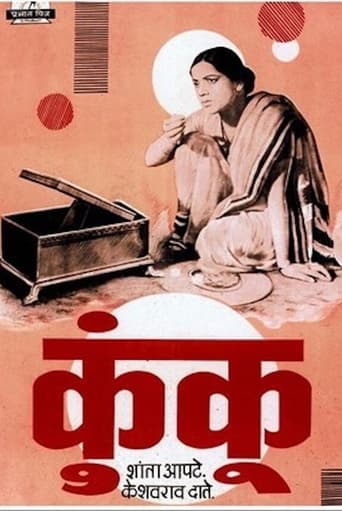
- It was also released in Hindi as 'Duniya Na Mane' and in Marathi as 'Kunku'
- The film was one of the earliest Indian films to receive international recognition
- It was screened at the Venice International Film Festival, a rare achievement for Indian cinema in the 1930s
- The film's lead actress, Shanta Apte, was known for her powerful singing voice and sang several songs in the film
- Director V. Shantaram considered this one of his most important socially relevant works
- The film was banned in several princely states due to its controversial subject matter
- It was one of the first Indian films to directly address the issue of age disparity in marriages
- The film's success led to increased awareness about the problem of child marriage in India
- The character of Nirmala became an icon of women's empowerment in Indian cinema
Awards & recognition
- Best Film Award at the Venice International Film Festival (1937)
- Special Jury Mention for its social significance
Visual style
The cinematography of Duniya Na Mane was groundbreaking for its time, employing techniques that enhanced the film's emotional impact and social message. Cinematographer V. Avadhoot used innovative camera angles to emphasize the power dynamics between characters, often shooting from below to show Nirmala's defiance and from above to depict the oppressive nature of the patriarchal system. The film made effective use of close-ups to capture the subtle emotions of the characters, particularly Nirmala's inner turmoil and determination. Lighting was used symbolically, with Nirmala often shown in soft, natural light while the older husband was frequently depicted in harsh shadows. The film also incorporated tracking shots that created a sense of movement and progress, reflecting the changing social landscape. The visual style combined realism with artistic expression, creating images that were both beautiful and meaningful.
Innovations
Duniya Na Mane was technically ahead of its time in several aspects. The film pioneered the use of synchronized sound in Indian cinema, with dialogue recording that was remarkably clear for the period. The editing techniques employed were sophisticated, using cross-cutting to build tension and parallel editing to contrast different characters' perspectives. The film's sound design was particularly noteworthy, using silence strategically to emphasize dramatic moments and employing ambient sounds to create a realistic atmosphere. The makeup and costume design were carefully researched to reflect the social status and personalities of the characters. The film also experimented with narrative structure, incorporating flashbacks and dream sequences that were innovative for Indian cinema of the 1930s. These technical achievements contributed significantly to the film's impact and demonstrated the growing sophistication of Indian filmmaking.
Music
The music of Duniya Na Mane was composed by Keshavrao Bhole, who was known for his ability to blend traditional Indian melodies with modern sensibilities. The soundtrack featured several songs that became popular for their meaningful lyrics and emotional depth. Shanta Apte, who played Nirmala, sang most of the songs herself, bringing authenticity and passion to the performances. The music served not just as entertainment but as a narrative device, advancing the story and revealing character motivations. Songs like 'Ab Ke Baras' and 'Jhoom Jhoom Ke' became anthems of women's empowerment. The soundtrack was notable for its avoidance of typical filmi music conventions, instead opting for a more classical and refined approach that matched the film's serious tone. The background score was equally innovative, using minimal instrumentation to create tension and emphasize key dramatic moments.
Famous quotes
Main ek jawan ladki hoon, ek budhe ke saath shaadi nahi kar sakti - I am a young woman, I cannot marry an old man
Shiksha hamara haq hai, koi nahi cheen sakta - Education is our right, no one can take it away
Zindagi jeene ke liye jeeni chahiye, bas sehni nahi - Life must be lived, not just endured
Badlav ki shururat ek hi se hoti hai - Change begins with one person
Purane rivaz badalne honge, warna hum badal jaayenge - Old customs must change, or we will change
Memorable scenes
- The confrontation scene where Nirmala refuses to accept the marriage proposal, standing up to the entire family with courage and dignity
- The emotional breakdown scene where Nirmala confides in the youngest son about her fears and dreams
- The courtroom sequence where Nirmala argues for her right to choose her own life partner
- The final scene where Nirmala walks away from the oppressive household, symbolizing her emancipation
- The scene where Nirmala teaches the children, showing how education can be a tool for change
What audiences thought
Duniya Na Mane was received with enthusiasm by audiences who were hungry for meaningful cinema that reflected their social realities. The film resonated particularly with urban, educated viewers who were grappling with similar conflicts between tradition and modernity in their own lives. Many women viewers found inspiration in Nirmala's character and her refusal to accept her fate passively. The film's success at the box office demonstrated that socially relevant content could be commercially viable. However, it also faced opposition from conservative sections of society who found its message too radical. Despite some controversy, the film developed a loyal following and became a talking point in social circles. Its impact was such that it continued to be discussed and referenced long after its theatrical run, contributing to ongoing conversations about women's rights and social reform in India.
Film connections
Influenced by
- Social reform movements of 1930s India
- Women's rights activism
- Indian nationalist movement
- Progressive literature of the period
- International cinema dealing with social issues
This film influenced
- Pinjra (1972)
- Nadiya Ke Paar (1948)
- Jagte Raho (1956)
- Mother India (1957)
- Bandini (1963)
- Mirch Masala (1987)
Film restoration
The film has been partially preserved by the National Film Archive of India (NFAI) in Pune. While some portions have suffered from the natural degradation of nitrate film stock, significant portions remain intact. The Film Heritage Foundation has undertaken restoration efforts, and a restored version was screened at various film festivals. The original negatives are believed to be lost, but good quality prints exist in archives. The film is considered part of India's cinematic heritage and ongoing efforts are being made to preserve it for future generations.
Where to watch
- National Film Archive of India (Pune) - for research and archival viewing
- Film Heritage Foundation screenings and retrospectives
- Various film festivals featuring classic Indian cinema
- Some restored versions available on specialized streaming platforms for classic cinema
- Academic institutions with film studies programs