
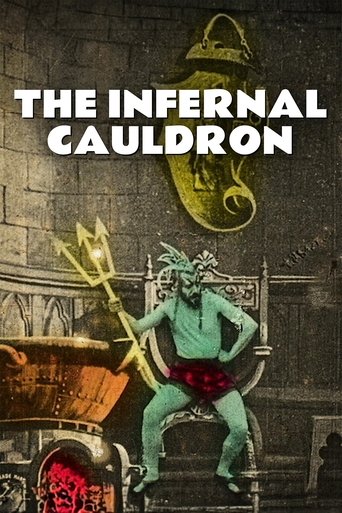
Enchanted Glasses
"pre-feature era intrigue and devilish"
Keys: Space play/pause · ←/→ 10s · F fullscreen · M mute · </> speed
About this film
An unlikely pre-feature era life, devilish looking man dances with a dress in his arms. The dress stands up by itself and a woman magician appears in it. She conjures six women and then makes them disappear. She magically changes into men's clothing and lines up six boxes which begin to smoke and produce six wome
Cast & crew
More films like this
More Fantasy films
View all →

More from Segundo de Chomón
View all →

More about this film
About the production
Release date1907
ProductionPathé Frères
Filmed inParis, France
Filmed using early special effects techniques including multiple exposures, substitution splices, and in-camera tricks. The production required precise timing for the appearance/disappearance effects and careful choreography of the magical transformations. The smoking effects were created using practical pyrotechnics, a common technique in early fantasy films. The film was shot on a single set with minimal props, relying entirely on the magician's performance and the technical effects to create the illusion of magic.
Themes
Magic and illusionTransformationGender fluidityThe supernaturalThe power of the magician
Themes & topics
magiciantrick filmspecial effectstransformationdisappearanceappearancemagicfantasydevilsmokeglasseswineballetcostume change
Historical background
Viewers who saw Enchanted Glasses in 1907 experienced it within the conventions of pre-feature era filmmaking.
Why this film matters
Film clubs and archives revisit Enchanted Glasses as part of broader pre-feature era programming. 1907 film directed by Segundo de Chomón
Making of
The making of 'Enchanted Glasses' required meticulous planning and execution of early cinematic special effects. Segundo de Chomón, working for Pathé Frères, employed multiple exposure techniques to create the appearance of women materializing from thin air and inside glasses. The transformation sequences were achieved through careful substitution splicing, where the camera would be stopped, elements changed, and filming resumed. The smoking effects were created using stage pyrotechnics, which had to be carefully controlled to avoid damaging the film equipment or endangering performers. The magician's costume changes were accomplished through quick-change techniques and clever editing. The production likely took place in Pathé's studio facilities in Paris or Vincennes, where de Chomón had access to the most advanced film equipment of the time. The film's success led to de Chomón becoming one of Pathé's most valuable directors of fantasy films.
What critics said
Surviving reviews and later retrospectives treat Enchanted Glasses as representative pre-feature era fare—valued for craft even when not hailed as a masterpiece.
Did you know?
- The film is also known by its French title 'Les Lunettes enchantées'
- Segundo de Chomón was often called the 'Spanish Méliès' due to his similar style of trick films
- The film was produced during the golden age of Pathé Frères, when they dominated the global film market
- De Chomón's wife, Julienne Mathieu, often appeared in his films and may be the magician in this production
- The special effects were achieved entirely in-camera without post-production editing
- The film was hand-colored in some releases, a common practice for fantasy films of this era
- The devilish character was a recurring motif in de Chomón's work, representing the magical or supernatural
- The transformation sequence from gowns to ballet dresses was particularly innovative for its time
- The film demonstrates de Chomón's mastery of substitution splicing, a technique he helped perfect
- Pathé distributed this film internationally, making it one of the earliest examples of global film distribution
Visual style
The cinematography in 'Enchanted Glasses' employs static camera positioning typical of early films, with all action taking place within a single frame. The lighting is bright and even, necessary for the multiple exposure techniques used throughout the film. The visual style emphasizes clarity and visibility of the magical effects, with careful attention to framing the transformation sequences. The camera work demonstrates technical precision in maintaining consistent framing across the multiple takes required for the special effects. The black and white photography creates stark contrasts that enhance the magical quality of the appearances and disappearances.
Innovations
'Enchanted Glasses' showcases several important technical innovations in early cinema. The film's multiple exposure techniques for creating the appearance of multiple women from a single performer were particularly sophisticated for 1907. The substitution splicing used for costume transformations demonstrates remarkable precision in early editing. The film's use of pyrotechnics for smoke effects while maintaining visual clarity shows advanced understanding of practical effects. The sequence of women appearing inside glasses required careful planning of focus and exposure to create convincing illusions. The smoothness of the magical transformations, achieved through meticulous in-camera techniques, represents a significant advancement over earlier, more jarring trick films.
Music
As a silent film, 'Enchanted Glasses' would have been accompanied by live musical performance during its original theatrical run. The typical accompaniment would have been piano or organ music, often improvised to match the on-screen action. Magical appearances would have been emphasized with musical flourishes, while transformation sequences might have featured more dramatic or mysterious melodies. Some theaters may have used pre-selected classical pieces or popular songs of the era. The absence of synchronized sound meant the visual effects had to carry the entire narrative and emotional weight of the film.
Famous quotes
(Silent film - no dialogue)
Memorable scenes
- The sequence where six women appear inside wine glasses as the magician pours liquid, creating a stunning visual effect that exemplifies early cinema's magical capabilities
- The transformation of the magician's clothing from feminine dress to men's formal wear, showcasing early special effects mastery
- The finale where the devilish figure converts the dress into torches and vanishes in smoke, providing a dramatic conclusion to the magical proceedings
What audiences thought
Early cinema audiences were captivated by 'Enchanted Glasses,' which was popular in theaters across Europe and America. Viewers were particularly amazed by the sequence showing women appearing inside glasses, which seemed like genuine magic to audiences unfamiliar with film techniques. The film's rapid succession of magical effects kept audiences engaged and demonstrated the wondrous possibilities of the new medium. The transformation sequences received especially enthusiastic responses, with many viewers returning to see the film multiple times to try to understand how the effects were achieved. The film's success contributed to de Chomón's growing reputation excelled in cinematic magic.
Film connections
Influenced by
- Georges Méliès' trick films
- Stage magic traditions
- Spiritualism movement
- Theatrical illusion techniques
This film influenced
- Later Pathé fantasy productions
- Georges Méliès' later works
- Early Disney animation
- Contemporary magic-themed films
Film restoration
The film is preserved in the Library of Congress collection and has been digitally restored. Original nitrate copies exist in various film archives worldwide. The restoration work has maintained the clarity of the original special effects while ensuring the film's survival for future generations.
Where to watch
- Library of Congress website
- YouTube (through official archive channels)
- Various classic film streaming platforms
- Film archive screenings
- Educational film collections