Enthusiasm. Symphony of Donbas
"Blood on the agrarian"
Keys: Space play/pause · ←/→ 10s · F fullscreen · M mute · </> speed
About this film
An audiovisual symphony that the industrial, agrarian, and cultural fabric of the Donbas region during the inaugural Soviet Five Year Plan. It spotlights anti-religious campaigns, propagandistic marches, and the vibrant athletic culture of its time.
Cast & crew
More films like this


More Documentary films
View all →

More from Dziga Vertov
View all →


More about this film
About the production
Release dateApril 1930 (premiere in Moscow), May 1930 (general Soviet release)
BudgetNot officially documented, as Soviet film budgets were not publicly disclosed during this period
Box officeNot applicable in Western terms; Soviet films were distributed through state channels without commercial box office tracking
ProductionVUFKU (All-Ukrainian Photo-Cinema Administration), Sovkino
Filmed inDonbas region (Donetsk and Luhansk Oblasts, Ukrainian SSR), Stalino (now Donetsk), Makeevka, Yuzovka, Various coal mines and steel plants throughout the Donbas industrial region
Filming took place under extremely challenging conditions in active industrial sites. Vertov and his crew had to develop portable sound recording equipment to capture authentic industrial sounds. The production lasted approximately 8 months, with the team often working alongside actual industrial shifts. The film was one of the first to use synchronous sound recording on location in the Soviet Union, requiring innovative solutions to overcome technical limitations in noisy industrial environments.
Themes
Industrialization and technological progressCollective labor and socialist constructionThe rhythm and beauty of industrial workHuman-machine symbiosisAnti-religious sentiment and scientific materialism
Themes & topics
industrializationSoviet Uniondocumentarysound filmcoal miningsteel productioncollectivizationworkerspropagandaavant-garde cinemaFive-Year Planindustrial machineryathletic competitionsanti-religious campaignssocialist construction
Historical background
Made in its country of production around 1930, Enthusiasm. Symphony of Donbas belongs to the early sound era. Its story of an audiovisual symphony that the industrial, agrarian, and cultural fabric of the donbas region during the inaugural soviet five year plan spoke to audiences of the day through familiar genres and topical settings.
Why this film matters
Archivists and historians still cite Enthusiasm. Symphony of Donbas when tracing how the early sound era filmmakers staged audiovisual and symphony on screen.
Making of
The production of 'Enthusiasm' was marked by extreme technical challenges and innovation. Vertov, working with sound engineer Pavel Shorin, had to develop portable sound recording equipment that could function in the harsh conditions of coal mines and steel factories. The crew often worked in dangerous environments, filming alongside actual industrial operations. Vertov's approach was revolutionary - he wanted to capture not just the sight but the sound of socialist construction, treating industrial noise as music. The film's production coincided with the forced collectivization and rapid industrialization of the First Five-Year Plan, adding urgency and political significance to the project. Vertov spent months in the Donbas region, living among workers and gaining their trust to capture authentic moments of industrial life. The editing process was equally innovative, with Vertov and Svilova creating complex rhythmic relationships between image and sound that went beyond simple synchronization.
What critics said
Reviews from 1930 weighed Enthusiasm. Symphony of Donbas on pacing, performance, and novelty. Later criticism reads its emphasis on audiovisual, symphony, industrial through modern standards of craft and representation.
Did you know?
- This was one of the first Soviet sound films and Vertov's first sound documentary, marking a revolutionary leap in cinematic technology
- Charlie Chaplin famously praised the film, calling it 'an achievement in the use of sound' and screening it privately multiple times
- Vertov developed special portable sound recording equipment to capture industrial sounds on location, a technical innovation for the time
- The film was temporarily banned in the USSR in 1931 for 'formalism' before being rehabilitated years later
- All the 'actors' in the film are real workers, farmers, and athletes - no professional performers were used
- The original title was simply 'The Symphony of the Donbas' before 'Enthusiasm' was added to emphasize the emotional tone
- Vertov's wife and longtime collaborator Elizaveta Svilova served as the film's editor, creating the complex rhythmic montages
- The film's sound design influenced later documentary filmmakers and is studied in film schools as a pioneering work in sound documentary
- Industrial sounds recorded for the film included coal mining operations, steel furnaces, locomotives, and factory machinery
- The athletic sequences were filmed during actual Spartakiad games, mass sporting events celebrating physical culture in the Soviet Union
Awards & recognition
- Honorable Mention at the 1930 Venice Film Festival for innovative use of sound in documentary
- Recognized as a pioneering work by the International Documentary Association (retrospective honor)
- Included in the UNESCO Memory of the World Register (as part of Vertov's film legacy)
Visual style
The film's cinematography was revolutionary for its time, employing dynamic camera movements and innovative angles to capture industrial processes. Vertov used handheld cameras, crane shots, and unusual perspectives to create a sense of movement and energy that mirrored the industrial processes being filmed. The camera often seems to dance with the machinery, creating a visual rhythm that complements the industrial sounds. Vertov employed techniques like superimposition, rapid montage, and rhythmic editing to create visual symphonies from industrial imagery. The cinematography emphasizes the scale of industrial projects while humanizing the workers who operate them. Vertov's camera work creates a sense of immediacy and authenticity, placing viewers inside the factories and mines rather than observing from a distance. The visual style combines documentary realism with avant-garde experimentation, creating images that are both informative and aesthetically striking.
Innovations
The film's most significant technical achievement was its pioneering use of synchronous sound recording on location in industrial environments. Vertov and his team developed portable sound recording equipment that could withstand the harsh conditions of coal mines and steel factories. They solved problems of echo, background noise, and equipment mobility that had previously limited location sound recording. The film also featured innovative editing techniques that created complex relationships between image and sound, going beyond simple synchronization. Vertov developed methods of rhythmic editing that matched visual and auditory patterns, creating what he called 'radio-eye' cinema. The film's sound mixing techniques were also advanced for the time, layering multiple sound sources to create rich audio textures. These technical innovations expanded the possibilities of documentary filmmaking and demonstrated the artistic potential of sound in cinema.
Music
The soundtrack of 'Enthusiasm' was groundbreaking in its conception and execution. Rather than using a traditional musical score, Vertov created a symphony from industrial sounds, worker chants, and recorded music. The film opens with the sounds of a locomotive and builds to complex layers of industrial noise, factory whistles, and machinery. Vertov treated these sounds as musical elements, arranging them into rhythmic patterns and harmonies. The film includes recordings of workers singing, speeches at rallies, and the sounds of athletic competitions. Vertov also incorporated elements of folk music and revolutionary songs, blending them with industrial sounds to create a unique audio landscape. The sound design was revolutionary in its use of location recording and its artistic approach to non-musical sounds. This approach to sound as both documentary evidence and artistic expression influenced generations of filmmakers and sound artists.
Famous quotes
The symphony of the Donbas is the symphony of socialist construction - Opening intertitle
Enthusiasm is the basic element of every socialist work - Intertitle
From the darkness of the mines to the light of socialism - Voiceover narration
The machine sings the song of the future - Intertitle during factory sequence
In the rhythm of work, we find the rhythm of life - Intertitle during montage sequence
Steel is our music, labor is our song - Worker chant recorded in the film
Yesterday we dug coal, tomorrow we will build socialism - Worker speech
The sound of the factory is the sound of progress - Intertitle
In every drop of sweat, in every spark of steel - the enthusiasm of the people - Concluding narration
Our enthusiasm is our weapon, our labor is our victory - Rally chant
Memorable scenes
- Opening sequence showing coal miners descending into the mines with headlamps creating patterns of light in darkness
- The steel plant sequence with molten metal flowing like rivers of fire, synchronized with industrial sounds
- Mass athletic competitions where thousands of workers perform synchronized exercises in vast stadiums
- Anti-religious demonstration where religious symbols are destroyed while workers chant revolutionary slogans
- The final montage sequence combining rapid cuts of industrial processes, workers' faces, and machinery in rhythmic patterns
- Sequence showing women workers operating complex machinery, emphasizing gender equality in socialist labor
- The 'symphony' sequence where various industrial sounds are layered to create a musical composition
- Parade of athletes and workers marching with banners through industrial streets
- Scene of collective farmers celebrating successful harvests with traditional songs adapted to socialist themes
- Closing sequence showing the Donbas illuminated at night, with factory lights creating a constellation of socialist achievement
What audiences thought
Soviet audience reception was complex and evolved over time. Initial showings in industrial centers like Moscow and Leningrad attracted workers and party officials, with many responding positively to the celebration of their labor. However, some viewers found the experimental style challenging compared to more conventional Soviet films. As political winds shifted and 'formalism' became condemned, the film's reception became more cautious. International audiences, particularly those interested in avant-garde cinema, were more consistently enthusiastic. The film found appreciative viewers in Europe's artistic and intellectual circles. In later decades, as it gained recognition as a classic of world cinema, 'Enthusiasm' developed a cult following among film enthusiasts and scholars. Modern audiences often view it as both a historical document and a work of artistic innovation, appreciating its dual significance as propaganda and avant-garde art.
Film connections
Influenced by
- Soviet constructivist art and design theory
- Italian Futurism's celebration of machines and speed
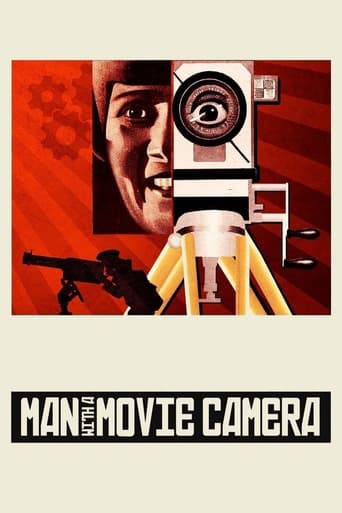
- Vertov's earlier silent films, particularly 'Man with a Movie Camera' (1929)
- Marxist-Leninist theory of historical materialism
- Soviet theories of montage and cinematic language
- Classical symphonic music structure
- Industrial and mechanical art movements
This film influenced
- Man with a Movie Camera (Vertov's earlier work, but 'Enthusiasm' influenced its sound version)
- Three Songs About Lenin (Vertov, 1934)
- The City (Steyermark, 1939)
- Listen to Britain (Jennings & Stewart, 1942)
- Industrial Britain (Wright, 1933)
- Night Mail (Watt & Wright, 1936)
- Koyaanisqatsi (Reggio, 1982)
- Manufactured Landscapes (Baichwal, 2006)
- Leviathan (Castaignet & Samoiloff, 2014)
Film restoration
The film has been preserved and restored by multiple archives worldwide. The original negative is held at Gosfilmofond in Russia, with copies at major film archives including the British Film Institute, the Museum of Modern Art, and the National Film Archive of Ukraine. The film underwent major restoration in the 1990s as part of Vertov's film preservation project. A digital restoration was completed in 2010, improving both visual and sound quality. Some versions exist with varying sound quality due to the technical limitations of original recording equipment. The film is considered well-preserved compared to many Soviet films of the era, thanks to its international recognition and Vertov's importance in film history.
Where to watch
- Available on The Criterion Channel as part of their Dziga Vertov collection
- Included in the DVD box set 'Dziga Vertov: The Man with the Movie Camera and Other Works' from Flicker Alley
- Streaming on Kanopy (through participating libraries and universities)
- Available for viewing at film archives including the Museum of Modern Art (New York) and the British Film Institute
- Occasionally screened at film festivals and cinematheques specializing in classic and avant-garde cinema
- Available on some educational streaming platforms for academic use
- Can be found on specialized streaming services focusing on classic world cinema