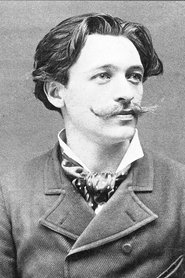

Fantasmagorie
"Lines that refuse to stay still"
Keys: Space play/pause · ←/→ 10s · F fullscreen · M mute · </> speed
About this film
Émile Cohl's stick figures morph through a dream parade of impossible shapes, line drawings dissolving and re-forming in the first great burst of hand-drawn screen animation.
Cast & crew
More Animation films
View all →

More from Émile Cohl
View all →
More about this film
About the production
Release dateAugust 17, 1908
Box officeUnknown - box office tracking was not standardized in this era
ProductionGaumont Film Company
Filmed inParis, France
Cohl created this film using traditional animation techniques, drawing each frame on paper and then shooting them sequentially. The film was created by drawing on paper, then shooting each frame, creating what we now recognize as traditional animation. The distinctive chalk-like appearance was achieved by drawing each frame on paper and then inverting the negative to create the white-on-black effect. The entire film consists of approximately 700 hand-drawn frames.
Themes
Transformation and metamorphosisSurrealism and dreamsThe nature of reality and illusionArtistic freedom and absurdityThe magic of cinema
Themes & topics
animationsurrealismtransformationdream sequencestick figureelephantprison escapemovie theatremorphingstream of consciousness
Historical background
Made in 1908 Paris amid the Incoherent art movement, Cohl's short pushed cinema toward pure graphic imagination rather than photographed reality.
Why this film matters
Often called the first true animated cartoon, its metamorphosing stick figures opened a path from trick photography to frame-by-frame drawing.
Making of
Émile Cohl, originally a political caricaturist and member of the avant-garde Incoherents movement, brought his surreal artistic sensibility to animation. He created Fantasmagorie by drawing each frame on paper with black ink, then photographing the drawings one by one. The process was laborious and time-consuming, requiring precise registration of each drawing to maintain smooth motion. Cohl's background in caricature influenced the fluid, morphing quality of the animation, where faces and shapes transform seamlessly. The film was produced at Gaumont's studio in Paris, where Cohl had access to the necessary equipment. His experience with the Incoherents, an artistic movement that embraced absurdity and rejected conventional artistic standards, directly informed the film's dreamlike, nonsensical narrative structure.
What critics said
French critics of the era noted its wit and strangeness; animation scholars screen it as the genre's symbolic birth certificate.
Did you know?
- Considered the first fully animated film in cinema history
- The title 'Fantasmagorie' refers to a type of 19th-century magic lantern show that featured ghostly projections
- Cohl was inspired by J. Stuart Blackton's 'Humorous Phases of Funny Faces' (1906) but expanded the concept considerably
- The film's distinctive visual style came from drawing on paper and then inverting the negative during processing
- Each frame was drawn individually, making it one of the earliest examples of traditional hand-drawn animation
- The stick figure protagonist was likely based on the 'Little Man' character popular in French comic strips of the time
- Cohl created the film while working for Gaumont, where he was initially hired as a writer and caricaturist
- The film was released without sound, as synchronized sound technology wouldn't exist for another two decades
- The transformation sequence where the character becomes an elephant references the popularity of circus imagery in early 20th century France
- Cohl was 51 years old when he created this groundbreaking film, making him one of animation's oldest pioneers
Visual style
The cinematography of Fantasmagorie was groundbreaking for its use of frame-by-frame photography to create the illusion of movement. Cohl employed a stop-motion technique applied to drawings rather than objects, essentially inventing traditional animation. The black-and-white cinematography creates a distinctive chalk-on-blackboard effect through the use of negative photography. The camera work was static, as the focus was on the animated drawings themselves, but the compositions were carefully planned to maximize the impact of the transformations. The film's visual style was influenced by the aesthetic of magic lantern shows, with their ghostly, floating images. The cinematography emphasized contrast and silhouette, making the morphing shapes more dramatic and readable to the audience.
Innovations
Fantasmagorie pioneered the fundamental technique of traditional animation: drawing each frame individually and photographing them sequentially to create movement. Cohl developed registration techniques to ensure smooth transitions between frames, a challenge that animators continue to perfect today. The film demonstrated the power of metamorphosis as an animation principle, showing how one image could fluidly transform into another. Cohl's use of negative photography to create the distinctive white-on-black appearance was innovative for the time. The film established the concept of the animated short as a complete narrative form, rather than just a novelty act. It also demonstrated that animation could tell abstract, non-linear stories, expanding the narrative possibilities of the medium.
Music
Fantasmagorie was originally released as a silent film, as synchronized sound technology would not be developed until the late 1920s. In contemporary theatrical presentations, the film would have been accompanied by live musical accompaniment, typically a pianist or small orchestra performing popular tunes of the era or improvised music to match the on-screen action. Modern restorations and presentations often feature newly composed scores, with musicians creating period-appropriate music using instruments common in 1908. Some contemporary screenings feature experimental scores that emphasize the film's surreal and abstract qualities. The lack of synchronized sound actually enhances the film's dreamlike quality, allowing the visual transformations to exist in their own timeless space.
Famous quotes
While the film contains no dialogue, its visual language speaks volumes: the transformation of a simple stick figure into countless forms became the visual vocabulary of animation itself.
Memorable scenes
- The opening sequence where a stick figure emerges from the hands of the animator, establishing the self-referential nature of the work
- The elephant transformation sequence where the creature morphs into various shapes, showcasing the limitless possibilities of animation
- The prison escape scene where the character transforms to slip through bars, demonstrating animation's ability to defy physical laws
- The final scene where the character becomes a gentleman and tips his hat to the audience, breaking the fourth wall
What audiences thought
Early 1908 audiences were reportedly astonished and delighted by Fantasmagorie, with many viewers believing they were witnessing actual magic rather than a carefully crafted illusion. The film's short length and whimsical nature made it popular as part of variety-style film programs common in early cinemas. Contemporary accounts suggest audiences would applaud and laugh at the various transformations, particularly the sequence involving the elephant. The film's popularity helped establish animation as a viable commercial format, leading Gaumont to produce more animated shorts. Modern audiences viewing the film in retrospectives and film festivals continue to be charmed by its primitive yet sophisticated animation techniques. The film remains popular in animation history courses and museum exhibitions, where viewers appreciate its historical significance and artistic innovation.
Film connections
Influenced by
- J. Stuart Blackton's 'Humorous Phases of Funny Faces' (1906)
- The Incoherents art movement
- Magic lantern shows and phantasmagoria performances
- Georges Méliès's trick films
- Political caricature and cartoon art
- Circus and vaudeville entertainment
This film influenced
- Winsor McCay's 'Gertie the Dinosaur' (1914)
- Walt Disney's early 'Laugh-O-Grams'
- Oskar Fischinger's abstract animations
- Norman McLaren's experimental films
- The surreal animations of the 1920s and 1930s
Film restoration
Fantasmagorie has been preserved and restored by various film archives, including the Cinémathèque Française. While the original nitrate print has deteriorated, high-quality copies exist in several film archives worldwide. The film is part of the permanent collection of major film institutions and has been digitally restored for modern viewing. Its preservation status is considered good, with multiple copies ensuring its survival for future generations.
Where to watch
- Available on YouTube through official film archive channels
- Included in the Criterion Collection's 'Avant-Garde' anthology
- Streamable on various classic film platforms including Kanopy
- Available on DVD in collections of early animation
- Screened periodically at film museums and cinematheques worldwide
- Accessible through university film libraries and academic databases