Five Minutes of Pure Cinema
"Pure cinema: form, rhythm, and composition without story."
Keys: Space play/pause · ←/→ 10s · F fullscreen · M mute · </> speed
About this film
Pure-cinema montage on the pure elements of film like form, visual composition, and rhythm.
Cast & crew
More films like this
More Drama films
View all →







More about this film
About the production
Release date1926
Box officeNot commercially released - limited to avant-garde circuits
ProductionIndependent production, Possibly self-funded by Chomette
Filmed inParis, France
Created during the height of the French avant-garde movement, this film was part of Chomette's exploration of 'cinéma pur' (pure cinema). The production utilized experimental techniques that were groundbreaking for 1926, including rapid montage sequences and abstract visual compositions. Chomette, influenced by contemporary artistic movements, deliberately avoided narrative elements to focus on the visual and rhythmic qualities unique to cinema. The film was likely shot on 35mm film using available light and simple camera setups, emphasizing the director's belief that cinema's power lay in its visual and temporal properties rather than complex production values.
Themes
Pure cinemaVisual rhythmAbstract compositionCinematic autonomyModernism
Themes & topics
Historical background
By 1926, distribution networks were widening, and Five Minutes of Pure Cinema reached viewers through the same short-program bills that mixed comedy, news, and spectacle.
Why this film matters
Collectors prize surviving prints of Five Minutes of Pure Cinema as evidence of how 1926-era filmmakers solved storytelling problems with limited means.
Making of
The creation of Five Minutes of Pure Cinema emerged from Henri Chomette's deep involvement with the Parisian avant-garde art scene of the 1920s. Chomette, working alongside experimental filmmakers like Germaine Dulac and Jean Epstein, sought to establish cinema as an independent art form with its own unique language. The production process was highly experimental, with Chomette often shooting footage without a clear plan, allowing the editing process to determine the final structure. He worked with basic camera equipment, proving that artistic innovation didn't require substantial resources. The film's rapid editing style was revolutionary for 1926, requiring Chomette to develop new techniques for splicing and arranging footage to create rhythmic visual patterns. Unlike commercial productions of the era, this film had no script, no professional actors, and no studio backing - it was truly an independent artistic statement created with minimal resources but maximum artistic ambition.
What critics said
Trade papers near 1926 treated Five Minutes of Pure Cinema as program material—noticed when exhibitors needed a reliable slot-filler, seldom debated as auteur cinema.
Did you know?
- Henri Chomette was the brother of more famous filmmaker René Clair, but chose to pursue experimental cinema rather than commercial filmmaking
- The film is considered one of the earliest examples of 'cinéma pur' or pure cinema movement
- Chomette coined the term 'cinégraphie' to describe his approach to visual rhythm in film
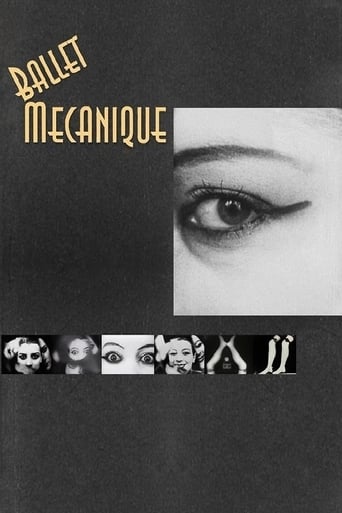
- The film was created during the same period as other notable avant-garde works like Ballet Mécanique (1924) and Un Chien Andalou (1929)
- Only fragments of many of Chomette's works survive today, making this complete 5-minute piece particularly valuable
- The film influenced later experimental filmmakers including Maya Deren and Stan Brakhage
- Chomette believed cinema should be 'a visual music' and this film was his manifesto of that principle
- The work was screened primarily in avant-garde circles and artistic salons in Paris rather than commercial theaters
- Chomette later abandoned filmmaking to focus on photography, believing the still image could better capture his artistic vision
- The film's emphasis on pure visual elements pre-dated and influenced similar movements in abstract film across Europe
Visual style
The cinematography of Five Minutes of Pure Cinema is characterized by its experimental approach to visual composition and its emphasis on abstract forms and patterns. Chomette employed innovative techniques for the period, including extreme close-ups, unusual camera angles, and rapid movements to create visual rhythms. The film utilizes high contrast lighting to emphasize geometric shapes and textures, creating stark black and white compositions that highlight the two-dimensional nature of the cinematic image. Chomette experimented with focus and depth of field to create abstract visual effects, sometimes shooting through prisms or using reflective surfaces to distort reality. The cinematography deliberately avoids conventional establishing shots or traditional composition rules, instead creating visual sequences that function like musical phrases. The camera work emphasizes movement and transformation, with many sequences showing the gradual metamorphosis of shapes and patterns. This approach to cinematography was revolutionary for 1926 and demonstrates Chomette's understanding of cinema's potential for creating purely visual experiences.
Innovations
Five Minutes of Pure Cinema achieved several technical innovations for its time, particularly in the realm of editing and visual composition. Chomette's use of rapid montage was groundbreaking for 1926, with some sequences featuring cuts that were much faster than typical commercial films of the era. The film demonstrated early examples of what would later become known as rhythmic editing, with visual patterns timed to create a sense of musicality without actual sound. Chomette also experimented with superimposition and multiple exposure techniques to create layered visual effects that were technically challenging with the equipment available in the 1920s. The film's abstract compositions required innovative approaches to lighting and camera placement, often using unconventional angles and movements to transform ordinary subjects into abstract patterns. While not technically complex in terms of production values, the film represented an achievement in pushing the boundaries of existing cinematic techniques to serve artistic rather than commercial purposes. These technical innovations influenced later developments in experimental cinema and even found their way into mainstream filmmaking as directors adopted more dynamic editing styles.
Music
As a silent film from 1926, Five Minutes of Pure Cinema was originally presented without a synchronized soundtrack. However, like many avant-garde films of the era, it would have been accompanied by live musical performances during its exhibition. The choice of musical accompaniment was crucial to the film's reception, with avant-garde venues often selecting contemporary classical compositions or improvised music that complemented the film's abstract visual rhythms. Some screenings may have featured works by modernist composers like Stravinsky or members of Les Six, whose musical innovations paralleled the film's visual experimentation. The lack of a fixed soundtrack allowed for different interpretations at each screening, with the musical accompaniment significantly influencing viewers' experience of the film's visual rhythms. Modern restorations and screenings of the film typically feature specially composed scores or carefully selected contemporary music that reflects the work's avant-garde nature. The absence of dialogue or sound effects emphasizes the film's focus on pure visual elements, making it a true example of silent cinema's artistic potential.
Famous quotes
Cinema must become its own art, independent of theater and literature
The camera eye sees what the human eye cannot
Visual rhythm is the soul of cinema
We must free cinema from the tyranny of narrative
Memorable scenes
- The opening sequence of rapidly edited geometric patterns that establishes the film's abstract visual language
- The middle section featuring superimposed architectural elements creating dreamlike compositions
- The finale where visual elements accelerate to create a climax of pure visual rhythm
What audiences thought
The original audience for Five Minutes of Pure Cinema was limited to the small but dedicated community of avant-garde art enthusiasts in Paris during the 1920s. These viewers, accustomed to experimental works across various artistic disciplines, generally received the film with interest and appreciation for its innovative approach to cinematic form. However, the work was not intended for or seen by mainstream audiences, who at the time preferred narrative films with clear storylines. The film's abstract nature and lack of conventional narrative elements would have been challenging for general audiences of the era. In subsequent decades, as experimental cinema gained broader acceptance, the film found new audiences among film students, experimental filmmakers, and art cinema enthusiasts. Modern audiences viewing the film in retrospectives or academic settings tend to appreciate it for its historical significance and its role in the development of cinematic language, though its abstract nature continues to make it more accessible to viewers with an interest in avant-garde art rather than those seeking traditional entertainment.
Film connections
Influenced by
- Ballet Mécanique (1924) by Fernand Léger
- The Cabinet of Dr. Caligari (1920)
- Works of Dziga Vertov
- French Impressionist cinema
- Dadaist art
- Cubist painting
- Futurist manifestos
This film influenced
- Meshes of the Afternoon (1943) by Maya Deren
- Mothlight (1963) by Stan Brakhage
- Window Water Baby Moving (1959) by Stan Brakhage
- Various abstract films of the 1940s-1960s
- Music videos of the 1980s
- Digital abstract cinema
Film restoration
The film is partially preserved with some degradation typical of nitrate film from the 1920s. Archives such as the Cinémathèque Française hold copies, though the condition varies. Some restoration work has been undertaken, but complete restoration remains challenging due to the film's age and experimental nature. The film is considered at-risk but not lost.
Where to watch
- Available through specialized film archives and cinematheques
- Screened at avant-garde film festivals and retrospectives
- Some educational institutions with film studies programs
- Occasionally available through museum exhibitions
- Limited availability through specialty DVD collections of avant-garde cinema