Flim Flam Films
"Felix makes home movies, wife objects"
Keys: Space play/pause · ←/→ 10s · F fullscreen · M mute · </> speed
About this film
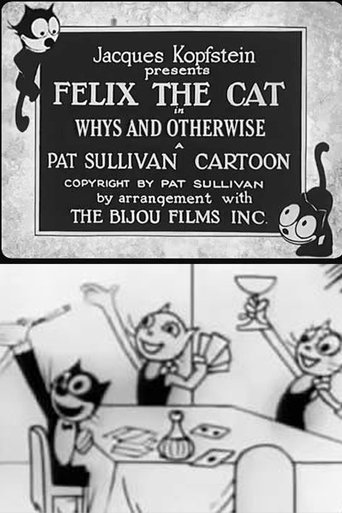
Felix the Cat sneaks his kittens into a movie house, gets ejected, and retaliates by filming his own scandalous short—shown to his furious wife.
Cast & crew
More films like this
More Animation films
View all →



More from Otto Messmer
View all →
More about this film
About the production
Release dateOctober 15, 1927
Box officeBox office figures for individual shorts were not tracked separately in the silent era
ProductionPat Sullivan Studios
Filmed inNew York City, New York
This film was created using traditional cel animation techniques, with each frame drawn by hand on paper and then transferred to celluloid sheets for coloring. The production process was labor-intensive, requiring thousands of individual drawings for the approximately 6-8 minute runtime. Otto Messmer and his small team would typically produce one Felix cartoon per week to meet the demanding theatrical release schedule. The film features the characteristic rubber hose animation style popular in the 1920s, where characters moved with fluid, boneless motions.
Themes
Family relationshipsCelebrity cultureThe magic of cinemaDomestic comedyArtistic creation
Themes & topics
movie theaterfilmmakingkittensinfidelitycomedy of errorssilent filmanimationfamilycelebrityscandalbathing beautydomestic life
Historical background
Production in 1927 placed Flim Flam Films among Jazz Age releases competing for attention in a rapidly expanding market.
Why this film matters
Retrospective programs include Flim Flam Films when mapping Jazz Age output across genres and national cinemas.
Making of
The creation of 'Flim Flam Films' exemplified the rapid production methods of Pat Sullivan Studios during Felix's peak popularity years. Otto Messmer led a small team of animators who worked in cramped New York studios, often producing cartoons on a weekly basis to meet theater demand. The animation process involved Messmer sketching the key poses and action, while assistant animators created the in-between frames. The film's gags about movie-making were particularly meta for the time, as animation itself was still a novel and magical medium for audiences. The bathing beauty sequence would have been carefully choreographed to maximize comedic effect while staying within the bounds of 1920s decency standards. Live-action reference footage may have been shot to help animators capture realistic movements for the more complex scenes.
What critics said
Festival revivals have renewed discussion of Flim Flam Films among Jazz Age specialists.
Did you know?
- Felix the Cat was the first animated character to achieve worldwide superstar status, predating Mickey Mouse by several years
- Otto Messmer, though credited as director, was the true creator of Felix, though Pat Sullivan took most of the public credit and profits
- The film was released during the transition period from silent to sound films, making it one of the last great silent Felix cartoons
- Felix's distinctive personality and walk were based on Charlie Chaplin's Little Tramp character
- The kittens in this film represent Felix's family, which was occasionally shown in cartoons to emphasize his domestic side
- This cartoon was part of a series that explored Felix's interactions with the emerging world of cinema and celebrity culture
- The bathing beauty scene was considered somewhat risqué for its time, though tame by modern standards
- Felix merchandise at the time included dolls, watches, and even a Chevrolet car hood ornament
- The film's title 'Flim Flam Films' plays on the slang term 'flim-flam' meaning deception or trickery, fitting the cartoon's theme of movie magic
- Original Felix cartoon negatives were often recycled or destroyed, making surviving prints like this one particularly valuable
Visual style
The animation in 'Flim Flam Films' employs the classic rubber hose style characteristic of 1920s animation, featuring fluid, boneless character movements and exaggerated physical comedy. The film uses dynamic camera angles and perspective changes unusual for the period, creating a sense of depth and movement. The black and white cinematography makes excellent use of contrast and shadow to enhance the comedic timing and emotional impact of scenes. The movie theater sequences feature detailed background art that captures the grandeur of 1920s picture palaces. Animation techniques include squash and stretch, smear frames for fast motion, and innovative use of negative space. The film's visual storytelling demonstrates sophisticated understanding of cinematic language despite the limitations of the medium.
Innovations
'Flim Flam Films' showcases several technical innovations for its time, including sophisticated use of perspective and depth in animated sequences. The film features complex crowd scenes and detailed backgrounds that pushed the boundaries of what was possible in limited animation budgets. The animation team developed techniques for creating realistic movement in clothing and hair, particularly evident in the bathing beauty scene. The cartoon demonstrates advanced understanding of timing and spacing in animation, creating smooth and believable character movements. The film's meta-cinematic elements, showing a movie within a movie, required careful planning of visual hierarchy and framing. The production utilized early versions of animation timing sheets to coordinate complex multi-character scenes. The surviving prints show remarkable clarity and preservation of detail, indicating high-quality original production standards.
Music
As a silent film, 'Flim Flam Films' would have been accompanied by live musical performance in theaters. Typical accompaniment included a pianist or small orchestra performing popular songs of the era, classical pieces, and improvised music matched to the on-screen action. The movie theater scenes might have featured popular 1927 songs like 'The Best Things in Life Are Free' or 'My Blue Heaven.' The romantic bathing beauty sequence would have been accompanied by sentimental, sweeping melodies, while the comedic chase scenes would have used ragtime or novelty tunes. Some larger theaters might have used compiled cue sheets specifically prepared for Felix cartoons, suggesting appropriate musical pieces for various scenes. The lack of synchronized sound allowed for greater flexibility in musical interpretation across different venues.
Memorable scenes
- The opening sequence showing Felix and his three kittens sneaking into the ornate movie theater, capturing the wonder and excitement of cinema-going in the 1920s
- The hilarious moment when Felix attempts to operate a movie camera, with his characteristic magical tail helping him in impossible ways
- The scandalous scene where the kittens catch Felix kissing the bathing beauty, filmed with perfect comedic timing and visual irony
- The climatic confrontation when Mrs. Felix sees the incriminating footage, showcasing the cartoon's mastery of silent emotional expression
What audiences thought
Felix the Cat cartoons were enormously popular with audiences in 1927, regularly drawing crowds to theaters specifically to see the latest adventures. Children and adults alike embraced Felix's mischievous charm and clever problem-solving abilities. The character's merchandise sold exceptionally well, indicating strong audience engagement beyond the theater experience. Audience feedback cards from movie palaces of the era consistently rated Felix cartoons among the most popular short subjects. The relatable family dynamics in 'Flim Flam Films' would have resonated particularly well with family audiences. Felix's universal appeal transcended cultural and language barriers, making him popular internationally even in the silent era. The character's popularity was so immense that he was often featured more prominently on theater marquees than the live-action features he accompanied.
Film connections
Influenced by
- Charlie Chaplin's comedies
- Buster Keaton's visual humor
- Early live-action comedies about Hollywood
- Vaudeville traditions
- Comic strip storytelling techniques
This film influenced
- Later Mickey Mouse cartoons
- Warner Bros. Looney Tunes meta-humor
- The Simpsons' celebrity episodes
- Modern animated parodies of Hollywood
Film restoration
The film exists in archived collections, with copies held by major film preservation institutions including the Library of Congress and the UCLA Film & Television Archive. Some restoration work has been performed on surviving prints, though the original camera negative is believed lost. The cartoon has been included in various Felix the Cat compilation releases on home video formats.
Where to watch
- Available on various Felix the Cat compilation DVDs
- Included in some streaming animation archive collections
- Occasionally screened at silent film festivals and animation retrospectives
- Public domain versions may be found on internet archive sites