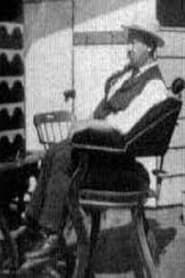
Glenroy Bros., No. 2
"The Glenroy Brothers box on film for Edison."
Keys: Space play/pause · ←/→ 10s · F fullscreen · M mute · </> speed
About this film
The Glenroy Brothers perform a portion of their vaudeville act, "The Comic View of Boxing: The Tramp & the Athlete".
Cast & crew
More films like this
More Comedy films
View all →







More from William Heise
View all →
More about this film
About the production
Release dateOctober 1894
Box officeNot tracked in modern terms - exhibited as part of Edison's Kinetoscope parlor offerings
ProductionEdison Manufacturing Company
Filmed inBlack Maria Studio, West Orange, New Jersey
Filmed in Edison's revolutionary Black Maria studio, which featured a retractable roof to allow natural sunlight for filming. The Glenroy Brothers were actual vaudeville performers brought in specifically for this recording. The film was shot on 35mm film using Edison's Kinetograph camera, which could only capture about 15-20 seconds of footage at a time. This was one of many vaudeville acts Edison captured to demonstrate the commercial potential of motion pictures.
Themes
Physical comedyClass differences (athlete vs. tramp)Sports parodyPerformance art preservationTechnology capturing entertainment
Themes & topics
Historical background
Glenroy Bros., No. 2 (1894) reached screens through Edison Manufacturing Company. Exhibitors of the time built nickelodeon-era programs that mixed shorts, features, and live acts, so a clear premise helped Glenroy Bros., No. 2 travel between cities and exchange markets.
Why this film matters
Archivists and revival programmers still cite Glenroy Bros., No. 2 (1894) when tracing studio habits, casting pools, and the visual rhetoric audiences once took for granted. Even modest surviving prints help map how Glenroy Bros., No. 2 fit beside competing releases of its day.
Making of
The Glenroy Brothers were recruited from the vaudeville circuit to perform their act specifically for Edison's camera. The filming took place in the cramped confines of the Black Maria studio, which measured only about 25 by 30 feet. The performers had to adapt their stage routine to fit within the limited frame of the camera and the short duration possible with early film technology. William Heise, as Edison's chief cameraman, would have manually cranked the camera while the brothers performed their routine multiple times to ensure a usable take. The studio's retractable roof had to be positioned correctly to capture the optimal natural light, as electric lighting was not yet used in filmmaking. The brothers likely received a one-time payment for their performance, as the concept of residuals or ongoing compensation didn't exist in early cinema.
What critics said
Trade coverage around 1894 discussed Glenroy Bros., No. 2 for pacing, clarity, and program fit rather than blockbuster grosses. Later writers value it as evidence of period style and as a reference point beside other films from the same era.
Did you know?
- This was one of the earliest boxing films ever made, preceding the famous 'Corbett and Courtney Before the Kinetograph' (1894)
- The Black Maria studio where this was filmed was the world's first movie production studio
- William Heise was one of Edison's principal cinematographers and directed many of the earliest American films
- The film was exhibited in Edison's Kinetoscope parlors, where viewers paid 25 cents to watch short films through individual viewing machines
- The Glenroy Brothers were part of the vaudeville circuit, especially popular forms of entertainment in late 19th century America
- the production represents one of the earliest examples of recording live stage performance for posterity
- The 'tramp' character was a popular comedic archetype in the 1890s, later perfected by Charlie Chaplin
- Edison's studio produced over 75 films in 1894 alone, most lasting under a minute
- The film was shot at approximately 16 frames per second, standard for early motion pictures
- This was part of Edison's strategy to capture popular entertainment acts that would attract paying customers to his Kinetoscope machines
Visual style
Shot on 35mm film using Edison's Kinetograph camera, which was heavy and required hand-cranking. The single static camera position was typical of early films, capturing the performance from a fixed distance similar to a theater audience's perspective. The Black Maria studio provided controlled lighting through its retractable roof, allowing for consistent exposure. The composition framed the full bodies of both performers, essential for showcasing their physical comedy routine. The camera operated at approximately 16 frames per second, giving the motion a slightly jerky quality characteristic of early cinema. The limited film capacity meant the entire routine had to be performed continuously without cuts or camera movement.
Innovations
the production demonstrated the successful recording of synchronized physical comedy between two performers, a significant technical challenge for early cinema. The capture of dynamic movement within the constraints of early film technology showed the medium's potential for preserving performance art. The film represents one of the earliest examples of comedy as a genre in motion pictures. The successful recording of a complete vaudeville routine, however brief, proved that cinema could serve as a documentation tool for popular entertainment.
Music
No original soundtrack existed as the film was silent. In Kinetoscope parlors, the experience was purely visual without musical accompaniment. When later projected in theaters, typical practice would have included live piano or organ music appropriate to the comedic action. The vaudeville origins suggest that contemporary performances might have included musical cues or sound effects from live musicians if exhibited with sound accompaniment.
Famous quotes
No recorded dialogue - silent film with physical performance
Memorable scenes
- The climactic moment where the tramp character attempts to mimic the athlete's boxing stance and falls awkwardly, showcasing the contrast between grace and clumsiness that defined the routine's humor
What audiences thought
Audiences in 1894 viewed the film through individual Kinetoscope machines, paying for the novelty of seeing moving images. The Glenroy Brothers' familiar vaudeville routine would have been comforting and entertaining to viewers who likely knew similar acts from live theater. The boxing theme, combined with physical comedy, appealed to the broad working-class audiences who frequented Kinetoscope parlors. Contemporary accounts suggest viewers were amazed more by the technology itself than by the content, with reports of people returning multiple times to watch the same films simply to marvel at the moving pictures.
Film connections
Influenced by
- Vaudeville theater tradition
- Stage comedy acts
- Boxing exhibitions
- Minstrel show comedy elements
This film influenced
- Early boxing films
- Vaudeville-to-cinema adaptations
- Physical comedy shorts
- Two-character comedy routines
Film restoration
Preserved by the Library of Congress and available through various film archives. The film has survived in reasonably good condition considering its age and the fragile nature of early nitrate film stock. Digital copies have been made for preservation and accessibility purposes.
Where to watch
- Library of Congress National Film Registry website
- YouTube (through authorized archives)
- Early cinema collections on various streaming platforms
- Film history educational websites
- Museum of Modern Art film collection