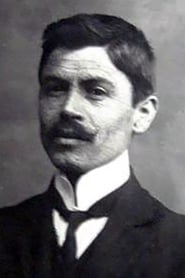
Grandma Despina
"Despina, the Janaki and Milton Manaki's grandmother, was recorded weaving in one high-angle."
Keys: Space play/pause · ←/→ 10s · F fullscreen · M mute · </> speed
About this film
For no apparent reason, the first shot made in Macedonia, in the Balkans in fact, made by these two The Weavers or Grandmother Despina is a short silent, black and white documentary film. Despina, the Janaki and Milton Manaki's grandmother, was recorded weaving in one high-angle shot.
Cast & crew
More films like this

More Documentary films
View all →




More from Janaki Manaki
View all →More about this film
About the production
Release date1905
ProductionManaki Brothers Productions
Filmed inManastir (modern-day Bitola, Macedonia)
Filmed using a Bioscope camera purchased by the Manaki brothers in London. The high-angle shot was achieved by placing the camera on an elevated surface, looking down on the weaving scene. The film was shot on 35mm celluloid film, which was cutting-edge technology for the region at the time. The entire sequence was likely filmed in a single continuous take, typical of early documentary filmmaking.
Themes
Tradition vs. ModernityCultural PreservationFamily HeritageThe Birth of CinemaEveryday Life
Themes & topics
weavinggrandmotherfirst filmMacedoniadocumentarytraditional craftspinning wheelhigh-angle shotsilent filmearly cinema
Historical background
Made in 1905, in Ottoman Empire, under Milton Manaki, Grandma Despina belongs to documentary filmmaking during early cinema when shorts dominated nickelodeon programs. The Weavers or Grandmother Despina is a short silent, black and white documentary film.
Why this film matters
Within documentary history, Milton Manaki's name attaches to the work; surviving prints help researchers study silent-era craft; archival value lies in recorded reality rather than fiction.
Making of
The Manaki brothers, Janaki and Milton, were Aromanian photographers who became fascinated with the new medium of motion pictures. After acquiring their first Bioscope camera in London in 1905, they returned to their hometown of Manastir (Bitola) and began experimenting. Their grandmother Despina became their first subject, captured in the act of traditional weaving. The brothers set up their camera looking down from an elevated position to capture the full weaving process. This simple domestic scene was chosen not for its dramatic content but for its cultural significance and the symbolic resonance of the spinning wheel representing the birth of a new art form in their homeland. The film was processed and developed by the brothers themselves, who had to learn the complex chemical processes of early cinema.
What critics said
Contemporary reviews of Grandma Despina are sparse in open sources; later catalog entries chiefly summarize plot and credits.
Did you know?
- Considered the very first film ever shot in Macedonia and the Balkans region
- Shot by Janaki Manaki, one half of the famous Manaki brothers who are considered the pioneers of Balkan cinematography
- Baba Despina was the actual grandmother of both Janaki and Milton Manaki
- The spinning wheel in the film has become a powerful symbol for the birth of cinema in Macedonia
- The Manaki brothers purchased their first camera, a Bioscope, in London in 1905 for the equivalent of 1,500 gold francs
- Shot in the city of Manastir, which was then part of the Ottoman Empire and is now known as Bitola in North Macedonia
- Only one copy of this historic film is known to exist today
- Initially intended as a test shot to familiarize the brothers with their new equipment
- The high-angle perspective was unusual for its time and showed the brothers' early artistic sensibility
- This film is now considered a national treasure in North Macedonia
Visual style
The cinematography of "Grandma Despina" is remarkably sophisticated for its time. The use of a high-angle shot looking down on the weaving scene demonstrates an early understanding of visual composition. The single continuous take captures the full rhythm of the weaving process, with the camera positioned to clearly show Despina's hands at work and the mechanics of the loom. The natural lighting, likely from a window, creates subtle shadows that add depth to the image. The framing balances the human subject with the traditional equipment, creating a harmonious composition that documents both the craft and the craftsperson. The camera work is steady and deliberate, suggesting the brothers had already mastered the technical challenges of their new equipment.
Famous quotes
At the moment when the grandmother Despina spins the weaving wheel, film starts rolling in our country.
Memorable scenes
- The opening shot showing Baba Despina seated at her loom, her hands working the threads as the spinning wheel turns, captured from above in what would become the most famous image in Macedonian cinema history.
What audiences thought
Initial audience reception is not documented, but it's likely that local audiences were fascinated by this new technology that could capture and reproduce movement. The fact that the subject was a familiar local figure would have made the experience particularly magical for viewers. Modern audiences, especially in Macedonia and throughout the Balkans, view the film with reverence and pride. It is regularly shown at film festivals and cultural events, often eliciting emotional responses from viewers who recognize its importance to their cultural heritage. The film's simplicity and authenticity continue to resonate with contemporary audiences who appreciate its historical value and the window it provides into life in early 20th century Macedonia.
Film connections
Influenced by
- Lumière brothers' actuality films
- Early ethnographic documentaries
- Family photography tradition
This film influenced
- Subsequent Manaki brothers documentaries
- Macedonian ethnographic films
- Balkan documentary tradition
Film restoration
Preserved in the Macedonian Film Archive and has been digitally restored. The original 35mm nitrate print is carefully stored under climate-controlled conditions. A digital version is available for screening and educational purposes. The film is considered part of the national cultural heritage of North Macedonia and is protected as such.
Where to watch
- Macedonian Film Archive screenings
- Manaki Brothers Film Festival in Bitola
- Museum of Macedonian Struggle
- National Cinematheque of North Macedonia
- Selected film festivals featuring early cinema
- Educational institutions studying film history