Great Guns
"Animated comedy short film."
Keys: Space play/pause · ←/→ 10s · F fullscreen · M mute · </> speed
About this film
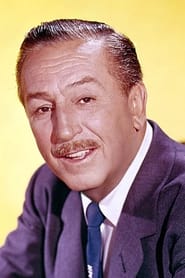
A short battle leaves him wounded, but at least in the field hospital where his girlfriend is working. Oswald's country is at war, like many other volunters he joins the army and finds himself soon in the trenches. is a 1927 animated comedy short film directed by Walt Disney and produced by Winkler Pictures.
Cast & crew
More films like this
More Animation films
View all →



More from Walt Disney
View all →

More about this film
About the production
Release dateAugust 15, 1927
Box officeUnknown - distributed as part of Universal's Oswald series
ProductionWalt Disney Productions, Universal Pictures
Filmed inDisney Brothers Cartoon Studio, Los Angeles, California
This was one of the 26 Oswald the Lucky Rabbit cartoons produced by Disney in 1927 before the character rights were lost to Universal. The animation was created using traditional hand-drawn techniques on paper, with each frame drawn and inked by hand. The film featured the rubber hose animation style popular at the time, giving characters flexible, boneless movements. Production was rushed to meet Universal's demanding release schedule of one cartoon every two weeks.
Themes
Themes & topics
armyhospitalbattlewoundednursetrenchesvolunteergirlfriendfield hospitalcartoon violence
Historical background
Released around 1927, Great Guns reached audiences while exhibitors were still shaping program length and star promotion.
Why this film matters
For historians, Great Guns documents what typical program fare looked like in 1927, not only marquee blockbusters.
Making of
The production of 'Great Guns' took place during a critical period in Disney's career when he was still establishing his studio and animation techniques. The Disney team was working under intense pressure from Universal to deliver high-quality cartoons on a tight schedule. Walt Disney himself directed this short, continuing his hands-on approach to filmmaking. The animation team, including key figures like Ub Iwerks, was developing the distinctive style that would later define Disney animation. The wartime theme was chosen partly because it allowed for dynamic action sequences and comedic situations that audiences of the era found entertaining. The hospital setting was particularly significant as it allowed for the introduction of a romantic subplot, adding emotional depth to the typically gag-driven format of silent cartoons.
What critics said
Modern retrospectives screen Great Guns for craft context—pacing, performance, and camera choices of 1927.
Did you know?
- This was the 13th Oswald the Lucky Rabbit cartoon produced by Walt Disney
- The film was released just months before Disney lost the rights to Oswald to Universal's producer Charles Mintz
- Oswald's girlfriend in this cartoon was an early version of what would later become a recurring character, sometimes called Ortensia or Sadie
- The wartime theme reflected the public's continued fascination with World War I, which had ended less than a decade earlier
- This cartoon demonstrates Disney's early experimentation with combining action, comedy, and romance in a single short
- The hospital scenes in this film would later influence similar scenarios in Mickey Mouse cartoons
- Disney animators Ub Iwerks and Les Clark likely worked on this production
- The film was originally released with a musical score performed live in theaters
- Only a few copies of this cartoon are known to survive today
- The military uniform design for Oswald would be reused in later Disney cartoons with military themes
Visual style
The film utilized standard silent era animation photography techniques, with each frame captured on 35mm film using an animation rostrum camera. The black and white cinematography emphasized contrast and clarity to ensure the gags and character expressions read well on screen. The animation employed the rubber hose style, with characters featuring fluid, boneless movements that were easier to animate and created dynamic visual effects. The composition followed Disney's emerging principles of staging, ensuring clear action and readability despite the limited animation techniques of the period. The battle sequences used innovative camera angles and perspective shots to create depth and excitement within the two-dimensional medium.
Innovations
While 'Great Guns' doesn't feature groundbreaking technical innovations, it demonstrates Disney's early mastery of animation techniques that were advanced for their time. The film shows sophisticated use of squash and stretch animation, giving characters weight and flexibility. The battle sequences feature multiple layers of animation, creating depth and complexity in the action scenes. Disney's team was developing techniques for smoother character movement and more expressive animation, moving beyond the relatively stiff animation common in earlier cartoons. The film also demonstrates early experiments in combining different emotional tones within a single short, balancing comedy, action, and romance seamlessly.
Music
As a silent film, 'Great Guns' was originally accompanied by live musical performances in theaters. The score would have been compiled from standard library music appropriate for the action and mood of each scene, with faster, martial music for the battle sequences and romantic themes for the hospital scenes. Some theaters may have used cue sheets provided by Universal to guide the musical accompaniment. The soundtrack included sound effects created by theater musicians or sound effects specialists, using various instruments and devices to simulate gunshots, explosions, and other battle sounds. No original score or specific musical arrangements for this cartoon are known to survive.
Famous quotes
(Silent film - no dialogue, but featured intertitles with typical Oswald cartoon humor)
Memorable scenes
- The chaotic battle sequence in the trenches where Oswald comically fumbles with military equipment while trying to be heroic
- The romantic reunion in the field hospital where Oswald discovers his girlfriend is his nurse
- Oswald's enthusiastic but clumsy basic training montage
- The final scene where Oswald recovers in the hospital surrounded by his girlfriend and other wounded soldiers
What audiences thought
Audiences in 1927 responded positively to 'Great Guns' and other Oswald cartoons, which were popular attractions in movie theaters. The combination of action, comedy, and romance appealed to broad audiences, and Oswald's character resonated with viewers as an everyman hero. The wartime theme would have been familiar and entertaining to audiences who had either experienced WWI or grown up hearing about it. The cartoon's success contributed to Oswald's growing popularity, making him especially popular cartoon characters of the late 1920s before Mickey Mouse's debut. Modern audiences who have access to this rare film often express fascination with its historical significance and the glimpse it provides into early Disney animation.
Film connections
Influenced by
- Felix the Cat cartoons
- World War I propaganda films
- Comedy shorts of the silent era
- Vaudeville comedy routines
This film influenced
- Later Mickey Mouse military cartoons
- Donald Duck WWII cartoons
- Looney Tunes wartime shorts
- Tom and Jerry military episodes
Film restoration
The film is partially preserved with known copies existing in film archives, though it remains relatively rare. Some versions may be incomplete or show signs of deterioration. The Walt Disney Archives and the Library of Congress may hold copies, and it has been included in some Oswald the Lucky Rabbit compilation releases. The film is not considered lost, but access to high-quality versions remains limited.
Where to watch
- Disney+ (as part of Oswald the Lucky Rabbit collection)
- Various DVD compilations of early Disney animation
- Film archive screenings and special exhibitions
- Some public domain versions may be available online, though quality varies