
Hell's Bells
"The demons of hell play music for Satan, whose delight turns to wrath when an insubordinate."
Keys: Space play/pause · ←/→ 10s · F fullscreen · M mute · </> speed
About this film
Satan and the other devils' happenings in Hell. One of these devils revolts against Satan and ends up kicking him off the cliff of Hell. The demons of hell play music for Satan, whose delight turns to wrath when an insubordinate refuses to become food for Cerberus. It was distributed to cinemas by the film company Columbia Pictures, who would also distribute other Walt Disney films such as Winter.
Cast & crew
More films like this

More Animation films
View all →



More from Ub Iwerks
View all →


More about this film
About the production
Release dateOctober 30, 1929
Box officeNot tracked individually for short subjects in 1929
ProductionWalt Disney Productions
Filmed inDisney Brothers Cartoon Studio, Hyperion Avenue, Hollywood, California
Was created during the revolutionary transition from silent to sound animation, utilizing the new Cinephone system. The cartoon featured innovative synchronization techniques that were cutting-edge for 1929. Ub Iwerks, Disney's primary animator at the time, reportedly animated much of the short himself, utilizing his incredible speed and skill. The dark themes and imagery were considered quite daring for the period, pushing the boundaries of what was acceptable in family entertainment. The film utilized multiplane camera techniques in its early stages, though the technology was still being perfected.
Themes
Rebellion against authorityThe nature of evilMusic as a universal languageOrder versus chaosPower and domination
Themes & topics
Historical background
Made in 1929, in United States, under Ub Iwerks, Hell's Bells belongs to animated short filmmaking amid the silent era's rapid stylistic experiments. Hell's Bells is a 1929 comedy horror animated short film directed by Ub Iwerks and produced by Walt Disney.
Why this film matters
Within animated short history, Ub Iwerks's name attaches to the work; surviving prints help researchers study silent-era craft; 1929 animated film directed by Ub Iwerks.
Making of
Was created during a period of intense innovation at the Disney studio, following the breakthrough success of Steamboat Willie. Ub Iwerks, Disney's star animator, worked closely with Walt Disney to push the boundaries of what animation could achieve with the new sound technology. The studio was experimenting with more sophisticated storytelling and visual effects, and this cartoon represented their willingness to tackle darker, more adult themes. The animation team developed new techniques for creating fluid movement and character expressions, particularly for the multiple demonic characters. The musical score was created by Carl Stalling, who would later become famous for his work with Warner Bros. cartoons. The production process was intense, with animators working long hours to meet the demanding schedule while maintaining the high quality Walt Disney required.
What critics said
Contemporary reviews of Hell's Bells are sparse in open sources; later catalog entries chiefly summarize plot and credits.
Did you know?
- Was the ninth cartoon in Disney's Silly Symphony series, which focused on musical innovation rather than recurring characters
- One of the earliest animated depictions of Satan in mainstream American animation
- Ub Iwerks was reportedly able to produce up to 700 drawings per day, making him one of the fastest animators of his time
- The cartoon was released just one week after the stock market crash of 1929, during the Great Depression's beginning
- Many of the demonic character designs were reused and modified for later Disney films, including some elements in 'Fantasia'
- The three-headed dog Cerberus was complex animated characters of its time, requiring intricate animation to coordinate all three heads
- The film's dark themes led to it being rarely shown on television in later decades due to content concerns
- Music was synchronized using a metronome system, with animators timing their drawings to beat markers
- The cartoon was originally released with a live-action Disney comedy feature as part of a double bill
- Some animation cels from this film survive in private collections and are considered valuable artifacts of early animation
Visual style
The cinematography of Hell's Bells utilized innovative techniques for its time, featuring dynamic camera movements and perspective shots that were rare in early animation. The film employed layered backgrounds to create depth and atmosphere in the hellish settings. The animators used subtle lighting effects and shadows to enhance the dark mood, with flickering torchlight and glowing demonic eyes adding visual interest. The camera work included dramatic zooms and pans that followed the action through the cavernous underworld scenes. The black and white photography was enhanced through careful attention to contrast and texture, creating a rich visual tapestry despite the lack of color. The animation team experimented with motion blur and speed lines to convey rapid movement, particularly during the chase sequences.
Innovations
Showcased several technical innovations that were for 1929. The film featured advanced synchronization techniques between animation and sound, utilizing the Cinephone system with unprecedented precision. The animation team developed new methods for coordinating multiple characters on screen simultaneously, creating complex crowd scenes that were technically challenging for the period. The cartoon employed early forms of the multiplane camera effect, creating depth and dimensionality in the underworld settings. The fluid character animation demonstrated improved understanding of physics and movement, with the demonic creatures exhibiting weight and momentum in their actions. The film also featured innovative sound design, with Stalling creating unique audio effects to accompany the supernatural visuals. These technical achievements helped establish Disney as a leader in animation innovation during the early sound era.
Music
The musical score for Hell's Bells was composed by Carl Stalling, who would later become for his work at Warner Bros. The soundtrack featured an original composition that blended classical motifs with jazz influences, creating an appropriately demonic and energetic atmosphere. The music was synchronized using the Cinephone system, which allowed for precise timing between the animation and musical elements. The score included various sound effects created through innovative methods, including the use of modified instruments and early electronic manipulation. The musical themes were designed to match the on-screen action, with different leitmotifs for Satan, the rebellious demon, and the various creatures of Hell. The soundtrack demonstrated the possibilities of music-driven animation, a concept that would become central to the Silly Symphony series.
Famous quotes
No dialogue - purely musical and visual storytelling
Memorable scenes
- The opening sequence showing the demonic orchestra tuning their instruments in the fiery caverns of Hell, with various imps and goblins preparing for their performance before Satan's throne
- The dramatic confrontation between the small rebellious demon and Satan, where the tiny creature defies the dark lord's command to become Cerberus's meal
- The chase sequence through the hellish landscape as the rebellious demon attempts to escape, featuring dynamic animation and creative visual gags
- The final punishment scene where Satan demonstrates his power over the insubordinate demon, showcasing the cartoon's dark themes and sophisticated animation
What audiences thought
Audience reception to Hell's Bells in 1929 was generally positive, with moviegoers impressed by the technical wizardry and imaginative visuals. The cartoon's musical elements and synchronized animation were still novel enough to generate excitement among theater audiences. However, the dark themes and demonic imagery likely startled some viewers, particularly those expecting lighter fare. The film was popular enough to warrant wide distribution as part of theater bills, though it didn't achieve the same level of audience recognition as Mickey Mouse cartoons. Modern audiences viewing the cartoon today often express surprise at its dark content and artistic sophistication, with many noting how different it is from later Disney productions. The cartoon has developed a cult following among classic animation enthusiasts who appreciate its historical significance and artistic boldness.
Film connections
Influenced by
- German Expressionist cinema
- Classical mythology
- Jazz Age music culture
- Dante's Inferno
- Vaudeville performance traditions
This film influenced
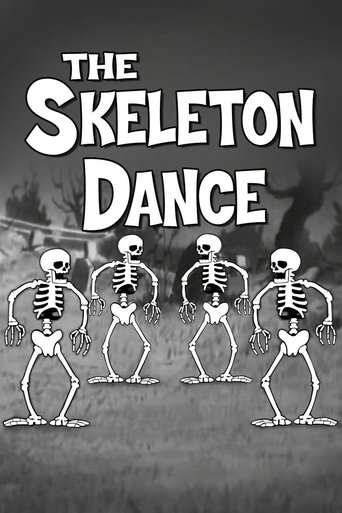
- The Skeleton Dance
- Night on Bald Mountain
- segment from Fantasia (1940)
- The Devil and Daniel Mouse
- various Halloween-themed cartoons
Film restoration
Has been preserved by the Walt Disney Company and is part of their archive collection. The film exists in its original 35mm format and has been digitally restored for modern viewing. While some early Disney cartoons have been lost or exist only in incomplete form, Hell's Bells survives in good condition. The restored version is available through various Disney channels and has been included in special collections of early Disney animation. Some original animation cels and production materials from the film are preserved in museum collections and private archives.
Where to watch
- Disney+ streaming service
- The Walt Disney Treasures: Silly Symphonies DVD collection
- Various public domain animation websites
- Museum animation retrospectives
- Film archive screenings