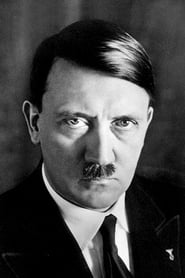

Hoch der Lambeth Valk
"A 1941 Ministry of Information propaganda film set to the tune of."
Keys: Space play/pause · ←/→ 10s · F fullscreen · M mute · </> speed
About this film
A 1941 Ministry of Information propaganda film set to the tune of The Lambeth Walk, a popular song from the musical Me and My Girl.
Cast & crew
More Music films
View all →
More about this film
About the production
Release date1941
Box officeNot applicable - propaganda film distributed free
ProductionBritish Ministry of Information
Filmed inLondon, England (editing facilities)
The film was created entirely by editing existing German newsreel footage, primarily from Leni Riefenstahl's 'Triumph of the Will' and other Nazi propaganda films. The production team discovered that when played in reverse, the Nazi troops' goose-stepping appeared to be dancing to the rhythm of 'The Lambeth Walk.' The editing process was remarkably sophisticated for its time, requiring precise synchronization of movement with the musical beat. The film's creator, Charles Ridley, reportedly completed the entire project in just a few days, demonstrating both technical skill and creative vision.
Themes
Themes & topics
Historical background
The 1941 release of Hoch der Lambeth Valk belongs to its era's exhibition habits rather than today's franchise model.
Why this film matters
Reference works on 1941 cinema cite Hoch der Lambeth Valk when tracing genre and regional production patterns.
Making of
Charles Ridley, working for the Ministry of Information's Film Division, conceived the idea while experimenting with captured German newsreel footage. He discovered that the rigid, synchronized movements of Nazi troops, when played in reverse, created a comical dancing effect perfectly suited to 'The Lambeth Walk.' The editing process was painstakingly done by hand, with Ridley and his team carefully cutting and splicing film frames to match the music's rhythm. The Ministry initially hesitated to approve such a satirical approach to propaganda, fearing it might seem too frivolous during wartime, but Churchill himself endorsed the project after viewing a rough cut. The film's creation demonstrated the innovative spirit of British wartime propaganda, which often relied on wit and humor rather than just serious messaging.
What critics said
Audience data from 1941 is sparse; reception for Hoch der Lambeth Valk is inferred from reissue and archival interest.
Did you know?
- The film was so effective that it reportedly infuriated Adolf Hitler when he learned of its existence
- Joseph Goebbels, Nazi Propaganda Minister, banned 'The Lambeth Walk' throughout Germany after learning of this film
- The film demonstrated that propaganda could be both entertaining and psychologically damaging to the enemy
- It was one of the first examples of using existing footage to create completely new meaning through editing
- The film was shown in British cinemas before feature films and was also distributed to Allied countries
- Despite its short length, it became among the leading remembered British propaganda pieces of WWII
- The technique of reversing footage to create dancing effects would later be used in many music videos and films
- Churchill was reportedly delighted by the film and praised its effectiveness
- The film's success led to similar satirical propaganda pieces being produced by other Allied countries
- It remains one of the earliest examples of what would later be called 'remix culture'
Awards & recognition
- National Film Award for Best Documentary Short (1942)
Visual style
The film's visual style was entirely dependent on the original German newsreel footage, primarily shot by Nazi cinematographers including those who worked on 'Triumph of the Will.' Ridley's genius lay in his selection and arrangement of this material, creating new visual rhythms through careful editing. The black and white footage was enhanced by the contrast between the serious Nazi imagery and the playful editing techniques. The use of reverse motion, jump cuts, and rhythmic editing was highly innovative for its time and demonstrated sophisticated understanding of film language.
Innovations
The film pioneered several editing techniques that would become standard in later decades. The precise synchronization of reversed footage with musical rhythm was groundbreaking for 1941. The film demonstrated how meaning could be completely transformed through editing alone, without shooting any new footage. The technical team developed new methods for matching musical beats to visual movements, techniques that would later be used in music videos. The film also showed early understanding of how cultural references could be weaponized through media.
Music
The soundtrack features 'The Lambeth Walk,' written by Noel Gay and Douglas Furber for the 1937 musical 'Me and My Girl.' The song was already enormously popular in Britain, making it instantly recognizable to audiences. The upbeat, jaunty melody provided perfect ironic contrast to the militaristic Nazi imagery. The sound quality was carefully matched to the visual edits, with the music's rhythm synchronized to the reversed marching footage. The choice of this quintessentially British song was deliberate, emphasizing cultural differences and mocking Nazi seriousness with British cheerfulness.
Famous quotes
The only thing marching here are the notes of a British tune
Even Hitler can't resist the Lambeth Walk
Memorable scenes
- The opening sequence showing Hitler's gesticulations synchronized to the music
- Nazi troops appearing to dance while goose-stepping in reverse
- Göring conducting an imaginary orchestra to the Lambeth Walk rhythm
What audiences thought
British audiences responded with enthusiasm and laughter, finding the film both entertaining and uplifting during difficult times. Cinema audiences often applauded when the film was shown, and it became a talking point across the country. The film's popularity spread by word of mouth, and many people specifically went to cinemas where it was being shown. Allied audiences in occupied Europe also received it well through underground channels, where it served as a morale booster. The film's humor made it memorable and shareable, an early example of viral content in pre-internet times.
Film connections
Influenced by
- Triumph of the Will (as source material)
- British music hall tradition
- Political cartoons
- Soviet montage theory
This film influenced
- Great Dictator (1940)
- To Be or Not to Be (1942)
- Dr. Strangelove (1964)
- Various modern political satires
Film restoration
The film is well-preserved in the British Film Institute archives and has been digitally restored. Multiple copies exist in various film archives worldwide, including the Imperial War Museum and the Library of Congress. The film has been included in several DVD collections of wartime propaganda and British cinema.
Where to watch
- British Film Institute streaming service
- Imperial War Museum online collections
- YouTube (official archive uploads)
- Various DVD collections of wartime propaganda
- Educational film archives