Humorous Phases of Funny Faces
"Chalkboard faces that walk and talk"
Keys: Space play/pause · ←/→ 10s · F fullscreen · M mute · </> speed
About this film
short silent animated film directed by James Stuart Blackton and generally regarded by film historians as the first animated film recorded on standard picture film.
Cast & crew
More films like this

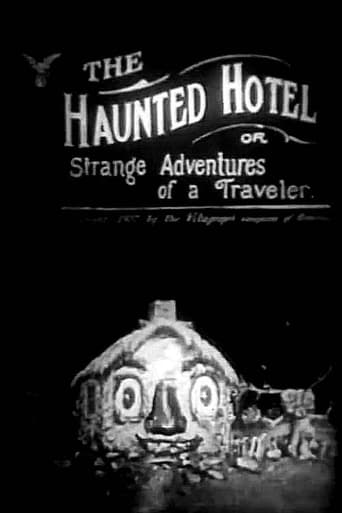
More Comedy films
View all →






More from J. Stuart Blackton
View all →
More about this film
About the production
Release dateApril 1906
Box officeUnknown (box office tracking was not standardized in 1906)
ProductionVitagraph Company of America
Filmed inBrooklyn, New York (Vitagraph Studios)
The film was created using a combination of live-action filming and stop-motion animation techniques. Blackton would draw a frame, film it, then slightly alter the drawing before filming the next frame. The chalkboard technique allowed for easy erasure and modification of the drawings between frames. The entire process was extremely labor-intensive, requiring hundreds of individual drawings for just a few minutes of animation.
Themes
Transformation and metamorphosisThe magic of art coming to lifeBreaking the boundary between artist and creationHumor through exaggerationThe power of visual illusion
Themes & topics
Historical background
Made in 1906, Humorous Phases of Funny Faces reflects production norms of the earliest years of projected motion pictures—shorter runtimes, regional audiences, and limited preservation infrastructure.
Why this film matters
Historians reference Humorous Phases of Funny Faces (1906) when discussing 1906 film by J. Stuart Blackton.
Making of
The creation of 'Humorous Phases of Funny Faces' involved a painstaking process that J. Stuart Blackton developed himself. Using a large blackboard as his canvas, Blackton would draw a figure or face with chalk, photograph it using a hand-cranked camera, then slightly alter the drawing before capturing the next frame. This stop-motion technique, combined with cut-out animation for some elements, created the illusion of movement. The live-action segments showing Blackton at work were filmed separately and integrated with the animated sequences. The entire production took several days to complete, which was unusually long for films of this period. Blackton's background as a cartoonist for the New York Evening World helped him understand the principles of movement and expression that he translated into this new medium of animation.
What critics said
Retrospective notes on Humorous Phases of Funny Faces emphasize its value as a silent-era document rather than blockbuster reception.
Did you know?
- This is widely considered the first animated film in history, predating other early animation works by several years.
- J. Stuart Blackton was a cartoonist and vaudeville performer before becoming a filmmaker, which influenced his innovative approach to animation.
- The film was originally titled just 'Funny Faces' but was later expanded to 'Humorous Phases of Funny Faces' for distribution.
- The animation technique used is often called 'chalkboard animation' or 'lightning animation' due to the way the drawings appear to move magically.
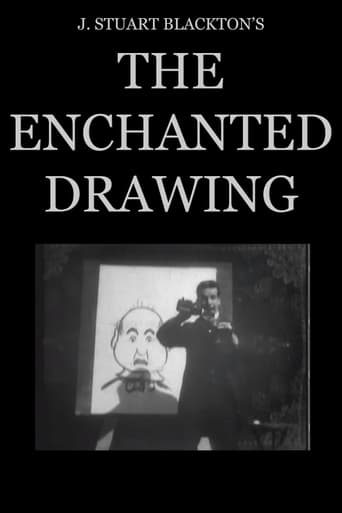
- Blackton created this film after being inspired by Thomas Edison's film 'The Enchanted Drawing' (1900), which used similar techniques.
- The film was shot on 35mm film at approximately 16 frames per second, the standard for silent films of the era.
- Vitagraph Studios, where this was made, was especially prolific American film studios of the early 1900s.
- The gentleman character who tips his hat at the end is believed to be a caricature of Blackton himself.
- The film's success led Blackton to create more animated works, including 'The Haunted Hotel' (1907).
- Only one complete print of the film is known to survive, preserved by the Library of Congress.
Visual style
The cinematography in 'Humorous Phases of Funny Faces' was groundbreaking for its time, combining live-action filming with stop-motion animation. The camera work was static and straightforward, typical of early films, but the visual content was revolutionary. Blackton used a standard 35mm camera mounted on a tripod to capture both the live-action segments and the animated sequences. The chalkboard provided a high-contrast background that made the chalk drawings clearly visible on film. The lighting was natural and consistent, essential for maintaining the illusion of smooth animation between frames. Each animated movement was captured through individual photographs, creating a jerky but effective motion that audiences found magical and entertaining.
Innovations
The film's primary technical achievement was the pioneering use of stop-motion animation, a technique Blackton essentially invented for this production. He developed a method of photographing sequential drawings to create the illusion of movement, establishing fundamental animation principles that would be used for decades. The chalkboard technique allowed for easy modification between frames, making the animation process more efficient than redrawing entire scenes. Blackton also successfully integrated live-action footage with animated sequences, creating a seamless blend that wouldn't become common until years later. The film demonstrated early understanding of timing, spacing, and squash-and-stretch principles that would later be formalized as animation fundamentals. These technical innovations laid the groundwork for the entire animation industry.
Music
As a silent film, 'Humorous Phases of Funny Faces' had no synchronized soundtrack. During its original theatrical run, it would have been accompanied by live music, typically a pianist or small theater orchestra. The musical accompaniment would have been improvised or chosen from standard silent film music libraries, matching the on-screen action with appropriate comedic or whimsical themes. Some theaters might have used sound effects created manually, such as bells or whistles, to enhance the animated sequences. The lack of dialogue meant the humor and storytelling had to rely entirely on visual expression, which Blackton accomplished through the exaggerated movements and expressions of his animated characters.
Memorable scenes
- The opening sequence where Blackton draws the first face and it begins to smile and move independently
- The clown character that performs acrobatic movements and tricks on the blackboard
- The transformation sequence where one face morphs into another through clever erasing and redrawing
- The final scene where the gentleman character tips his hat directly to the camera, breaking the fourth wall
What audiences thought
Audiences in 1906 were astonished and delighted by 'Humorous Phases of Funny Faces.' The film was a popular attraction in nickelodeons and vaudeville theaters, where it often played to packed houses. Viewers had never seen anything like drawings that moved independently of human hands, and many believed it was some form of magic or trick photography. The humor and charm of the animated characters resonated with audiences of all ages, making it especially successful Vitagraph releases of 1906. The film's popularity led to numerous imitations and inspired other filmmakers to experiment with animation techniques. Audience reactions were typically described as 'uproarious laughter' and 'widespread amazement' in contemporary theater reports.
Film connections
Influenced by
- Thomas Edison's 'The Enchanted Drawing' (1900)
- Magic lantern shows
- Vaudeville performance traditions
- Newspaper comic strips
- Chalk talk performances
This film influenced
- Winsor McCay's 'Gertie the Dinosaur' (1914)
- J. Stuart Blackton's 'The Haunted Hotel' (1907)
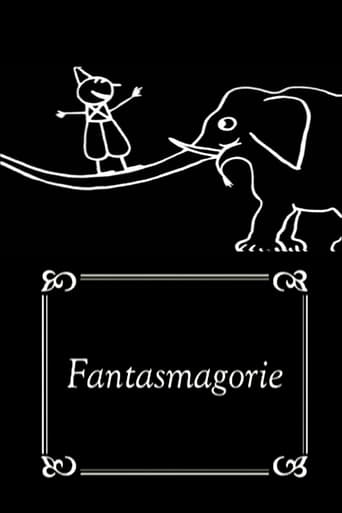
- Émile Cohl's 'Fantasmagorie' (1908)
- Walt Disney's early Laugh-O-Grams
- Fleischer Studios' Out of the Inkwell series
Film restoration
The film is preserved and available for viewing. A complete 35mm print is held by the Library of Congress as part of their paper print collection, which was a method of copyright registration in the early 1900s. The film has been digitally restored and is available through various archival institutions and online platforms. The preservation quality is remarkably good considering the film's age and the volatile nature of early nitrate film stock. Multiple archives worldwide hold copies, including the British Film Institute and the Museum of Modern Art's film department.
Where to watch
- YouTube (various public domain uploads)
- Internet Archive
- Library of Congress website
- British Film Institute's streaming platform
- Museum of Modern Art's film collection screenings
- Kino Lorber's 'The Movies Begin' DVD collection
- Flicker Alley's 'Saved from the Flames' DVD set