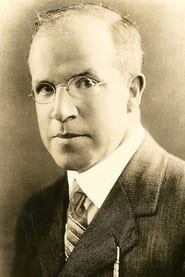
J. Stuart Blackton
Actor & Director
Born: January 5, 1875 in Sheffield, England, United Kingdom Died: August 13, 1941 Active: 1896-1922 Birth Name: James Stuart Blackton
Films
15 films
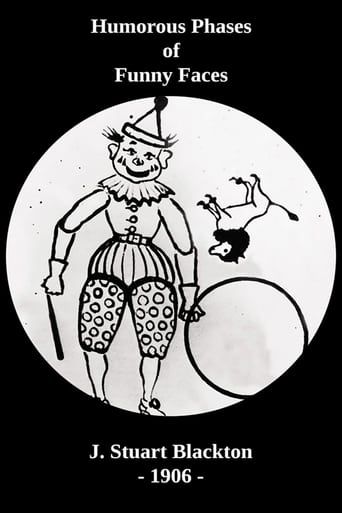
Humorous Phases of Funny Faces
1906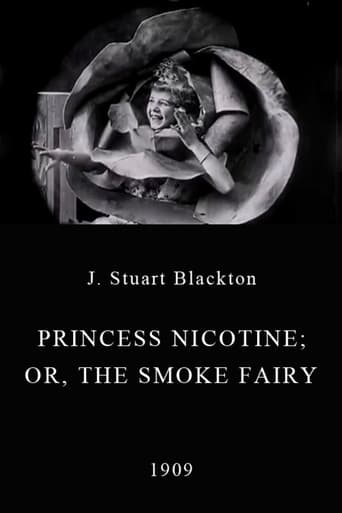
Princess Nicotine; or, The Smoke Fairy
1909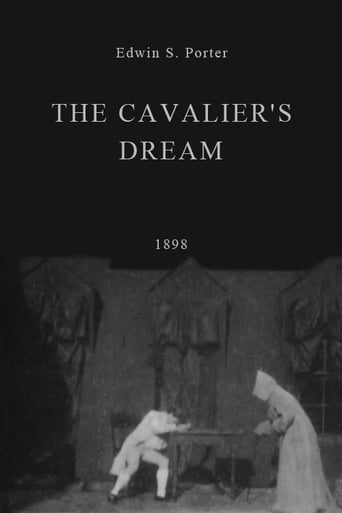
The Cavalier's Dream
1898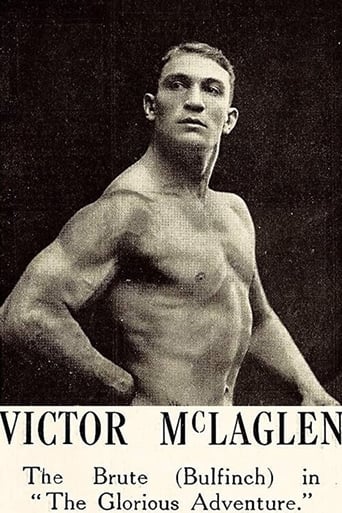
The Glorious Adventure
1922
Oliver Twist
1909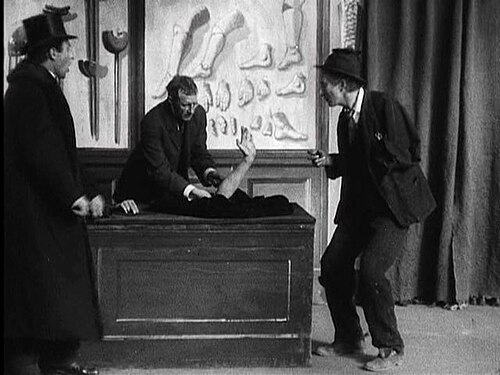
The Thieving Hand
1908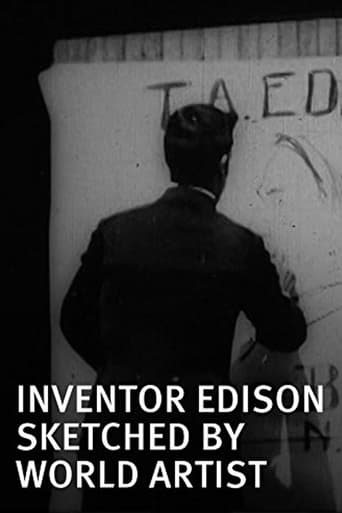
Edison Drawn by 'World' Artist
1896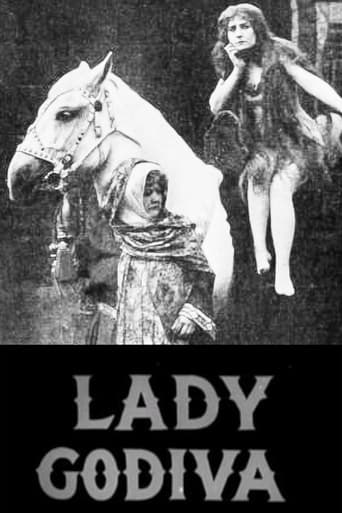
Lady Godiva
1911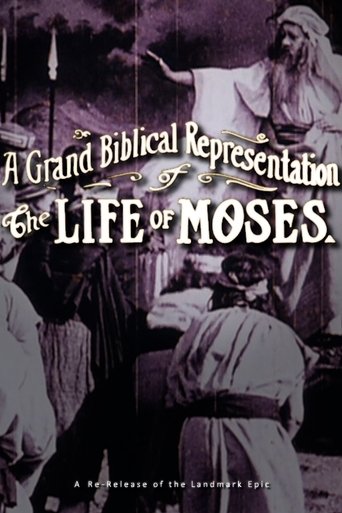
The Life of Moses
1909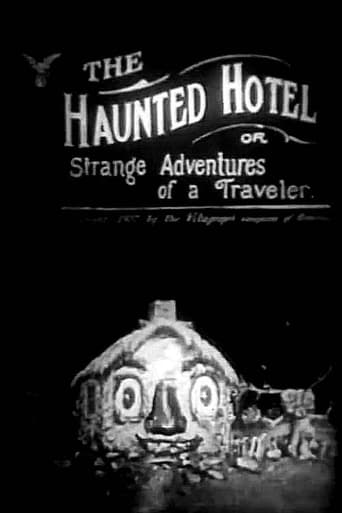
The Haunted Hotel
1907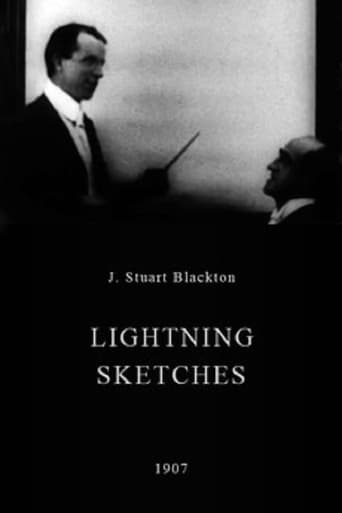
Lightning Sketches
1907No Poster
Little Mischief
1899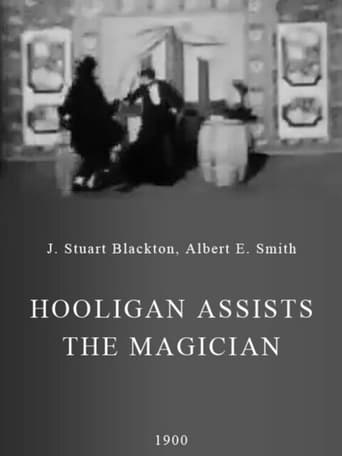
Hooligan Assists the Magician
1900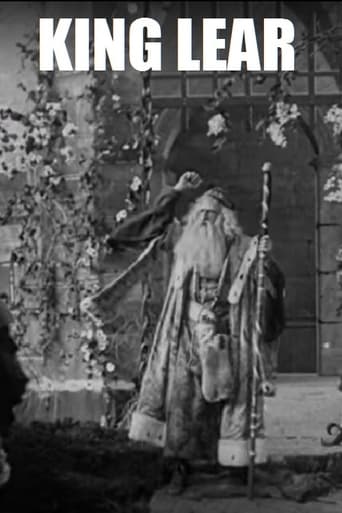
King Lear
1909About J. Stuart Blackton
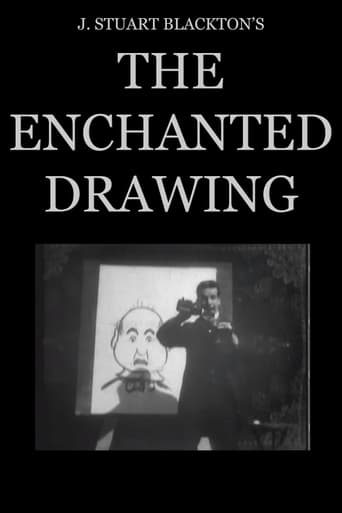
James Stuart Blackton — American film producer and director who in the development of early cinema and animation. Born in England in 1875, he emigrated to the United States as a child and began his career as a cartoonist and journalist for the New York Evening World. His encounter with Thomas Edison in 1896 led to his entry into filmmaking, where he quickly became innovative figures of the silent era. Blackton co-founded the American Vitagraph Company in 1897, which would become prolific and successful film studios of the early 20th century. He created some of the earliest animated films, including 'The Enchanted Drawing' (1900) and 'Humorous Phases of Funny Faces' (1906), which are considered precursors to modern animation. Blackton also directed numerous narrative films and was instrumental in developing special effects techniques that would influence generations of filmmakers. His the crucial transition from cinema's experimental phase to its establishment as a major industry, though his prominence waned as Hollywood studios rose to dominance in the 1920s.
The Craft
On Screen
As an actor in his early films, Blackton employed exaggerated gestures and expressions typical of the silent era, often performing in comedic sketches that showcased his background as a vaudeville performer and cartoonist. His performances were designed to be clearly understood through physical movement rather than dialogue, a necessity in the pre-sound era.
Behind the Camera
Blackton's directing style was highly experimental and innovative, characterized by his willingness to push the boundaries of what was technically possible in early cinema. He frequently incorporated special effects, multiple exposures, and animation into his narrative films, creating a visual language that was distinctly cinematic rather than theatrical. His approach emphasized visual spectacle and technical innovation over complex storytelling, reflecting the wonder and excitement of cinema's earliest years.
Milestones
- Co-founded American Vitagraph Company (1897)
- Created first animated films in America
- Pioneered stop-motion and special effects techniques
- Produced over 2,000 films at Vitagraph
- Directed the first film adaptation of 'A Midsummer Night's Dream' (1909)
- Introduced D.W. Griffith to filmmaking
Best Known For
Iconic Roles
Must-See Films
Accolades
Won
- Posthumous induction into the Animation Hall of Fame
- Windsor McCay Award (posthumous)
Nominated
- No formal award nominations during his lifetime (awards systems were not established in early cinema era)
Special Recognition
- Star on the Hollywood Walk of Fame (for contributions to motion pictures)
- Inducted into the International Animated Film Association Hall of Fame
- Recognized by the Library of Congress as a film pioneer
Working Relationships
Worked Often With
Studios
Why They Matter
Impact on Culture
J. Stuart Blackton's cultural impact on cinema cannot be overstated, as he was instrumental in establishing the language of both narrative film and animation. His early animated works laid the groundwork for the entire animation industry, predating even Winsor McCay's more famous 'Gertie the Dinosaur' (1914). Blackton's Vitagraph Studio became. His innovations in special effects and visual storytelling techniques influenced countless filmmakers who followed, helping establish cinema as a distinct art form separate from theater. Blackton's work demonstrated early on that film could do things no other medium could, particularly through his use of stop-motion, multiple exposure, and animation techniques.
Lasting Legacy
J. Stuart Blackton's legacy endures through his foundational contributions to both animation and narrative cinema. As the creator of what many consider the first animated films, he established techniques that would evolve into the multi-billion dollar animation industry of today. His Vitagraph Studio, while eventually absorbed by larger Hollywood companies, represented an important alternative to the Edison Trust monopoly and helped establish New York as an early center of film production before the industry's migration to California. Blackton's films continue to be studied by film historians and animation scholars as crucial examples of early cinematic innovation. Perhaps most importantly, his career trajectory from experimental filmmaker to studio head mirrors the entire development of the American film industry itself, making him a representative figure of cinema's formative years.
Who They Inspired
Blackton's influence extends far beyond his own films, as he directly mentored and employed numerous figures who would become major players in early Hollywood. Most notably, he gave D.W. Griffith his first opportunity in film, a decision that would profoundly shape the future of American cinema. His animation techniques influenced early pioneers like Winsor McCay and, through them, the entire trajectory of American animation. The special effects methods he developed at Vitagraph were adopted and refined by countless filmmakers throughout the silent era. His business model for Vitagraph, balancing artistic innovation with commercial success, provided a template for independent film production that would be emulated by many future studio founders. Even his failures, particularly his inability to adapt to the Hollywood studio system, offered important lessons about the changing nature of the film industry.
Off Screen
Blackton married Jessie Macdonald in 1899, and they had several children together. He was known for his business acumen as well as his creative talents, successfully running Vitagraph for many years before selling it to Warner Bros. In 1925. Despite his early success, Blackton faced financial difficulties in his later years and died relatively impoverished in 1941. His life spanned the entire transformation of cinema from a novelty attraction to a major industry, making him one of the few figures who witnessed and shaped this complete evolution.
Education
Limited formal education; largely self-taught in art and filmmaking; attended public schools in New York City after emigrating
Family
- Jessie Macdonald (1899-1941)
Did You Know?
- Originally a cartoonist for the New York Evening World before entering films
- His first film experience came from interviewing Thomas Edison about his new motion picture invention
- Vitagraph was the first American company to open a studio in Hollywood (1911)
- He was one of the first filmmakers to use close-ups effectively in narrative films
- His film 'Princess Nicotine' (1909) featured some of the earliest special effects involving smoke and miniatures
- Blackton — talented magician and incorporated magic tricks into some of his films
- He directed over 500 films during his career, though many are now lost
- His animated films were created by filming his own drawings as he drew them
- Vitagraph was one of the 'Big Five' studios before the rise of Hollywood
- Blackton was instrumental in developing the star system by promoting actors like Florence Turner
In Their Own Words
The motion picture is not merely an amusement, not merely a recreation, but an important factor in the education and uplift of the people
Animation is the art of bringing life to the lifeless
In the beginning, we had no rules to follow, so we made our own
The camera is a magic wand that can transform reality into dreams
Every new film is an adventure into unknown territory
Frequently Asked Questions
Who was J. Stuart Blackton?
American filmmaker and animator who co-founded Vitagraph Studios and created some of the first animated films in cinema history. He was instrumental in developing early special effects techniques and helped establish the American film industry during its formative years from the 1890s through the 1920s.
What films is J. Stuart Blackton best known for?
Titles linked here include The Enchanted Drawing (1900), Humorous Phases of Funny Faces (1906).
When was J. Stuart Blackton born and when did he die?
Born January 5, 1875; died August 13, 1941.
What awards did J. Stuart Blackton win?
During his lifetime, formal film awards did not exist, but Blackton has received posthumous recognition including induction into the Animation Hall of Fame and the Windsor McCay Award. He also received a star on the Hollywood Walk of Fame for his contributions to motion pictures.
What was J. Stuart Blackton's directing style?
Blackton's directing style was highly experimental and innovative, characterized by his use of special effects, animation, and visual tricks. He was known for pushing technical boundaries and creating visual spectacles that demonstrated the unique possibilities of cinema as a medium, often incorporating multiple exposures and stop-motion techniques.