The Enchanted Drawing
"Ink becomes wine, hats, and cigars"
Keys: Space play/pause · ←/→ 10s · F fullscreen · M mute · </> speed
About this film
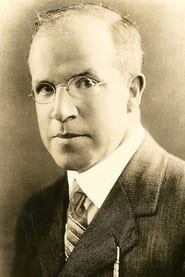
Cartoonist J. Stuart Blackton sketches a face, a wine glass, and a hat on paper, then lifts each drawing into three dimensions and uses them before the camera.
Cast & crew
More films like this
More Animation films
View all →




More from J. Stuart Blackton
View all →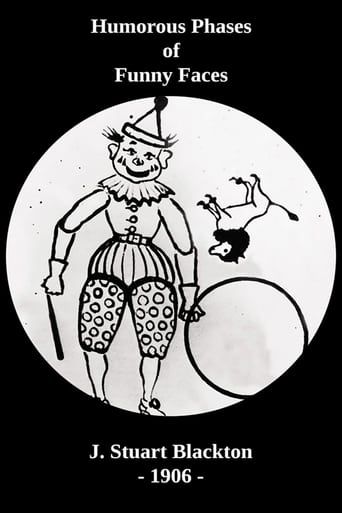
More about this film
About the production
Release dateNovember 16, 1900
Box officeNot documented - box office tracking was not standardized in 1900
ProductionAmerican Vitagraph Company
Filmed inBrooklyn, New York (Vitagraph's studio location)
This film was created using a combination of live-action photography and stop-motion techniques. Blackton would draw on the paper, stop the camera, replace the drawing with the real object, then restart filming to create the illusion of transformation. The entire production was likely completed in a single day with basic equipment available at the time.
Themes
The magic of artThe boundary between imagination and realityTransformation and metamorphosisThe power of creationVisual illusion and perception
Themes & topics
Historical background
Vitagraph's 1900 trick short appeared when nickelodeons were turning moving pictures from novelty into narrative entertainment.
Why this film matters
Widely cited as a foundational animation experiment, Blackton's lightning-sketch routine bridged vaudeville stage magic and screen illusion.
Making of
The production of 'The Enchanted Drawing' was remarkably simple yet revolutionary for its time. Blackton, working in Vitagraph's Brooklyn studio, set up a basic camera rig and performed the entire sequence himself. The magic was created through careful timing - he would draw an object, pause the camera, replace the drawing with the actual prop, then resume filming. This stop-motion technique, while crude by modern standards, was groundbreaking in 1900. The film was likely inspired by stage magic shows and the popular lightning sketch performances of vaudeville theaters. Blackton's background as a cartoonist gave him the unique perspective to combine drawing with the new medium of motion pictures, creating what many film historians consider the birth of animation.
What critics said
Period exhibitors promoted it as ingenious novelty; film historians treat it as a key ancestor of drawn animation.
Did you know?
- Considered one of the first animated films in cinema history, predating even more famous early animations like 'Fantasmagorie' (1908)
- J. Stuart Blackton was a co-founder of the American Vitagraph Company and a pioneer in early film techniques
- The film uses a technique called 'lightning sketching,' which was popular in vaudeville shows where artists would draw quickly for audiences
- Blackton was originally a cartoonist and illustrator for the New York Evening World before entering film
- The transformation effects were achieved through stop-motion photography, a technique Blackton helped pioneer
- was part of Vitagraph's series of 'trick films' that showcased special effects capabilities
- The original film was shot on 35mm film and has been preserved through various archives
- Blackton would later create 'Humorous Phases of Funny Faces' (1906), which is often cited as the first true animated film
- The film was distributed internationally and helped establish Vitagraph as a major player in early cinema
- The technique of lifting drawings from paper to create 3D objects would influence countless future animators and filmmakers
Visual style
The cinematography in 'The Enchanted Drawing' was straightforward but effective for its purpose. A single static camera captures Blackton at his table, allowing the focus to remain entirely on the magical transformations. The lighting is natural and even, typical of early studio productions that relied on daylight or basic artificial illumination. What makes the cinematography remarkable is its role in enabling the stop-motion effects - each camera stop and restart had to be precisely timed to create the illusion of seamless transformation. The framing is tight on the action, ensuring viewers could clearly see both the drawings and their three-dimensional counterparts. This simple approach proved that sophisticated effects could be achieved without complex camera movements or elaborate setups.
Innovations
The primary technical achievement of 'The Enchanted Drawing' was its pioneering use of stop-motion animation, making it one of the first films to successfully blend live-action with animated elements. The film demonstrated that drawings could be made to appear to transform into real objects through careful editing and timing. This technique, while simple in concept, required precise camera work and coordination between the artist and the camera operator. The film also represents an early example of what would later be called 'special effects' - using film technology to create illusions impossible in real life. The seamless integration of different media (drawing, photography, and live action) was revolutionary for its time and laid groundwork for countless future innovations in visual effects and animation.
Music
Like all films of 1900, 'The Enchanted Drawing' was produced as a silent work with no synchronized soundtrack. During its initial theatrical runs, the film would have been accompanied by live music, typically a pianist or small orchestra in the theater. The musical accompaniment would have been improvised or selected from standard collections of photoplay music, designed to match the whimsical and magical nature of the on-screen action. Modern presentations of the film often feature period-appropriate piano scores or newly composed music that enhances the film's playful tone. The absence of dialogue or sound effects actually strengthens the film's universal appeal, as the visual magic requires no verbal explanation.
Famous quotes
No dialogue in this silent film, but the visual magic speaks for itself
Memorable scenes
- The moment when Blackton lifts the drawn glass of wine from the paper and actually drinks from it, creating the illusion that a two-dimensional drawing has become a real, three-dimensional object that can interact with the physical world
What audiences thought
Audiences in 1900 were reportedly astonished and delighted by 'The Enchanted Drawing.' The film was a popular attraction in nickelodeons and vaudeville theater programs, where it often elicited gasps and applause from viewers who had never seen such visual tricks before. Contemporary accounts suggest that many spectators initially believed they were witnessing actual magic rather than a filmed illusion. The film's success helped establish Vitagraph as a major producer of quality trick films, and it became one of their most requested titles. Modern audiences viewing the film in retrospectives and archives continue to be impressed by its ingenuity and historical importance, often noting how sophisticated the effects appear for their time.
Film connections
Influenced by
- Vaudeville lightning sketch performances
- Stage magic shows
- Georges Méliès' trick films
- Eadweard Muybridge's motion studies
- Thomas Edison's early films
This film influenced
- Humorous Phases of Funny Faces (1906)
- Fantasmagorie (1908)
- Gertie the Dinosaur (1914)
- Steamboat Willie (1928)
- Snow White and the Seven Dwarfs (1937)
Film restoration
The film has been preserved and is available through various archives including the Library of Congress and the Museum of Modern Art. Multiple copies exist in different film archives worldwide, ensuring its survival for future generations. The film has been digitized and restored by several organizations, making it accessible for modern viewing while maintaining its historical authenticity.
Where to watch
- YouTube (various public domain uploads)
- Library of Congress National Screening Room
- Museum of Modern Art film collection
- Kino Lorber's 'The Movies Begin' DVD collection
- British Film Institute's online archive
- Internet Archive