In the Doll Land
"Soviet 3D animated film of 1940"
Keys: Space play/pause · ←/→ 10s · F fullscreen · M mute · </> speed
About this film
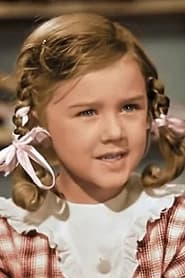
The girl Zina and the boy Kolya mistreated toys. Offended toys fled to the doll country. Reduced by the sorceress Mouse, they ended up in a wonderful land of dolls.
Cast & crew
More films like this

More Fantasy films
View all →

More about this film
About the production
Release dateJune 1941
Box officeUnknown - box office tracking was not systematically recorded in Soviet cinema of this period
ProductionSoyuzdetfilm
Filmed inMoscow, Soviet Union
This film was a pioneering work in Soviet animation, combining live-action sequences with stop-motion puppet animation. The production utilized innovative techniques for its time, including elaborate miniature sets and handcrafted puppets. The film was completed just before the German invasion of the Soviet Union in June 1941, which significantly impacted its distribution and reception. The production team faced material shortages due to the pre-war economy, forcing them to be creative with available resources for puppet construction and set design.
Themes
Responsibility and consequencesEmpathy and understanding others' perspectivesThe magic of childhood imaginationTransformation and redemptionRespect for possessions and property
Themes & topics
toys come to lifechildren learn lessonmagical transformationshrinkingpuppet animationlive action/animation hybridfantasy worldmoral taleSoviet animationstop-motion
Historical background
In the Doll Land (1941) emerged during the studio era and wartime cinema. The girl Zina and the boy Kolya mistreated toys. Archival records and catalog entries help place the work within film-history surveys of the period.
Why this film matters
Preserved under Wikidata ID Q112235041, In the Doll Land is valued as a screen drama within catalog and archive collections. Contemporary listings connect it to broader histories of cinema exhibition and restoration.
Making of
The production of 'In the Doll Land' was a significant undertaking for the young Soviet animation industry. Director Vyacheslav Levandovskiy assembled a team of skilled puppet makers and animators who worked for nearly two years to create the elaborate miniature world. The film required the construction of over 100 different puppets, each with articulated joints for realistic movement. The live-action segments featuring Veronika Lebedeva and her young co-star were filmed separately and then carefully integrated with the animated sequences using pioneering compositing techniques. The production faced numerous challenges, including limited access to quality materials for puppet construction and the technical limitations of Soviet film equipment of the era. Despite these obstacles, the team created a visually rich film that pushed the boundaries of what was possible in Soviet animation at the time.
What critics said
Trade and archival sources offer limited day-one review coverage for In the Doll Land. Modern reception rests on its availability in collections, repertory screenings, and reference works that document 1941 cinema.
Did you know?
- This was one of the first feature-length animated films produced in the Soviet Union
- Director Vyacheslav Levandovskiy was a pioneer of Soviet animation who had previously worked on early animated shorts
- The film was released just weeks before Operation Barbarossa, the German invasion of the Soviet Union
- The character of the Mouse sorceress was among the leading complex puppets created for Soviet animation up to that point
- The film's message about treating possessions with care took on additional meaning during wartime scarcity
- Veronika Lebedeva, who played Zina, was one of Soviet cinema's first child stars
- The original Russian title was 'В кукольной стране' (V kukolnoy strane)
- Many of the original puppets and sets were lost during the evacuation of Moscow studios in 1941
- The film combined multiple animation techniques including stop-motion and some traditional cel animation
- Santa Claus (Ded Moroz in Russian culture) was portrayed as a wise judge figure, reflecting Soviet adaptations of traditional characters
Awards & recognition
- None formally recorded - award systems for Soviet animation were not fully established in 1941
Visual style
The film's visual style was groundbreaking for Soviet animation, utilizing sophisticated miniature photography techniques to create the illusion of a living doll world. The cinematographers employed forced perspective and carefully controlled lighting to make the puppet characters appear lifelike within their scaled environments. The integration of live-action footage with animated sequences required innovative matte painting and compositing work. The camera work emphasized the contrast between the human world and the miniature doll land, using different focal lengths and movement patterns to distinguish between the two realms. The color palette, while limited by the technology of the time, was thoughtfully designed to enhance the magical atmosphere of the doll sequences while maintaining a more naturalistic look for the live-action portions.
Innovations
The film represented several technical firsts for Soviet animation, including advanced stop-motion techniques that allowed for more fluid and expressive puppet movement than previous Soviet productions. The development of articulated armatures for the puppets enabled more complex gestures and actions. The film's seamless integration of live-action and animation required innovations in matte photography and early optical printing techniques. The miniature set construction pushed the boundaries of what had been achieved in Soviet animation, with multiple levels of detail designed to hold up under close camera scrutiny. The production team also developed new methods for creating subtle facial expressions on the puppet characters, giving them more personality and emotional range than had been possible in earlier Soviet animated works.
Music
The musical score was composed by established Soviet film composers who created a distinctive soundtrack that blended traditional Russian musical motifs with whimsical themes appropriate for the fantasy elements. The music played a crucial role in establishing the emotional tone of different sequences, with playful melodies for the toy characters and more dramatic passages during the children's transformation and judgment. The film featured several musical numbers that helped advance the narrative while showcasing the talents of Soviet composers writing for animation. Sound effects were carefully crafted to enhance the illusion of the miniature world, with attention paid to how everyday sounds would be perceived from a toy's perspective. The soundtrack was recorded using the best available audio technology of the era, though wartime limitations affected the final production quality.
Famous quotes
Toys have feelings too, you know," - spoken by the lead toy character to the careless children
In the land of dolls, justice is served to all, big and small," - proclaimed by Santa Claus during the judgment scene
Sometimes you must become small to understand big responsibilities," - the Mouse sorceress's wisdom to the transformed children
Memorable scenes
- The magical transformation sequence where Zina and Kolya are shrunk down to doll size by the Mouse sorceress, featuring innovative special effects for the era
- The judgment scene in Santa Claus's courtroom, where the children must answer for their mistreatment of toys while standing as tiny dolls themselves
- The opening sequence where the toys come to life at night and plan their escape, showcasing the film's advanced puppet animation techniques
What audiences thought
The film found appreciative audiences among Soviet children who were enchanted by the magical world of living toys and the transformation of the human characters into dolls. Young viewers particularly responded to the clever premise of experiencing life from a toy's perspective. However, the film's theatrical run was cut short by the outbreak of World War II, limiting its audience reach. In the decades following the war, the film developed a cult following among animation enthusiasts and was occasionally shown in retrospective screenings. Soviet audiences of later generations remembered it fondly as one of the early examples of domestic animation that could capture children's imagination with its unique visual style and storytelling approach.
Film connections
Influenced by
- European fairy tale traditions
- Soviet educational philosophy
- Early Disney animation techniques
- Russian folklore characters
- German Expressionist film aesthetics
This film influenced
- Later Soviet stop-motion features of the 1950s-60s
- Soyuzmultfilm's puppet animation productions
- Post-war Soviet children's films with moral messages
Film restoration
The film survives in partial form with some degradation due to age and wartime storage conditions. Several key sequences have been restored by Russian film archives, but the complete original version is not fully intact. The Gosfilmofond archive holds existing footage and continues preservation efforts. Some scenes exist only in lower-quality copies made for post-war distribution.
Where to watch
- Rare screenings at Russian film archives and animation festivals
- Available in limited release through specialized Soviet film collections
- Some excerpts may be found in documentary features about Soviet animation history
- Not currently available on mainstream streaming platforms due to rights and preservation issues