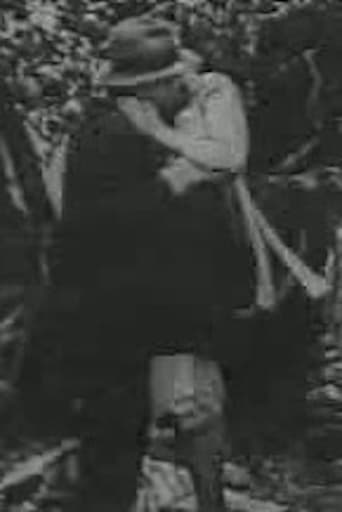
In the Evening
"A woman lies on a bed and masturbates for several minutes, then a male partner enters the."
Keys: Space play/pause · ←/→ 10s · F fullscreen · M mute · </> speed
About this film
Am Abend is an early 20th-century German stag film which was made in 1910. Along with the Argentinian film El Satario and the American film A Free Ride or A Grass Sandwich, it is one of the earliest hardcore pornographic films, produced between the years 1907 and 1915, that have been collected at the Kinsey Institute for Research in Sex, Gender, and Reproduction. A woman lies on a bed and masturbates for several minutes, then a male partner enters the room and the two begin to engage in various sexual activities.
More films like this
More about this film
About the production
Release date1910
Almost nothing is securely documented about the production circumstances of In the Evening, which is common for illicit or clandestinely circulated early adult films from the silent era. It was likely made outside the formal studio system and intended for private rather than theatrical exhibition, which explains the scarcity of surviving paperwork, credits, and contemporary publicity materials. The film belongs to a broader early-20th-century cycle of erotic one-reel shorts that were exchanged discreetly among collectors or shown in private venues. Because of its explicit content, it was not preserved, cataloged, or advertised in the same way as mainstream releases, and many details remain uncertain or reconstructed from archival references.
Themes
sexual desirevoyeurismprivacy and secrecyearly cinematic eroticismthe body as spectacle
Themes & topics
Historical background
Made in 1910, in Germany, In the Evening belongs to silent filmmaking amid the silent era's rapid stylistic experiments. Am Abend is an early 20th-century German stag film which was made in 1910.
Why this film matters
Within silent history, surviving prints help researchers study silent-era craft; 1910 German film; Along with the Argentinian film El Satario and the American film A Free Ride or A Grass Sandwich, it is one of the earliest hardcore pornographic films, produced between the years 1907 and 1915, that have been collected at the Kinsey Institute for Research in Sex, Gender, and Reproduction..
Making of
Behind-the-scenes information is extremely limited, and no reliable studio correspondence, production ledger, or contemporary press campaign is known to survive. The film was almost certainly made with a very small crew, a minimal set, and nonprofessional or anonymous performers, which was standard practice for many early erotic shorts. The absence of credits and the lack of surviving production records suggest that it was created for discreet circulation and that its makers expected anonymity. Its existence reflects an early underground economy of sexual films that operated alongside legitimate cinema, often outside the reach of formal distribution networks.
What critics said
Contemporary reviews of In the Evening are sparse in open sources; later catalog entries chiefly summarize plot and credits.
Did you know?
- Widely classified as an early pornographic or erotic silent short rather than a conventional narrative feature.
- Because of its explicit content and unofficial circulation, very little production information has survived.
- The title is often listed in archival references without a credited director or cast, which is typical for clandestine early adult films.
- It is associated with the pre-Code and pre-regulation period in which sexually explicit shorts were made and privately circulated before stricter censorship regimes took hold.
- Notable for depicting masturbation on screen, which was extremely unusual and controversial in 1910.
- Like many early explicit films, it likely circulated in restricted private exhibition contexts rather than in ordinary commercial movie theaters.
- The movie is part of the historical record of early sex films that helped shape later categories of adult cinema, even though it was not produced as a mainstream work.
- Its survival status is uncertain in some references, but it is commonly treated as a lost or inaccessible obscenity-era title.
- Sometimes used by historians to illustrate how quickly cinema developed parallel streams of mainstream and clandestine exhibition in its earliest years.
- Because documentation is sparse, different databases may vary on credits and technical details, making it an especially archival-research-dependent title.
Visual style
Specific cinematographer credit and camera details are not documented in the surviving record. The film likely used a fixed, static camera position typical of early silent shorts, with the performance framed to keep the action continuously visible for the viewer. Its visual style would have been straightforward and non-expressive by mainstream narrative standards, emphasizing the body and the staged sexual action over editing or dramatic composition. The minimal technique is itself historically significant because it reflects how early erotic films often relied on uninterrupted display rather than cinematic embellishment.
Innovations
No unique technical innovation is securely attributed to the film. Its significance is instead historical: it shows early use of the motion picture camera for explicit sexual display, a form of representation that was still highly unusual and socially taboo in 1910. The film’s unbroken presentation of erotic action may have made it especially effective for private exhibition, as viewers could watch the scene unfold without narrative distraction. In that sense, its formal directness is part of the early grammar of adult film.
Music
As a silent film, In the Evening would not have had a synchronized recorded soundtrack. Any exhibition music would have depended on the venue, the projectionist, or private accompaniment, and there is no known original score. For modern presentations, accompaniment would typically be added ad hoc by archives, restorers, or screening venues, if the film survives in a viewable form.
Memorable scenes
- The extended opening sequence in which the woman lies on the bed and masturbates, presented as the film's central erotic focus.
- The moment when the male partner enters the room, shifting the film from solitary sexual display to partnered activity.
- The sustained depiction of sexual acts that follows, which gives the short its reputation as an early explicit screen document.
What audiences thought
There is no reliable record of broad public audience response, since the film was almost certainly not released through mainstream channels. Its intended viewers were likely a small, private adult audience, making box-office style reception data unavailable. Given the era and its content, the film would have appealed to curiosity, novelty, and illicit interest rather than mass entertainment expectations. Today, audience interest is primarily scholarly, archival, or historical.
Film connections
Influenced by
- Early erotic stage entertainment and peepshow culture
- Late 19th- and early 20th-century adult photographic imagery
- The tradition of clandestine obscenity films circulating before formal censorship
This film influenced
- Later clandestine silent erotic shorts
- Mid-20th-century underground adult films
- The broader development of pornographic cinema
Film restoration
Preservation status is uncertain in widely available public references. The film is frequently treated as a lost, inaccessible, or privately held early erotic short, with no widely known restored commercial release. If any print survives, it is likely in a specialized archive or private collection rather than in general circulation.
Where to watch
- Specialized film archives or research collections, if accessible by appointment
- Academic screenings focused on early erotic cinema, when permitted
- Archival databases or catalog records that document the title but may not provide public viewing access