L'Âge d'or
“A surrealist masterpiece of subversive desire and social rebellion.”
About L'Âge d'or
The film begins with a documentary-style sequence about the behavior of scorpions before shifting into a series of surrealist vignettes centered on a man and a woman whose desperate attempts to consummate their physical passion are repeatedly obstructed. Their desire is interrupted by various manifestations of bourgeois society, including the Catholic Church, the military, and rigid aristocratic social codes. As the narrative dissolves into dreamlike logic, the protagonist is seen kicking a blind man and striking a woman at a party, symbolizing a total revolt against moral constraints. The film culminates in a shocking final sequence that links the Marquis de Sade's '120 Days of Sodom' with religious iconography, suggesting a dark fusion of debauchery and the sacred. Ultimately, the film serves as a violent manifesto against the repression of human instinct by the institutions of the modern world.
Cast & crew

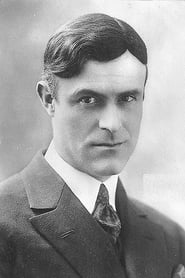

More films like this
More from Luis Buñuel
View all →
More about L'Âge d'or
Production
- Release date
- October 28, 1930
- Country
- France
- Budget
- Approximately 1,000,000 French francs
- Box office
- Limited due to being banned for 50 years; modern restoration screenings have grossed modest amounts in arthouse circuits.
- Production
- Vicomte de Noailles
- Filmed in
- Studio Billancourt, Paris, France, Hyères, Var, France, Cadaqués, Girona, Catalonia, Spain
The film was entirely financed by the Vicomte de Noailles as a birthday gift for his wife, Marie-Laure de Noailles. Buñuel and Salvador Dalí initially intended to collaborate as they had on 'Un Chien Andalou', but their relationship soured during the process, leading Buñuel to take primary creative control. The production used professional actors alongside non-professionals, and the script was written to intentionally provoke the sensibilities of the French elite. Despite the Vicomte's patronage, the resulting scandal led to his expulsion from the prestigious Jockey Club and threats of excommunication from the Pope.
Themes & topics
Historical background
Made in the transition period between silent film and 'talkies', L'Âge d'or was produced during a time of rising political extremism in Europe. The Surrealist movement was at its peak of provocation, seeking to align itself with Marxist revolution while maintaining an anarchic artistic independence. The film's release coincided with the Great Depression's arrival in Europe, a time when the stability of the bourgeois order was being questioned. The violent reaction from right-wing leagues like the 'Croix-de-Feu' reflected the deep ideological divisions in France that would eventually lead to the civil unrest of the 1930s.
Why this film matters
L'Âge d'or is considered the definitive masterpiece of cinematic Surrealism. It broke the conventions of narrative structure and used the medium of film to launch a direct assault on the 'three pillars' of society: Church, State, and Family. It pioneered the use of 'irrational' editing, where scenes are linked by psychological association rather than chronological logic. Its influence persists in the works of directors like David Lynch, Alejandro Jodorowsky, and Terry Gilliam, who utilize surrealist imagery to explore the subconscious.
Making of
The production was marked by the disintegrating friendship between Buñuel and Dalí. While Dalí sent suggestions from Spain, Buñuel found many of them unworkable or too focused on personal obsessions rather than the social critique he wanted to achieve. The filming was also physically demanding; the crew traveled to the rugged coast of Cadaqués to film the 'Majorcan' sequences. Buñuel exercised total control over the editing, ensuring that the sound—a mix of Mozart, Wagner, and Pasodoble—often contrasted ironically with the visual imagery. The Vicomte de Noailles, despite the social ruin the film brought upon him, remained a supporter of the work, though he was forced to withdraw it from distribution to protect his family's reputation.
What critics said
Upon its 1930 release, the film was met with horror and outrage by conservative critics, who labeled it 'the work of a madman' and 'bolshevik filth.' However, the Surrealist group published a manifesto praising it as a triumph of the imagination. In the modern era, critics universally regard it as a landmark of avant-garde cinema. It currently holds a very high rating on Rotten Tomatoes and is frequently cited in academic circles as one of the most important films ever made for its uncompromising vision and technical audacity.
What audiences thought
Initial audiences were polarized; while the intellectual elite and the Surrealist circle hailed it as a breakthrough, general audiences were often confused or offended. The 1930 screenings at Studio 28 were famously interrupted by riots, leading to the film's seizure by police. Today, the film is a staple of film schools and cinematheques, where it is received with reverence by cinephiles who appreciate its dark humor and historical defiance.
Visual style
The cinematography by Albert Duverger is characterized by its stark, high-contrast black and white imagery that oscillates between documentary realism and dreamlike artifice. The film uses deep focus in several interior scenes and wide, desolate shots of the Spanish coastline to create a sense of isolation. The camera work is often static, allowing the bizarre actions within the frame—such as a cow appearing on a bed or a cart driving through a drawing room—to speak for themselves without manipulative camera movement.
Innovations
The film is one of the earliest examples of using sound as a counterpoint to image rather than just a reinforcement of it. It also utilized sophisticated (for the time) editing techniques to create 'associative montages', such as the transition from a woman's face to a mirror reflecting a different reality. The use of non-professional actors in key roles to achieve a 'blank' or 'naturalistic' performance style also predated Italian Neorealism by over a decade.
Music
The soundtrack is a collage of classical music and found sounds. It features excerpts from Wagner's 'Tristan und Isolde', Mozart's 'Ave Verum Corpus', and Mendelssohn's 'Italian Symphony'. Buñuel used sound subversively; for instance, the sound of barking dogs or wind is often layered over scenes of high-society dialogue, and the protagonist's inner thoughts are occasionally heard as a voiceover, which was a revolutionary technique in 1930.
Film restoration
The film was meticulously restored by the Cinémathèque Française and the George Eastman House in the late 20th century. High-definition digital restorations are now available on Blu-ray via the British Film Institute (BFI) and Kino Lorber.
Did you know?
- The film was banned by the Prefecture of Police in Paris in December 1930 after right-wing groups, including the League of Patriots, attacked the cinema, threw ink at the screen, and destroyed surrealist artworks in the lobby.
- It remained officially banned and withdrawn from public circulation for nearly 50 years, only becoming widely available again in 1979.
- The opening sequence featuring scorpions was actually stock footage from a documentary, chosen by Buñuel to mirror the 'venomous' nature of the human characters to follow.
- Salvador Dalí claimed that his contribution to the film was minimal and that Buñuel had 'betrayed' his original ideas by making the film too political.
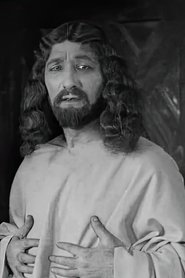
- The character of the Duke of Blangis in the final sequence is visually styled to resemble Jesus Christ, which was the primary cause of the blasphemy charges against the film.
- Max Ernst, the famous surrealist painter, makes a cameo appearance as the leader of the bandits in the hut.
- The film was one of the first sound films made in France, utilizing the new technology to create a jarring, non-linear auditory experience.
- During the riot at the Studio 28 cinema, members of the 'Camelots du Roi' destroyed paintings by Dalí, Miró, and Tanguy that were on display.
- Buñuel originally wanted to title the film 'The Beast of the Sea' or 'Down with the Constitution'.
- The film's score includes Richard Wagner's 'Tristan und Isolde', specifically the 'Liebestod', to underscore the theme of 'L'amour fou' (mad love).
Awards & recognition
- National Board of Review - Top Foreign Films (1931)
- Inducted into the Sight & Sound Greatest Films of All Time list (various years)
Memorable scenes
- The opening documentary about scorpions fighting among rocks.
- A woman sucking the toe of a statue in a state of religious/erotic ecstasy.
- A father shooting his son for dropping a cigarette ash tray during a party.
- A cow lying calmly on the bed of an aristocratic woman.
- The final sequence where survivors of a debauched orgy emerge from a castle, led by a figure resembling Jesus Christ.
Influenced by
- The Marquis de Sade
- Karl Marx
- Sigmund Freud
- The Surrealist Manifesto
- Un Chien Andalou
This film influenced
- Eraserhead
- The Holy Mountain
- Blue Velvet
- The Discreet Charm of the Bourgeoisie
- Weekend
Where else to watch
- The Criterion Channel
- BFI Player
- Kino Now
- Physical media (BFI/Kino Lorber Blu-ray)
- Various university film archives
Famous quotes
What a joy to have murdered my child!
Our love is the only thing that matters, but they will never let us be.
The Duke of Blangis was a man of great piety and even greater cruelty.