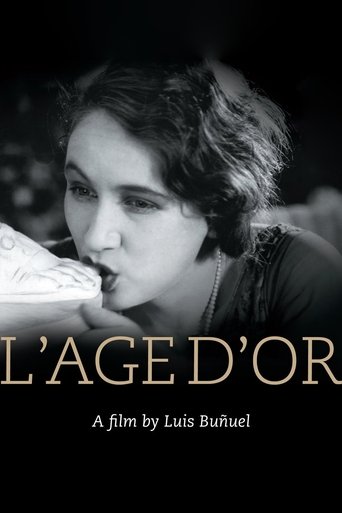
Germaine Noizet
Actor
- Active
- 1928-1933
Films 1
About Germaine Noizet
Germaine Noizet was a French actress active during the pivotal transition from silent film to early sound cinema in the late 1920s and early 1930s. She is most significantly recognized for her role as the Marquise of X in Luis Buñuel's surrealist masterpiece 'L'Âge d'or' (1930), a film that became a landmark of avant-garde cinema and was notoriously banned for decades. Beyond her work with the surrealists, Noizet appeared in several French and international co-productions, including the Robert Wiene-directed operetta 'Venetian Nights' (1931). Her career saw her collaborating with notable directors such as André Berthomieu and Robert Bibal, often playing aristocratic or sophisticated supporting roles. While her filmography is relatively brief, spanning roughly from 1928 to 1933, her participation in 'L'Âge d'or' secured her a permanent place in film history. Like many actors of her era, her transition into the 'talkies' was marked by roles in light comedies and musical dramas before she largely faded from the public eye.
More about Germaine Noizet
On screen
Germaine Noizet was typically cast in roles requiring a sophisticated, often aristocratic presence, fitting the 'grande dame' archetype of early French sound cinema. In 'L'Âge d'or', her performance is characterized by the stylized, somewhat detached mannerism required by Buñuel's surrealist direction, where she represents the rigid and hypocritical bourgeois class. Her work in operettas like 'Venetian Nights' suggests a versatility in light, musical comedy, though she remained primarily a character actress rather than a lead star.
Impact on culture
Germaine Noizet's cultural impact is inextricably linked to the scandal and legacy of 'L'Âge d'or'. As the Marquise, she participated in scenes that were considered highly blasphemous and subversive at the time, contributing to a film that challenged the moral and religious foundations of 1930s society. The film's subsequent 50-year ban in various territories turned her performance into a subject of study for film historians and surrealist scholars.
Lasting legacy
Her legacy resides in her contribution to the avant-garde movement. While her mainstream career was short-lived, her presence in one of the most important films of the 20th century ensures her name appears in comprehensive histories of world cinema. She represents the professional acting talent that helped ground the abstract visions of surrealist filmmakers like Buñuel and Dalí.
Who they inspired
While she did not influence acting techniques in a traditional sense, her participation in experimental cinema paved the way for future actors to engage with non-linear and symbolic storytelling. She is a key figure for researchers studying the casting choices of the early Surrealist film movement.
Off screen
Detailed records of Germaine Noizet's personal life remain obscure, as was common for supporting players of the early 1930s who did not transition into long-term stardom. She was part of the Parisian artistic circle that intersected with the Surrealist movement during the production of 'L'Âge d'or', though she was not a core member of the Surrealist group herself.
Career milestones
- Cast as the Marquise of X in the seminal surrealist film 'L'Âge d'or' (1930), directed by Luis Buñuel.
- Worked under the direction of legendary German Expressionist director Robert Wiene in 'Venetian Nights' (1931).
- Appeared in the early sound comedy 'Mon coeur et ses millions' (1931) alongside Jules Berry.
- Featured in the 1932 drama 'Chouchou poids plume', produced by the influential Léon Poirier.
- Participated in the early French sound film 'Le Crime de Sylvestre Bonnard' (1929).
Iconic roles
- Marquise of X in L'Âge d'or (1930)
- Comtesse de Vaneuse in Mon coeur et ses millions (1931)
- Supporting role in Venetian Nights (1931)
Must-see films
- L'Âge d'or (1930)
- Venetian Nights (1931)
- Mon coeur et ses millions (1931)
- Chouchou poids plume (1932)
- Le Crime de Sylvestre Bonnard (1929)
Special recognition
- Her performance in 'L'Âge d'or' is preserved in the French National Film Archives (Cinémathèque française).
Worked often with
- Luis Buñuel (Director)
- Robert Wiene (Director)
- Gaston Modot (Actor)
- Jules Berry (Actor)
- André Berthomieu (Director)
Studios
- G.F.F.A. (Gaumont-Franco-Film-Aubert)
- Emelka Studios
- Les Films Léon Poirier
Did you know?
- She appeared in 'L'Âge d'or', a film so controversial that right-wing groups threw ink at the screen and set off stink bombs during its premiere.
- She worked on 'Venetian Nights', which was a French-language 'alternate version' of a German film, a common practice before dubbing became standard.
- Her character in 'L'Âge d'or' is involved in the famous party scene where a cart driven by peasants passes through a high-society gathering unnoticed.
- She shared the screen with the famous painter Max Ernst in 'L'Âge d'or'.
- Her filmography includes 'Plein aux as' (1933), which was one of her final recorded screen appearances.
- She is often cited in academic papers regarding the use of sound in early surrealist cinema due to her dialogue scenes in Buñuel's work.
In their own words
Six of them placed near the microphone... will make more noise than sixty ten kilometres away. (As the Marquise in L'Âge d'or, discussing the efficiency of modern sound recording during a party scene)
Questions and answers
Who was Germaine Noizet?
Germaine Noizet was a French film actress active in the late 1920s and early 1930s. She is best known for her role as the Marquise in the surrealist film 'L'Âge d'or'.
What films is Germaine Noizet best known for?
She is most famous for 'L'Âge d'or' (1930), but also appeared in 'Venetian Nights' (1931), 'Mon coeur et ses millions' (1931), and 'Chouchou poids plume' (1932).
When was Germaine Noizet active in cinema?
Her recorded film career spanned from approximately 1928 to 1933, during the transition from silent films to the early sound era.
What was Germaine Noizet's role in L'Âge d'or?
She played the Marquise of X, a representative of the high-society bourgeois class whose party is interrupted by surreal events.
Did Germaine Noizet win any awards?
There are no records of major competitive awards for Noizet, as her career was relatively brief and focused on supporting roles in the early 1930s.