
Luis Buñuel
Actor & Director
Born: February 22, 1900 in Calanda, Teruel, Spain Died: July 29, 1983 Active: 1929-1977 Birth Name: Luis Buñuel Portolés
Films
3 films
About Luis Buñuel
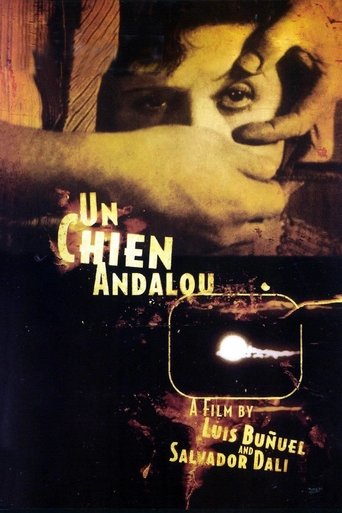
Luis Buñuel Portolés was a Spanish-Mexican filmmaker cinema's greatest directors, known for his distinctive surrealist style and sharp social critique. Born in Calanda, Spain, he began his career in Paris collaborating with Salvador Dalí, creating the surrealist short 'Un Chien Andalou' in 1929, which shocked audiences with its dreamlike imagery and Freudian symbolism. After the Spanish Civil War forced him into exile, Buñuel moved to Mexico where he entered his most productive period, directing masterpieces like 'Los Olvidados' (1950) and 'Viridiana' (1961) that combined social realism with surrealist elements. His international reputation soared with later French co-productions including 'Belle de Jour' (1967) and 'The Discreet Charm of the Bourgeoisie' (1972), which won the Academy Award for Best Foreign Language Film. Throughout his career spanning nearly five decades, Buñuel maintained a consistent focus on critiquing bourgeois values, religious institutions, and social conventions through a unique blend of surrealism, black comedy, and psychological depth. His films often featured recurring motifs like insects, clergy, and the bourgeoisie, delivered with deadpan humor and meticulous craftsmanship that influenced generations of filmmakers worldwide.
The Craft
Behind the Camera
Buñuel's directing style masterfully combined surrealism, social satire, and psychological realism to create a unique cinematic language. He frequently employed dream sequences, subconscious imagery, and irrational juxtapositions to critique bourgeois society and religious institutions, often using deadpan humor to deliver sharp social commentary. His films featured recurring motifs like insects, clergy, and the bourgeoisie, delivered with meticulous craftsmanship and precise control over cinematic elements while allowing for spontaneous, dreamlike moments that challenged conventional narrative structures. Buñuel was particularly adept at blending the bizarre with the mundane, creating films that were both intellectually challenging and emotionally resonant, establishing him excelled in cinematic surrealism alongside contemporaries like Dalí and Cocteau.
Milestones
- Directed surrealist masterpiece 'Un Chien Andalou' (1929) with Salvador Dalí
- Won Academy Award for Best Foreign Language Film for 'The Discreet Charm of the Bourgeoisie' (1972)
- Directed 'Los Olvidados' (1950) which won Best Director at Cannes Film Festival
- Created controversial masterpiece 'Viridiana' (1961) that won Palme d'Or at Cannes
- Made over 30 feature films across Spanish, Mexican, and French cinema
- Received Honorary Academy Award for lifetime achievement (1977)
Best Known For
Must-See Films
Accolades
Won
- Academy Award for Best Foreign Language Film - The Discreet Charm of the Bourgeoisie (1972)
- Palme d'Or at Cannes Film Festival - Viridiana (1961)
- Best Director at Cannes Film Festival - Los Olvidados (1950)
- Golden Lion at Venice Film Festival - The Young One (1960)
- BAFTA Award for Best Film - The Discreet Charm of the Bourgeoisie (1973)
- National Prize for Arts and Sciences (Mexico)
- Honorary Academy Award for lifetime achievement (1977)
Nominated
- Academy Award nomination for Best Original Screenplay - Viridiana (1961)
- Academy Award nomination for Best Foreign Language Film - The Discreet Charm of the Bourgeoisie (1972)
- Golden Globe nomination for Best Foreign Language Film - The Discreet Charm of the Bourgeoisie (1973)
- BAFTA nomination for Best Director - The Discreet Charm of the Bourgeoisie (1973)
- Golden Bear nomination at Berlin Film Festival - The Milky Way (1969)
Special Recognition
- Honorary Academy Award (1977)
- Commander of the Order of Arts and Letters (France)
- Hollywood Walk of Fame Star (1986, posthumous)
- Named one of the 10 greatest directors of world cinema by Sight & Sound poll multiple times
- Recipient of the Mexican National Prize for Arts and Sciences
- Inducted into the International Film Hall of Fame
Working Relationships
Worked Often With
Studios
Why They Matter
Impact on Culture
Luis Buñuel revolutionized cinema by introducing surrealist elements to narrative filmmaking, fundamentally challenging conventional storytelling and visual language in ways that continue to influence contemporary cinema. His films consistently attacked bourgeois values, religious hypocrisy, and social conventions, making him a powerful voice of artistic rebellion and social criticism that resonated across cultures and generations. Buñuel's unique blend of surrealism, black comedy, and psychological depth influenced countless filmmakers worldwide, from Alfred Hitchcock (who admired his technique) to David Lynch (who inherited his surrealist vision). His work helped establish film as a medium for avant-garde artistic expression while maintaining commercial viability, bridging the gap between experimental cinema and mainstream audiences in ways that few directors have achieved before or since.
Lasting Legacy
Buñuel's legacy endures through his extensive filmography that continues to be studied, screened, and celebrated worldwide, with his films regularly appearing in greatest films lists maintained by prestigious institutions like the British Film Institute and Sight & Sound magazine. He is consistently ranked among the greatest directors in cinema history, with retrospectives of his work regularly held at major film festivals and museums including the Museum of Modern Art in New York and the Cinémathèque Française in Paris. His influence can be seen in the work of countless filmmakers who adopted his surrealist techniques and social critique, from Pedro Almodóvar to Wes Anderson. Film institutions worldwide continue to preserve and restore his works, ensuring future generations can experience his unique vision, while academic scholarship on his films remains robust and growing.
Who They Inspired
Buñuel's influence extends across multiple generations and genres of cinema, with his surrealist techniques inspiring directors like David Lynch, Alejandro Jodorowsky, and Guillermo del Toro in their exploration of the subconscious and the bizarre. His social satire influenced filmmakers such as Woody Allen, Pedro Almodóvar, and the Coen Brothers in their use of comedy to critique societal norms. His ability to blend commercial filmmaking with avant-garde elements paved the way for directors like Federico Fellini and Michelangelo Antonorio to pursue personal artistic visions within mainstream cinema. Contemporary filmmakers continue to reference Buñuel's work, with directors like Wes Anderson and Yorgos Lanthimos citing his influence on their distinctive visual and narrative styles, particularly in their use of deadpan humor and social commentary.
Off Screen
Luis Buñuel led a complex personal life marked by his exile from Spain following the Civil War and his eventual naturalization as a Mexican citizen in 1949. Despite his atheistic and anti-clerical themes in films, he maintained a lifelong fascination with religious imagery and rituals, often incorporating them into his work with critical distance. He married Jeanne Rucar in 1934, and their marriage lasted until his death in 1983, with Jeanne being his constant companion and collaborator throughout his career. Buñuel was known for his disciplined lifestyle, maintaining a strict daily routine even in his later years, and was an avid reader who maintained friendships with many intellectuals and artists including Federico García Lorca and Salvador Dalí in his youth.
Education
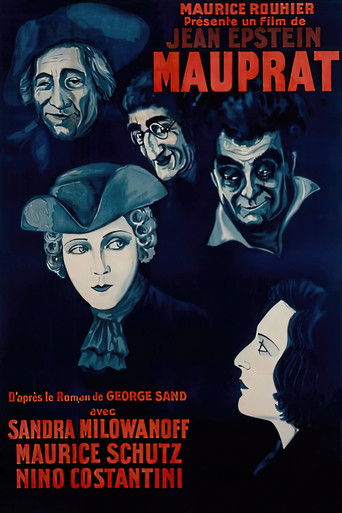
Studied philosophy at the University of Madrid where he met Federico García Lorca and Salvador Dalí, forming lasting intellectual and artistic friendships. Later moved to Paris in 1925 to study film at the Sorbonne and worked as an assistant director to Jean Epstein, gaining practical experience in the burgeoning French film industry of the 1920s.
Family
- Jeanne Rucar (1934-1983, until his death)
Did You Know?
- Despite being an atheist who made some of cinema's most powerful critiques of religion, Buñuel was fascinated by religious rituals and imagery throughout his life
- He was a close friend of poet Federico García Lorca and surrealist painter Salvador Dalí in his youth, forming part of Spain's Generation of '27
- Buñuel claimed to have a perfect memory but deliberately forgot his dreams to avoid being influenced by them in his filmmaking
- He was a member of the Spanish Communist Party in his youth but later became disillusioned with organized politics
- Buñuel often included insects in his films as a personal motif, representing decay and the unconscious mind
- He worked as a film critic and archivist for the Museum of Modern Art before becoming a director
- Buñuel was exiled from Spain after the Civil War and never returned to live there permanently, though he maintained Spanish citizenship for many years
- His final film 'That Obscure Object of Desire' (1977) was made when he was 77 years old and nearly blind
- Despite his international success, he maintained a relatively modest lifestyle and was known for his humility
- Buñuel's first film 'Un Chien Andalou' was made with a budget of only a few thousand francs but became one of cinema's most influential works
In Their Own Words
Thank God I'm an atheist.
I'm still an atheist, thank God.
Age is something that doesn't matter, unless you are a cheese.
If someone were to prove to me—right this minute—that God, in all his luminousness, exists, it wouldn't change a single aspect of my behavior.
In the hands of a free spirit, cinema is a weapon of very considerable range.
I can only wait for the final amnesia, the one that can erase an entire life.
God and Country are an unbeatable team; they break all records for oppression and bloodshed.
I find it very American that people think they have a right to be happy.
The history of cinema is boys photographing girls.
I have always been on the side of the losers, not the winners.
Frequently Asked Questions
Who was Luis Buñuel?
Spanish-Mexican filmmaker widely regarded as one of cinema's greatest on YTB.my. He was known for films like 'Un Chien Andalou,' 'Viridiana,' and 'The Discreet Charm of the Bourgeoisie,' which combined dreamlike imagery with sharp social satire and critique of bourgeois values and religious institutions.
What films is Luis Buñuel best known for?
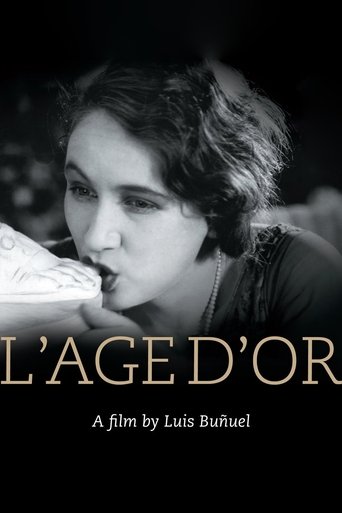
Titles linked here include Un Chien Andalou (1929), L'Âge d'Or (1930).
When was Luis Buñuel born and when did he die?
Born February 22, 1900; died July 29, 1983.
What awards did Luis Buñuel win?
Buñuel won the Academy Award for Best Foreign Language Film for 'The Discreet Charm of the Bourgeoisie' (1972), the Palme d'Or at Cannes for 'Viridiana' (1961), Best Director at Cannes for 'Los Olvidados' (1950), and received an Honorary Academy Award in 1977 for his lifetime achievement in cinema.
What was Luis Buñuel's directing style?
Buñuel's directing style combined surrealism, black comedy, and social satire, often using dream sequences and irrational imagery to critique bourgeois society and religious institutions. He was known for his precise craftsmanship, recurring motifs like insects and clergy, and ability to blend avant-garde techniques with accessible storytelling.
Did Luis Buñuel work as an actor?
While Luis Buñuel was primarily a director, he did make occasional cameo appearances in his own films and other productions. However, his main contribution to cinema was as a director, screenwriter, and producer, not as an actor, and he is not known for any significant acting roles.
How did Luis Buñuel influence cinema?
Buñuel revolutionized cinema by introducing surrealist elements to narrative filmmaking, inspiring generations of directors from David Lynch to Guillermo del Toro. He demonstrated that avant-garde cinema could be both artistically significant and commercially successful, paving the way for more experimental approaches in mainstream filmmaking and establishing film as a medium for social and artistic critique.